Bonito Flakes: What It Is, How to Use It and Substitutes
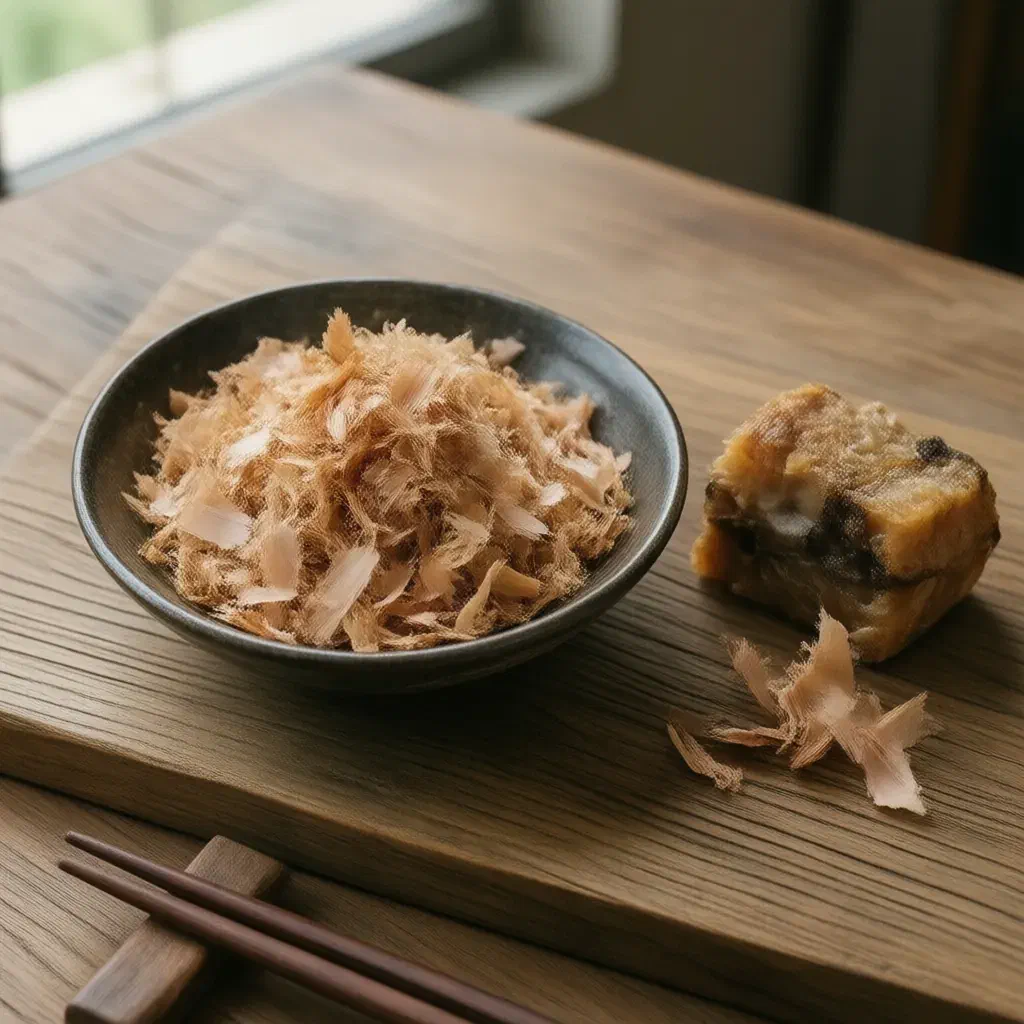
What are bonito flakes?
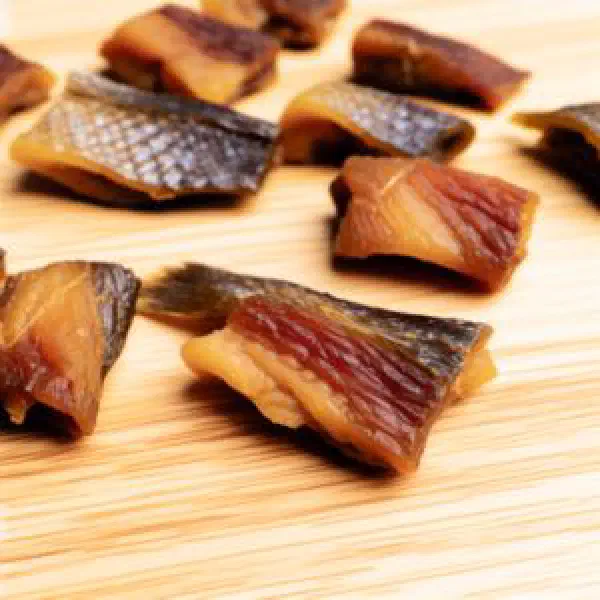
They are made from skipjack tuna (Katsuwonus pelamis), a small member of the tuna family. The fish is filleted, the fillets are simmered in hot water, the bones are removed, and then the fillets are smoked over a wood fire again and again for many days. The result is called arabushi and is as hard as a piece of wood. For the highest grade, karebushi, the blocks are also brought into contact with a mould (Aspergillus) several times and dried for weeks or months. The mould draws out the remaining moisture and the flavour becomes rounder. The flakes are shaved from the finished block. In Japan this used to be done fresh at home with a special plane box. Today most households buy ready-shaved flakes in bags.
Flavour and uses
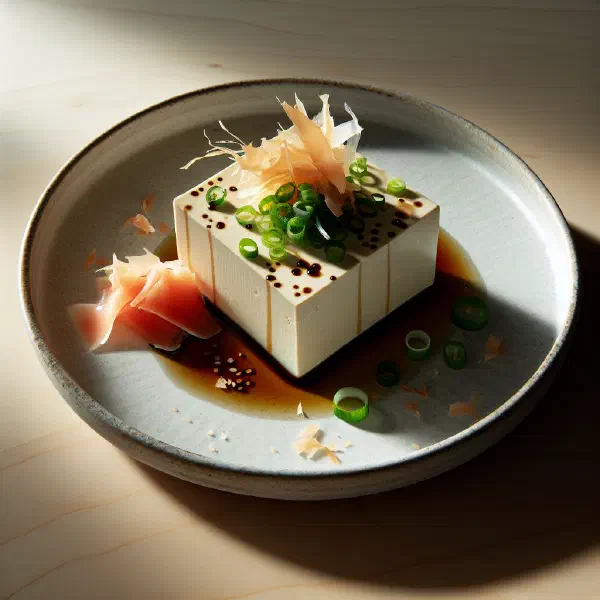
Bonito flakes taste smoky, salty and strongly of fish, with plenty of umami. For dashi, add 20 g of flakes to 1 litre of hot kombu water that is no longer boiling, leave them for two minutes until they sink, then pour everything through a sieve. Do not squeeze the flakes, or the stock turns cloudy and bitter. This stock is the base of miso soup and many simmered dishes. As a topping the flakes go on raw, scattered over okonomiyaki and takoyaki, on cold tofu as in hiyayakko, or on rice. Mixed with a little soy sauce they become okaka, a classic filling for onigiri.
Buying bonito flakes: what to look for
You will find bonito flakes at Asian and Japanese grocers and from Japanese food shops online. For dashi, choose large, thin flakes in bags of 40 to 500 g. For topping, small single-portion packs of fine flakes are more practical. Good flakes smell smoky, not rancid, and are a pale pinkish brown. Some products contain other fish such as mackerel or sardine, which is shown on the ingredients list.
Storage and shelf life
Unopened, bonito flakes keep until the date printed on the pack, usually about a year. Once opened they quickly lose their aroma and absorb moisture. Press the air out of the bag, seal it tightly and keep it in the fridge. There it lasts about four weeks, and in the freezer a few months.
What can you use instead of bonito flakes?
For 1 litre of dashi, replace the 20 g of bonito flakes with instant dashi powder as directed on the pack. It usually contains bonito itself. For a fish-free version, soak 10 g of kombu and three dried shiitake mushrooms in cold water overnight. As a topping for okonomiyaki or tofu, use 1 tbsp of crumbled nori with a pinch of toasted sesame seeds. That will not give you the smoky flavour, but it adds a taste of the sea.