Galangal: What It Is, How to Use It and Substitutes
What is galangal?
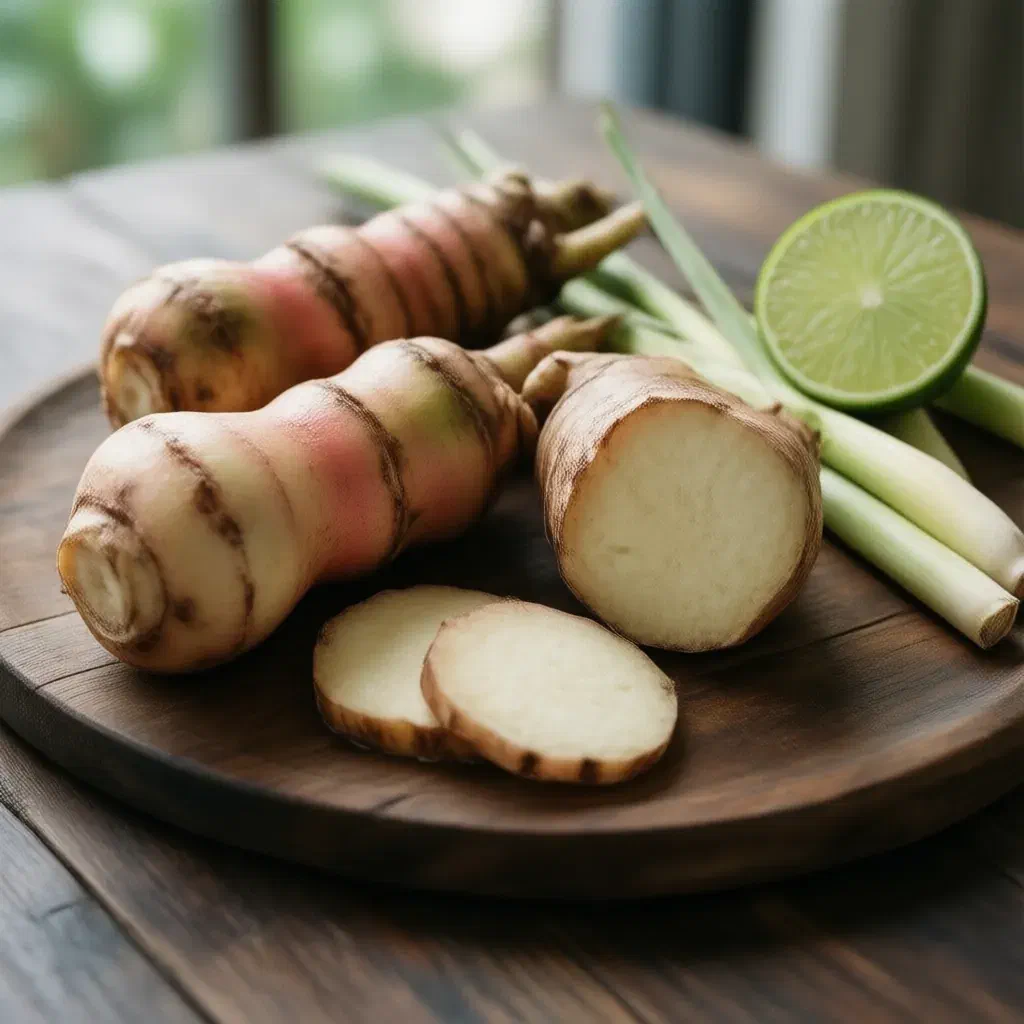
In cooking, galangal almost always means greater galangal, Alpinia galanga. Like ginger and turmeric, the plant belongs to the ginger family and grows in Southeast Asia. The part used is the thickened underground stem, the rhizome. It has a thin, pink to yellowish skin with dark rings and is pale, almost white, inside. Fresh galangal is much harder and more fibrous than ginger, and a small knife barely gets through older pieces. Lesser galangal, Alpinia officinarum, is a related species. It was known in medieval Europe as a medicine and spice, and Hildegard of Bingen recommended it. Asian recipes, however, mean the larger root. In Thailand it is called kha, in Indonesia laos or lengkuas, and in Vietnam riềng.
Flavour and uses
Galangal tastes hot, but differently from ginger. It also has notes of pine resin, citrus and pepper, and some people detect a hint of camphor. Because the root is so tough, it is simmered in soups in slices and not eaten afterwards. In Tom Kha Gai it is even part of the name: kha is galangal, gai is chicken. For curry pastes, galangal is finely chopped and pounded in a mortar with lemongrass, garlic and chilli. This is also how the Cambodian spice paste Kroeung is made, the base for amok and many braised dishes. In Indonesia and Malaysia galangal braises for hours in beef rendang. Powder made from dried galangal is fine for marinades, but it adds too little to soups.
Buying galangal: what to look for
You will find fresh galangal in Asian grocers, usually next to the ginger and lemongrass. Good pieces are plump and heavy, with smooth, shiny skin. Wrinkled or grey patches mean the root has been sitting around for a long time. Young shoots with pink tips are more tender and easier to cut. Many Asian grocers also sell frozen sliced galangal, which is a good thing to keep in stock. Dried slices need soaking before cooking, and galangal powder tastes much flatter.
Storage and shelf life
Wrapped in kitchen paper and kept in a bag in the vegetable drawer, fresh galangal lasts about two to three weeks. To keep it longer, slice it and freeze it. Frozen slices can go straight into the pot or be pounded in a mortar once slightly thawed. This way the aroma stays good for several months.
What can you use instead of galangal?
The closest substitute is fresh ginger with a little acidity. For 3 cm of galangal, use 2 cm of ginger, a little grated lime zest and a pinch of black pepper. Ginger is juicier and sweeter, so use slightly less rather than more. A tom kha made this way tastes good, just not quite like in Bangkok. If you have galangal powder at home, allow half a teaspoon of powder for 2 cm of fresh root.