Labneh: What It Is, How to Use It and Substitutes
What is labneh?
Labneh is made from yoghurt, usually cow’s milk yoghurt, less often sheep’s or goat’s. A little salt is stirred in, then the yoghurt is put in a cloth and hung up to drain. After 12 hours it is as creamy as quark, and after 24 to 48 hours it is firm enough to shape. 500 g of yoghurt gives about 250 g of labneh. In the Levant, firm labneh is rolled into small balls, dried briefly and preserved in olive oil, often coated in za’atar or chilli flakes. This form is called labneh makbous. The name comes from the Arabic word laban, which means yoghurt or buttermilk depending on the country. Related products are Turkish süzme yoğurt, Greek yoghurt and Indian chakka, which is used to make the sweet dish shrikhand.
Flavour and uses
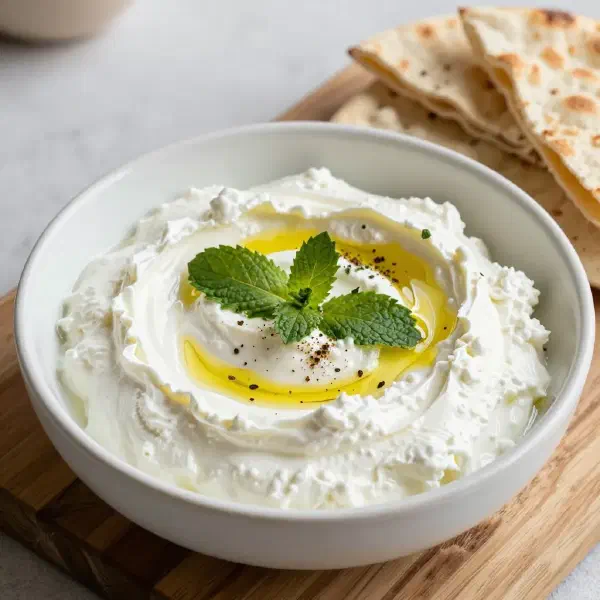
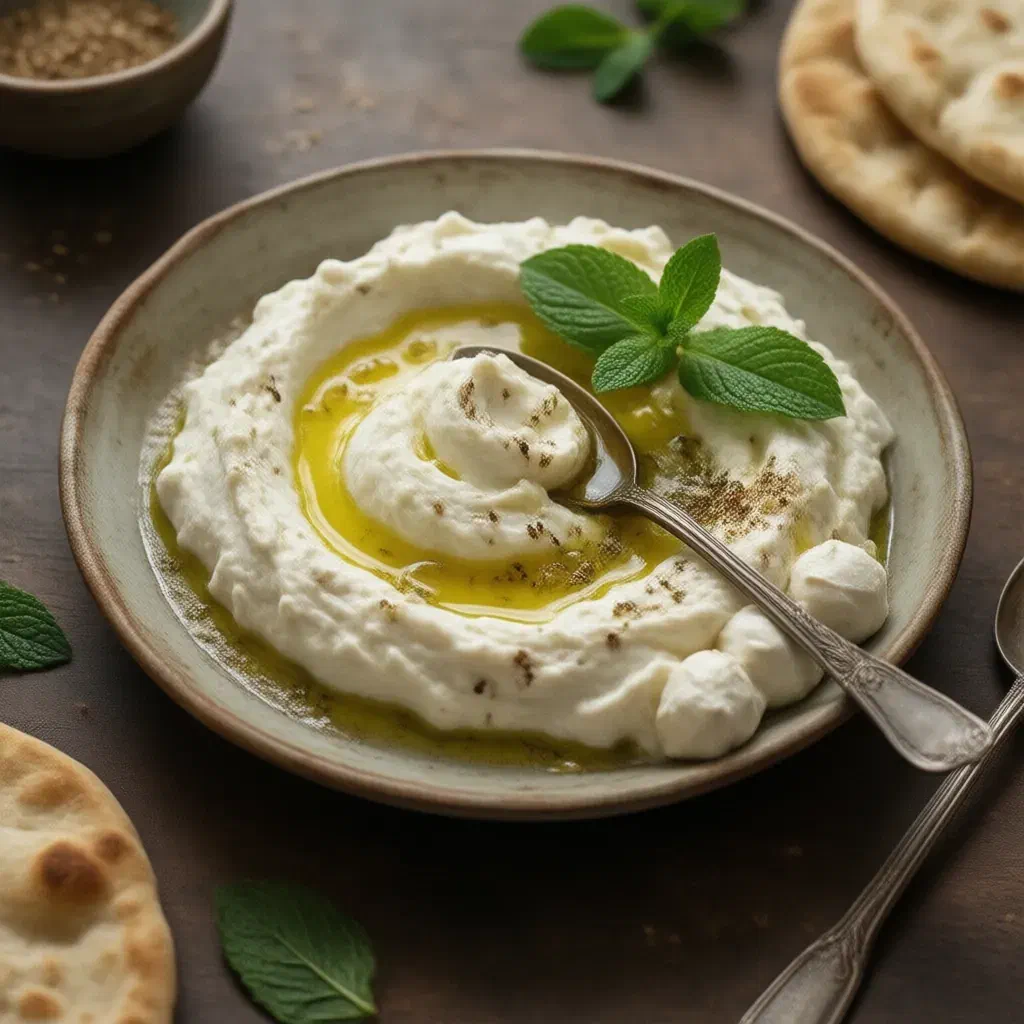
Labneh tastes fresh, mildly sour and a little salty. Its texture is denser than yoghurt and lighter than cream cheese. Most often, as in Lebanese Labneh, it is spread flat on a plate with a hollow for plenty of olive oil. For Labneh with Olive Oil and Za’atar, the herb blend of thyme, sumac and sesame is added. At breakfast it comes with flatbread, cucumber, tomatoes, olives and mint. Labneh also goes well alongside Manakeesh Zaatar or as a dip for grilled vegetables. Mixed with garlic, grated cucumber and mint, it becomes a cold starter. It curdles easily in hot sauces, so stir it in only at the end and don’t let it boil.
Buying labneh: what to look for
You can buy labneh from Middle Eastern and Turkish grocers, and often in the chiller cabinet of larger supermarkets. The fat content varies between brands, and more fat gives a rounder flavour. Look for a short ingredients list of milk, cultures and salt. Good labneh needs no starch or thickeners. Labneh balls preserved in oil are sold in jars, usually on the shelf next to the olives.
Storage and shelf life
Fresh labneh keeps for about a week in the fridge if well covered. Use homemade labneh within five to seven days. Labneh balls fully covered in olive oil keep in the fridge for several weeks. The oil sets in the cold, so leave the jar at room temperature for half an hour before serving.
What can you use instead of labneh?
The easiest option is to make labneh yourself. Mix 500 g of Greek yoghurt (10% fat) with ½ teaspoon of salt and leave it to drain overnight in the fridge in a sieve lined with a clean tea towel. If you are short of time, mix 100 g of full-fat cream cheese with 100 g of Greek yoghurt, a pinch of salt and a squeeze of lemon juice. Skyr comes close in texture but tastes milder.