Pomegranate Molasses: What It Is, How to Use It and Substitutes
What is pomegranate molasses?
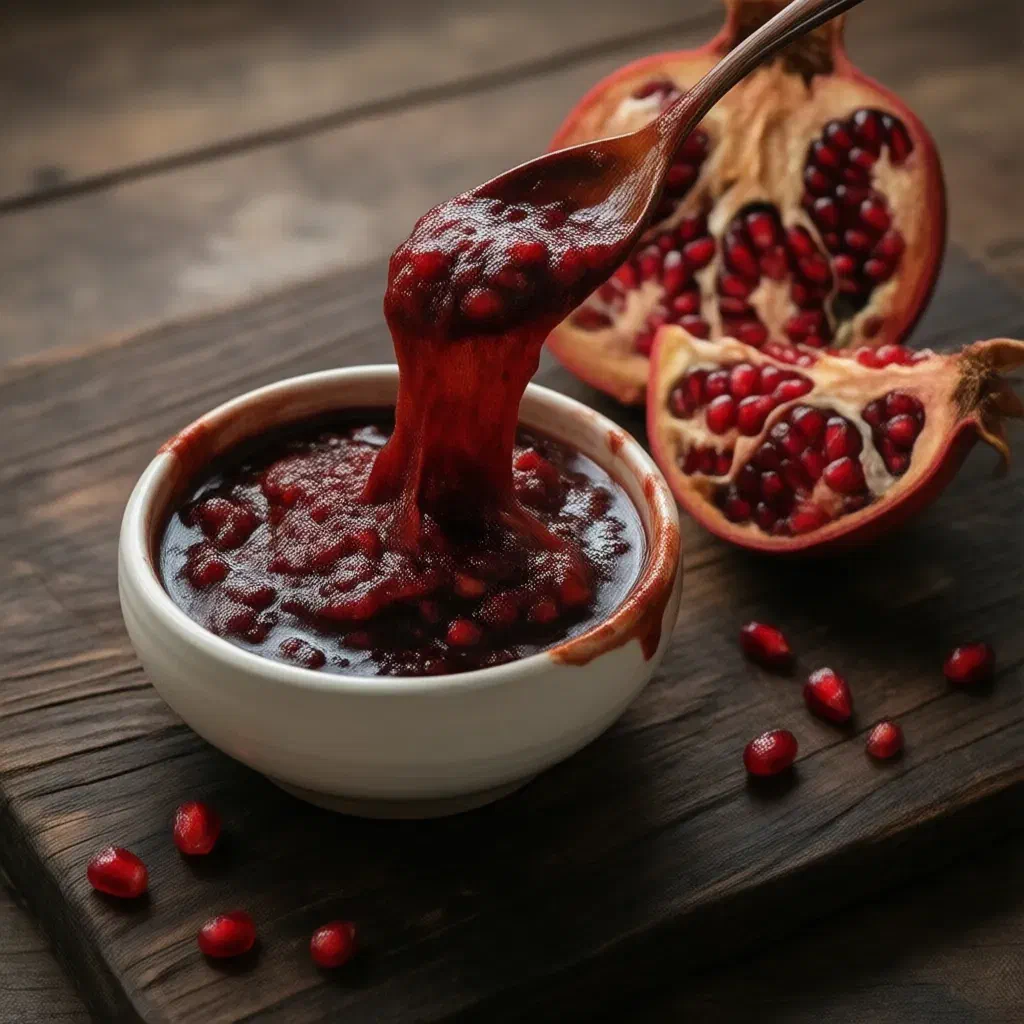
To make pomegranate molasses, producers boil down the juice of sour pomegranate varieties in open pans until only a small part of the liquid is left. The result is a glossy, dark red to brownish syrup, roughly as thick as runny honey. Traditional versions contain nothing but pomegranates. Some producers add sugar or lemon juice. Pomegranates have been grown between Iran, the Caucasus and the Mediterranean since ancient times, so the syrup is just as widespread. In Iran it is called rob-e anar, in Turkey nar ekşisi, and in the Arab world dibs rumman. Do not confuse it with the sweet pomegranate syrup used for drinks. That is a sweetened fruit syrup and is no good for cooking, because it lacks the acidity.
Flavour and uses
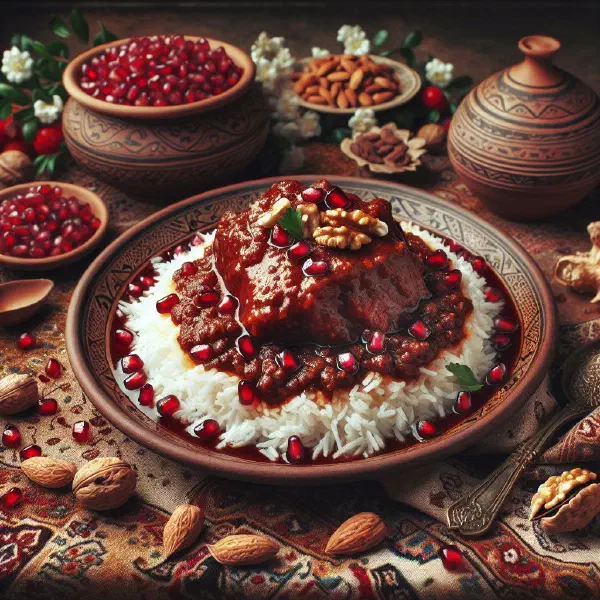
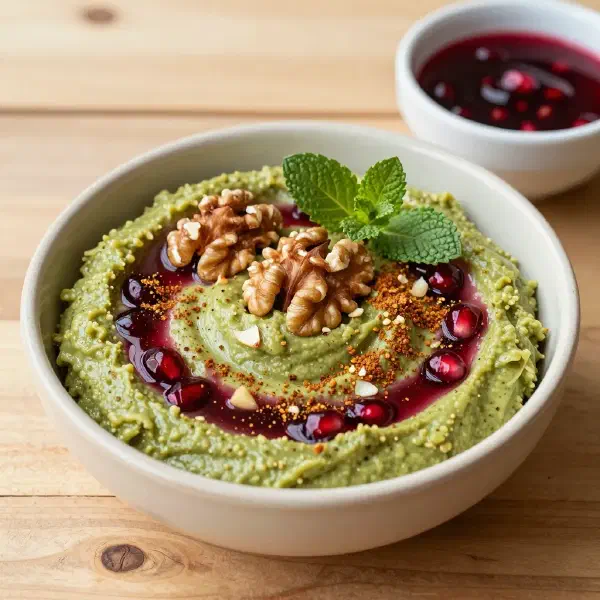
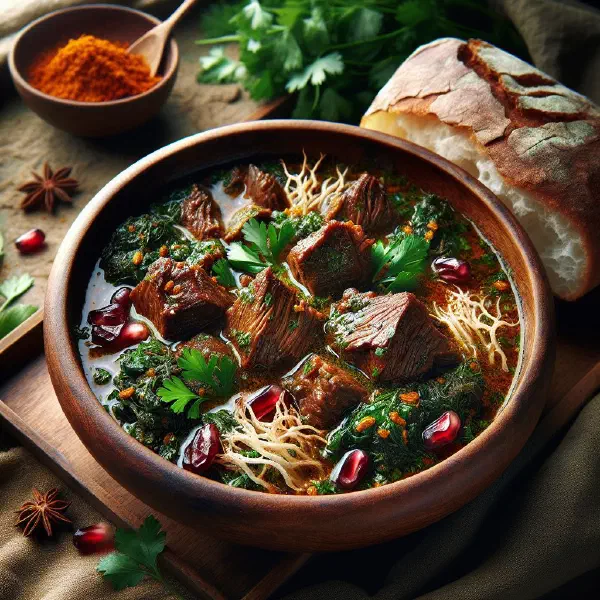
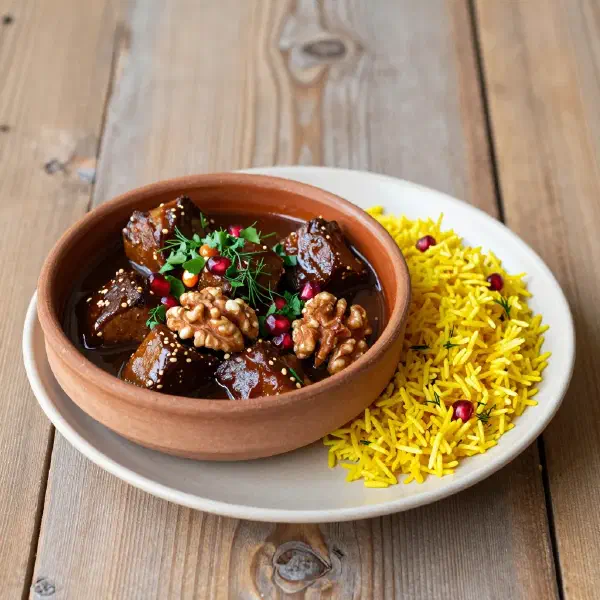
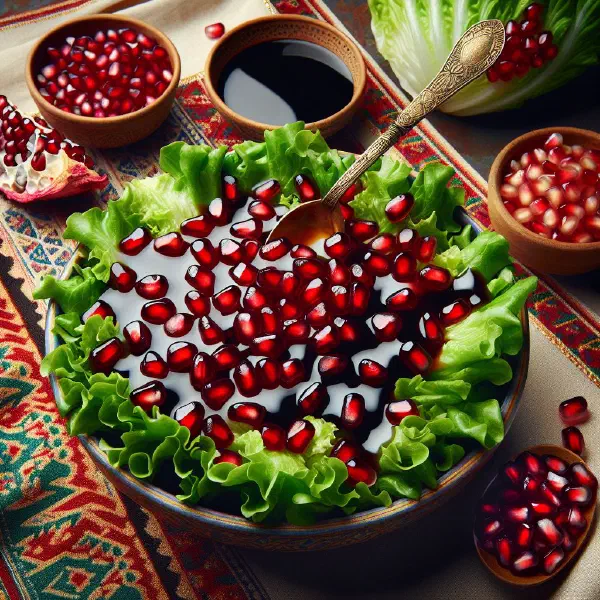
Pomegranate molasses tastes strongly sour, fruity and slightly bitter, with the sweetness in the background. One tablespoon is often enough for a whole pan. The best-known dish is Persian Fesenjan, a braise of ground walnuts, pomegranate molasses and chicken or duck. Also from Iran is Zeytoon Parvardeh, green olives in a paste of walnuts, herbs and pomegranate molasses. In the Levant it goes into muhammara and often into the dressing for fattoush. It also suits Pkhali, the Georgian vegetable dish with walnut paste. Beyond that, it works in marinades for lamb or chicken, drizzled over fried aubergines and in place of vinegar in salad dressings. On the grill it caramelises quickly and burns easily, so brush it on only in the last few minutes.
Buying pomegranate molasses: what to look for
You can buy pomegranate molasses at Turkish, Persian and Arab grocers, and increasingly in the world foods aisle of larger supermarkets or online. Read the ingredients list. A good product contains only pomegranate or pomegranate juice concentrate. Products labelled nar ekşili sos, on the other hand, are a sauce with some pomegranate in it and often contain glucose syrup and citric acid. They taste flatter and sweeter. A good molasses is dark ruby red to brown and runs slowly off the spoon.
Storage and shelf life
Unopened, pomegranate molasses keeps for a long time; go by the best-before date. Once opened, keep the bottle in the fridge. Sugar and acidity preserve it, and it stays good there for several months. If it becomes very thick or crystals form around the neck of the bottle, stand the bottle in warm water for a few minutes. If it smells fermented or shows mould, throw it away.
What can you use instead of pomegranate molasses?
For 2 tbsp pomegranate molasses, mix 1 tbsp balsamic vinegar, 1 tbsp lemon juice and 1 tsp honey. That gets the acidity and sweetness roughly right, but the fruitiness is missing. Closer to the real thing is reducing juice yourself. Boil 250 ml pure pomegranate juice with no added sugar and 1 tbsp lemon juice in an open pan until about 60 ml is left and it flows off the spoon like syrup. For fesenjan it is still worth buying the real thing, because there the molasses carries the whole dish.