Quinoa: What It Is, How to Use It and Substitutes
What is quinoa?
Quinoa (Chenopodium quinoa) belongs to the amaranth family and is related to amaranth and spinach, not to wheat or rice. That is why it is called a pseudo-grain. The plant grows in the Andean highlands at more than 3,500 metres, where maize barely thrives. For the Andean peoples it was a staple food. Today most of the crop comes from Peru and Bolivia. The small round seeds are coated in saponins, bitter compounds that protect the plant from birds. Quinoa sold in shops has usually already been washed or polished. Quinoa contains more protein than most cereals and all the essential amino acids, along with magnesium and iron. It contains no gluten. The United Nations declared 2013 the International Year of Quinoa.
Flavour and uses
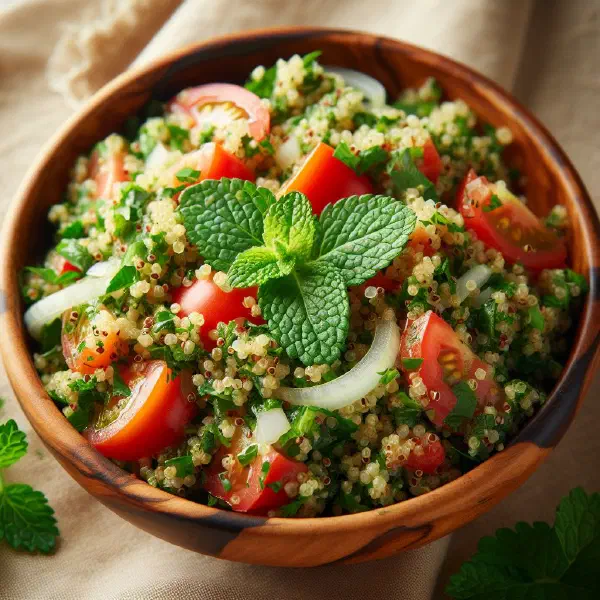
Cooked quinoa tastes mild and slightly nutty. The grains keep some bite, and during cooking a small white germ ring comes away, which is normal. Rinse the seeds in a fine sieve under running water before cooking so that no bitterness remains. Then cook 1 part quinoa with 2 parts water or stock for about 15 minutes and leave it covered for 5 minutes to steam. In Peru and Bolivia, quinoa goes into soups and stews, such as Bolivian Quinoa Soup. Outside the Andes it is often used like couscous or bulgur, in salads, as a side dish or as a filling for peppers. Toasted, it turns crunchy and makes a good topping.
Buying quinoa: what to look for
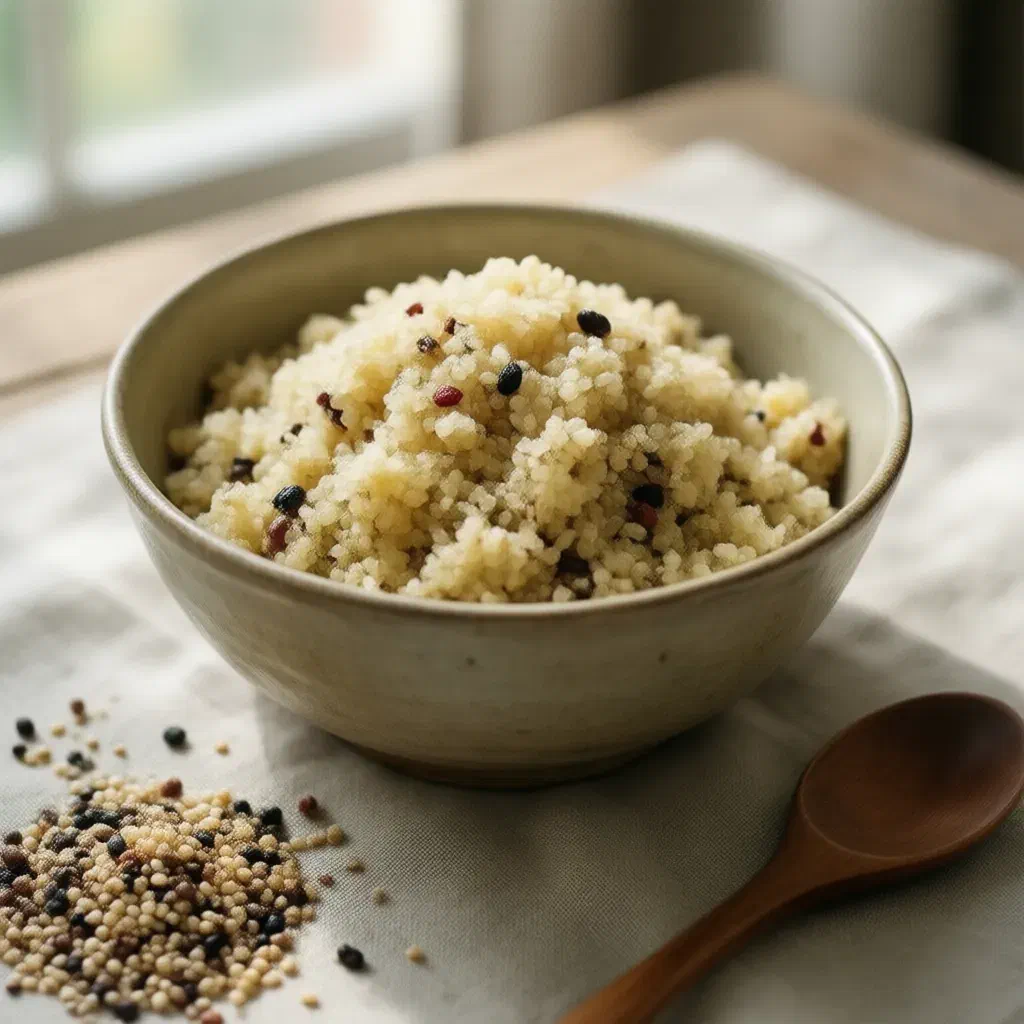
Most supermarkets and health-food shops now stock quinoa. There are three common types. White quinoa is the mildest and cooks fastest. Red quinoa stays firmer and looks good in salads. Black quinoa has the most bite and tastes slightly earthier. Mixes of all three are also common. If you are cooking for someone with coeliac disease, look for a ‘gluten-free’ label, as quinoa is sometimes processed in facilities that also handle wheat. Puffed quinoa and quinoa flakes are meant for breakfast cereals and muesli.
Storage and shelf life
Kept dry, dark and well sealed, uncooked quinoa lasts one to two years. A screw-top jar protects it from pantry moths. Cooked quinoa stays fresh in the fridge for three to four days. You can also freeze it in portions, and it then keeps for about two months. Let it cool completely first.
What can you use instead of quinoa?
For gluten-free dishes, millet is the obvious substitute. Use the same amount with 2½ parts water, and cook it for about 15–20 minutes. Amaranth is also gluten-free but turns softer. If gluten is not an issue, replace 100 g quinoa in a salad with 100 g bulgur or couscous. In soups, pearl barley or rice also work, though the cooking time will be longer depending on the type.