Taro: What It Is, How to Use It and Substitutes
What is taro?
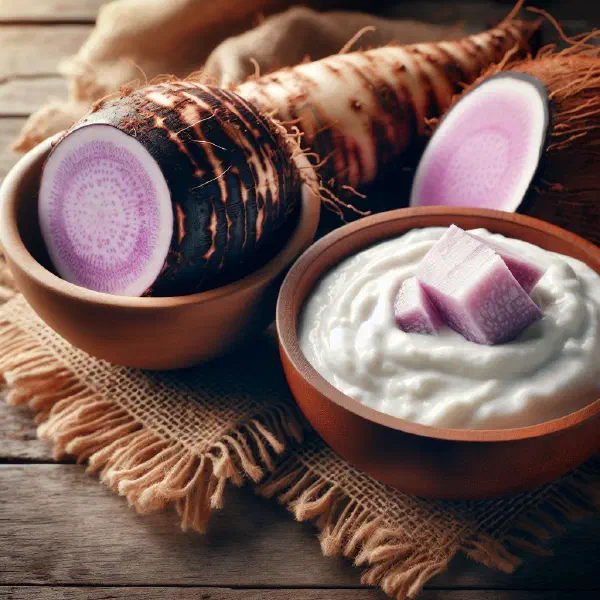
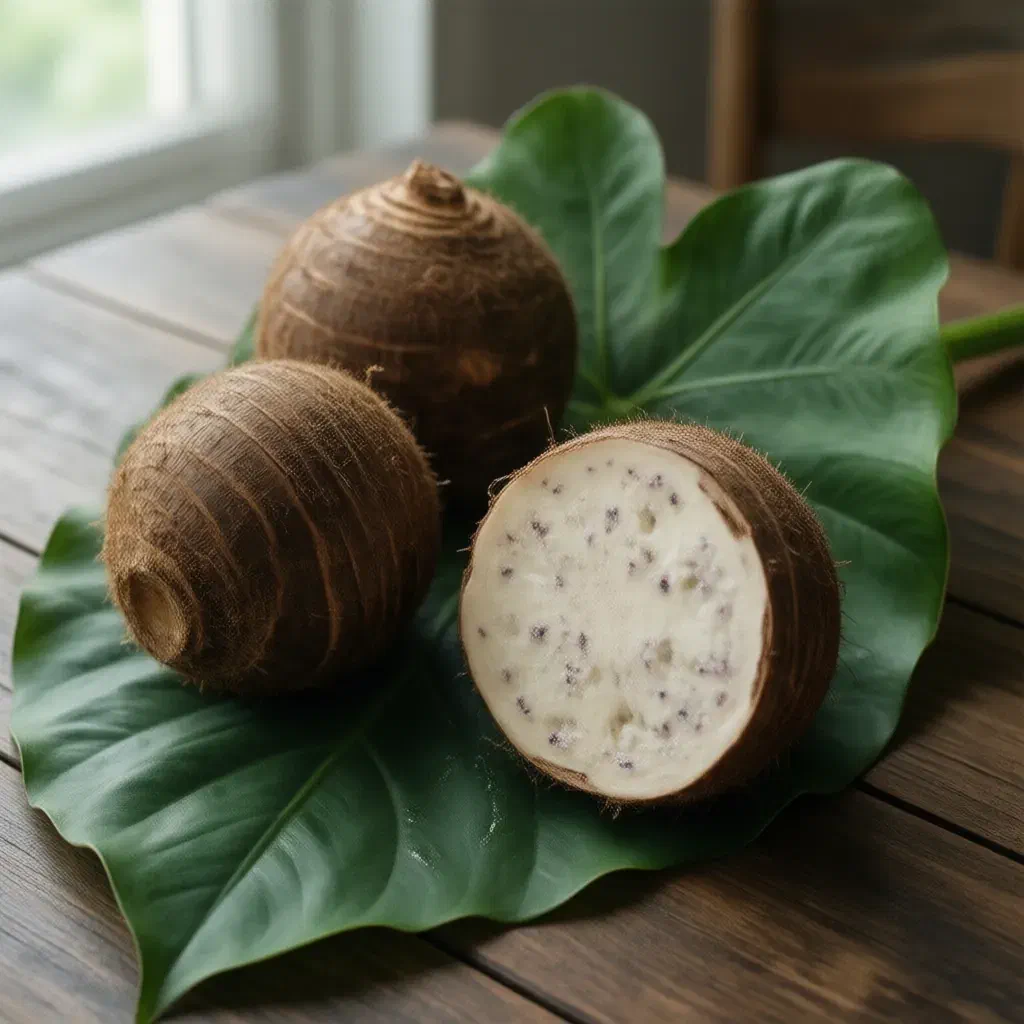
Taro, botanically Colocasia esculenta, belongs to the arum family and probably comes from South and South East Asia. From there the plant travelled early on to the Pacific and Egypt, and later via West Africa to the Caribbean. The root has a brown, fibrous, ringed skin and white to cream flesh, often with fine purple specks. Its name changes from region to region: dalo in Fiji, talo in Samoa, qolqas in Egypt, dasheen in the Caribbean and gölevez in Turkey. Both root and leaves contain fine crystals of calcium oxalate. Raw, they irritate the mouth and throat, and only thorough cooking makes taro easy to eat. At least 20 minutes of cooking is a good rule of thumb.
Flavour and uses
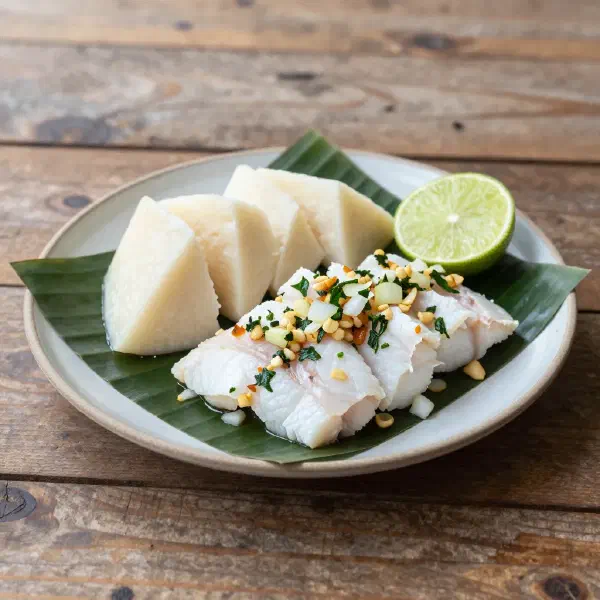
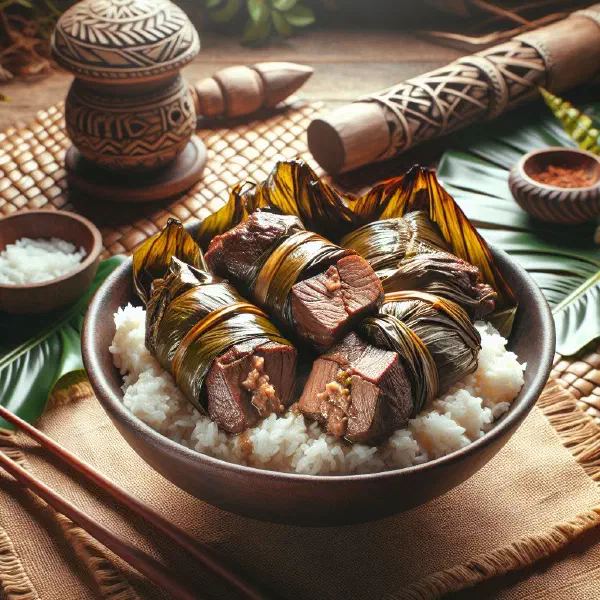
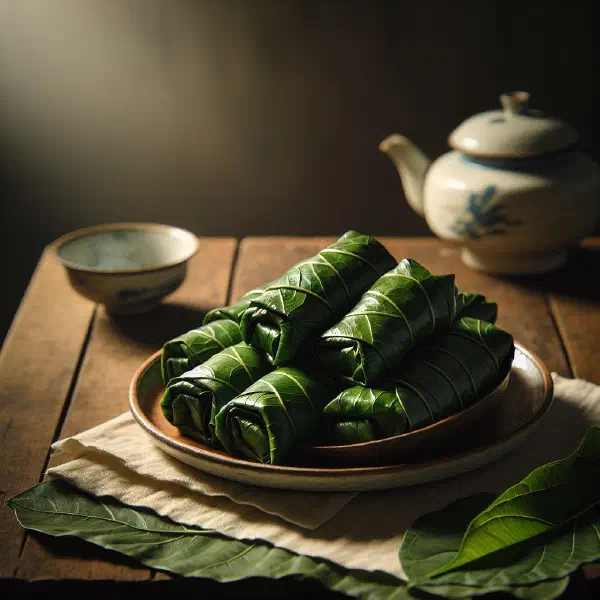
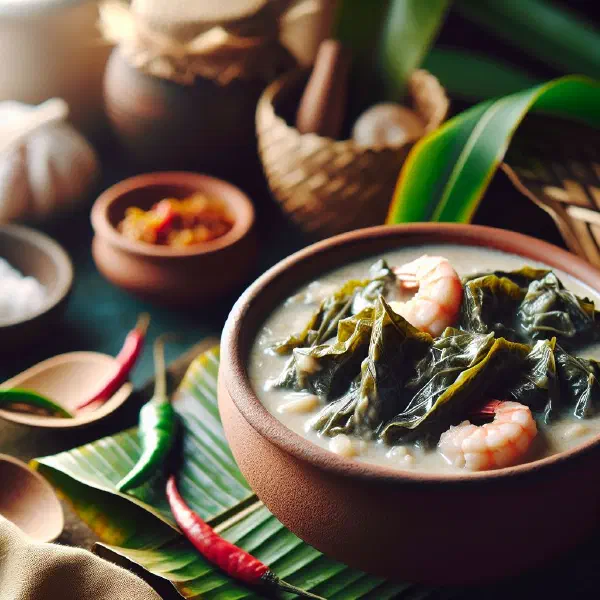
Cooked taro tastes mild, slightly sweet and nutty, with a texture somewhere between potato and sweet chestnut. It turns a little slimy as it cooks, like okra, which helps to thicken soups. In the Pacific it is cooked in coconut cream, as in Taro Dumplings in Coconut Cream from Fiji. In Egypt it is simmered in broth with chard, garlic and coriander as Qolqas. The leaves are a vegetable in their own right. In Samoa they are filled with coconut cream and onions and cooked as Palusami, and in Trinidad they are the basis of callaloo. Wear gloves when peeling, as the juice can make your skin itch.
Buying taro: what to look for
You will find taro in Asian, African and Caribbean grocers, and in Turkish shops under the name gölevez. Shops sell both large roots and small round eddoes. The small ones cook faster and are creamier. The roots should be firm and heavy, with no soft spots and no mould at the stem end. Fresh taro leaves can be hard to find, but Asian grocers sell them dried or frozen. Both work for laing and palusami, dried leaves just need longer in the coconut milk.
Storage and shelf life
Store whole taro roots somewhere cool, dry and dark, not in the fridge. That way they keep for about one to two weeks. Peeled taro discolours in the air and should be cooked soon. Cooked pieces keep for two to three days in the fridge and freeze well.
What can you use instead of taro?
For 400 g taro, use 300 g waxy potatoes and 100 g sweet potato. That captures the slightly sweet, nutty note quite well. You lose the slimy thickening, but in soups a teaspoon of cornflour helps. Replace the leaves with chard or leaf spinach, which need much less cooking, about five minutes instead of twenty.