Tempeh: What It Is, How to Use It and Substitutes
What is tempeh?
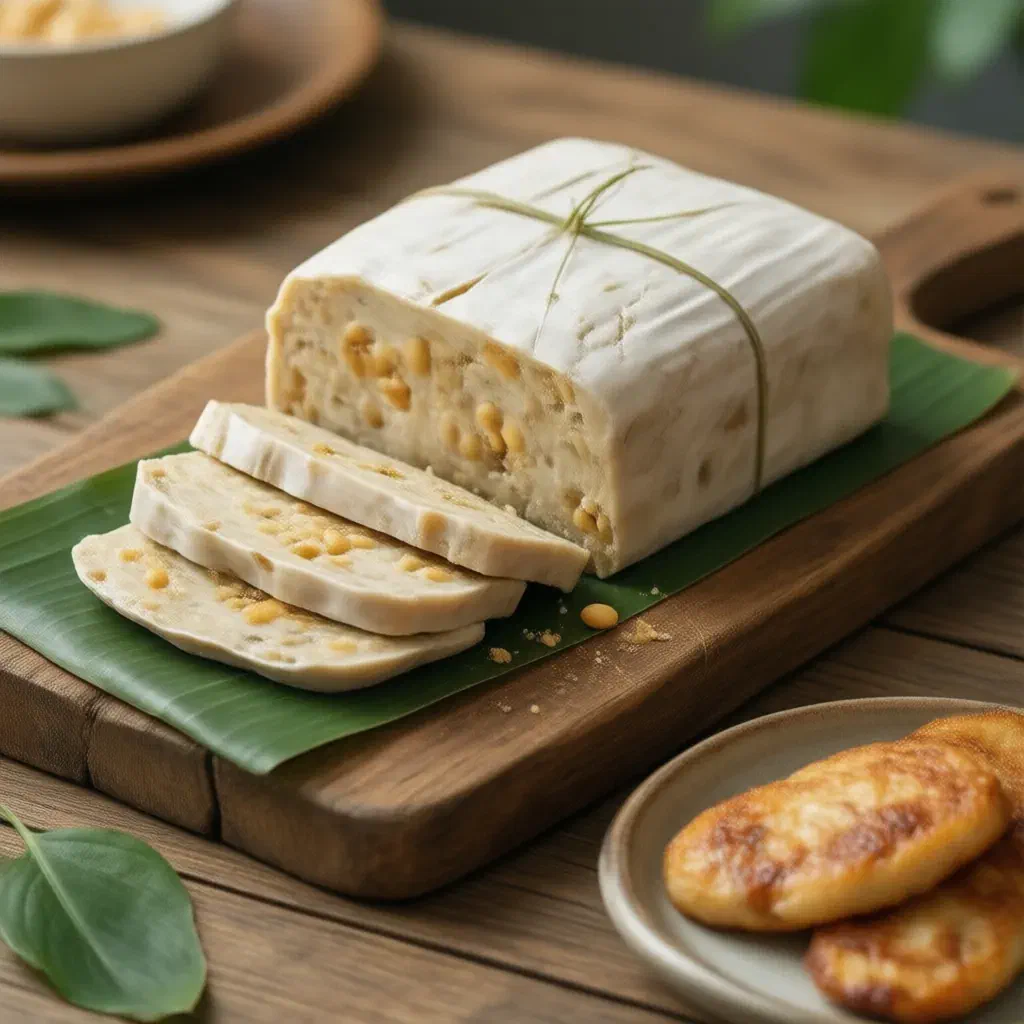
To make tempeh, soya beans are soaked, hulled and cooked. They are then inoculated with spores of an edible mould of the genus Rhizopus. At around 30 °C the mould grows through the beans in one to two days and binds them with a white web into a compact block. In Indonesia the beans used to be wrapped in banana leaves, today mostly in perforated plastic. Unlike tofu, tempeh keeps the whole beans. That gives it more fibre and a grainy, firm texture. Tempeh has been part of everyday Javanese cooking for centuries. In Europe it is most common in the Netherlands, the former colonial power in Indonesia.
Flavour and uses
Raw tempeh tastes slightly bitter, of button mushrooms. The nutty flavour only develops when you fry it. Cut it into slices or cubes and steam it for ten minutes first, then it takes up marinades better and loses its bitterness. In Java tempeh is cooked with coconut water, palm sugar and coriander until it is sweet and glossy dark, then fried. The recipe is called Tempe Bacem. Sliced paper thin and fried until crisp, it becomes Tempeh Crisps, known as keripik tempe. In Malaysia it comes to the table with tofu in a spicy sauce, see Tahu Tempe. Crumbled, it also works in a Bolognese sauce or in fillings.
Buying tempeh: what to look for
You can buy tempeh in health-food shops and, more and more, in the chiller cabinet of supermarkets. Asian grocers stock fresh and frozen tempeh from Indonesia or the Netherlands. Good tempeh is firm, evenly coated in white and smells freshly of mushrooms. The odd grey or black patch is spores and harmless. Besides plain soya tempeh there are versions made from chickpeas, lupins or other beans, as well as smoked tempeh.
Storage and shelf life
Packaged, pasteurised tempeh keeps in the fridge until its best-before date. Once opened, use it within three to four days and wrap it in cling film. If it smells of ammonia or turns slimy, it has gone off. Tempeh freezes well and then keeps for several months. Thaw it overnight in the fridge.
What can you use instead of tempeh?
Instead of 200 g tempeh, use 200 g firm tofu. Press it for 20 minutes and fry it hard so that it takes on colour. Smoked tofu comes close to the flavour of smoked tempeh. For crumbled fillings, 150 g cooked brown lentils with 50 g chopped walnuts work well. Seitan has a good bite, but it is not gluten-free.