
Wakame: What It Is, How to Use It and Substitutes
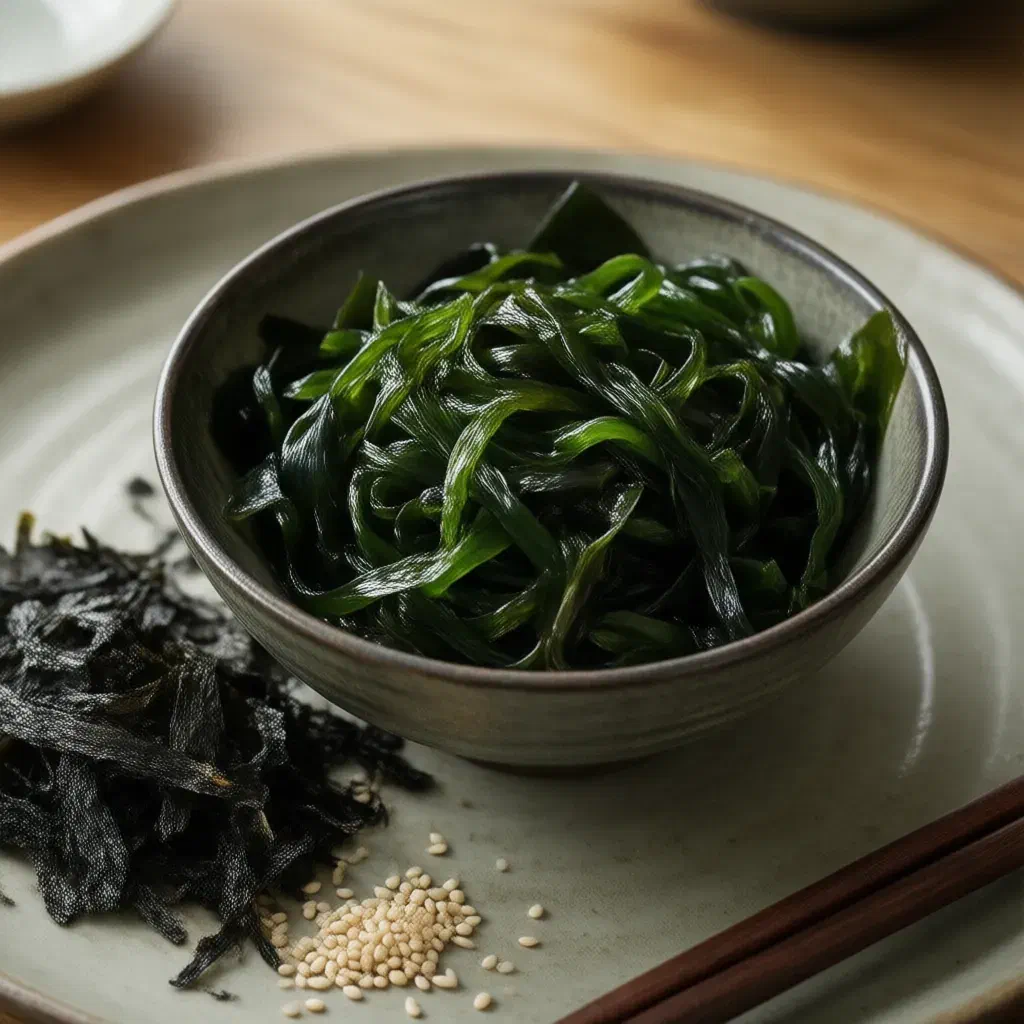
What is wakame?
Wakame (Undaria pinnatifida) is a brown seaweed with broad, lobed fronds that grows on rocks and on marine farms. Japan, Korea and China cultivate it on a large scale on ropes. In Korea it is called miyeok. After harvesting it is briefly blanched and then dried or salted. In shops you will mostly find dried, finely cut pieces. Wakame swells a lot when soaked, and one teaspoon of the dried seaweed is enough for a bowl of soup. Wakame contains minerals and iodine. The iodine content of dried seaweed varies widely, so buy products that state the iodine content and a recommended serving. Wakame usually contains much less iodine than kombu.
Flavour and uses
Wakame tastes mildly salty and of the sea, with a slight sweetness, and has a soft, somewhat slippery texture. The central rib stays crisper. In miso soup it goes into the hot dashi together with tofu and spring onions. In Korea it is used for Miyeok Guk, a soup traditionally served on birthdays and to women after giving birth. For a Japanese cucumber salad (sunomono), mix soaked wakame with cucumber slices, rice vinegar, a little sugar and sesame. Soak dried pieces in cold water for five to ten minutes and squeeze them out. Do not cook wakame for long, or it turns slimy. In soups one minute is enough.
Buying wakame: what to look for
You can buy dried wakame from Asian grocers, health-food shops and the world food aisle of larger supermarkets, usually in bags of 50 to 100 g. Pre-cut wakame saves work. Check the origin and the information on iodine content. Salted wakame from the chiller tastes fresher but must be rinsed thoroughly. Ready-made bright green seaweed salad is usually dressed with colouring, sugar and sesame oil. For soups and your own salads, the dried seaweed is the better buy.
Storage and shelf life
Dried wakame keeps for one to two years in an airtight container, stored somewhere dry and dark. Moisture makes it soft and lumpy. Leftover soaked wakame keeps in a container in the fridge for one to two days. Salted wakame keeps in the fridge for a few weeks; check the date on the pack.
What can you use instead of wakame?
In miso soup, replace 1 tsp dried wakame with half a sheet of nori cut into thin strips. Put the strips straight into the bowl, as nori falls apart quickly in hot broth. For salads, sea spaghetti or dulse from a health-food shop works, 5 g dried per portion. If you do not like seaweed, use a handful of young spinach leaves, which wilt quickly in the soup. A splash of dashi then brings the taste of the sea.