National Dish Algeria: Borek (Recipe)

In this article
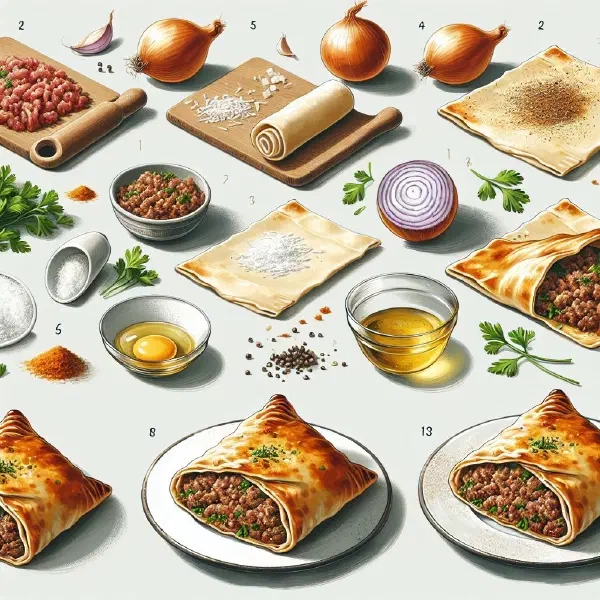
Discover Borek, a crisp North African pastry that has become a firm favourite across Algeria and the wider Mediterranean. Delicate sheets of filo are wrapped around a savoury filling of tender meat, fresh vegetables or tangy cheese, then baked until golden and shatteringly crisp. Endlessly adaptable and always satisfying, borek makes a wonderful snack, an appealing starter or the centrepiece of a shared table. Bring the flavours of North Africa straight into your own kitchen.
About Borek
Borek is a traditional dish from North Africa that is especially popular in Algeria and other Mediterranean countries. It is a delicious pastry made from crisp filo dough wrapped around a variety of fillings. Typical choices include tender minced meat, fresh vegetables or tangy cheese, and this sheer variety is what makes borek such a versatile bite. It suits almost any occasion and never fails to please.
Ingredients (serves 1–2)
- 200g filo pastry
- 150g minced meat (beef or lamb)
- 1 small onion, finely chopped
- 1 carrot, grated
- 100g feta cheese, crumbled
- 1 egg, beaten
- 2 tablespoons olive oil
- Salt and pepper to taste
Shopping for the ingredients
When shopping for the ingredients for borek, it is worth choosing fresh, good-quality produce. The filo pastry should be thin and crisp to guarantee the perfect texture, and the minced meat should be of a decent grade to bring out the fullest flavour. For the vegetables, regional and seasonal choices are not only tastier but kinder to the environment too. A little care at this stage pays off in the finished dish.
Preparing the dish
Before you start assembling borek, it helps to have all your ingredients ready to go. That means washing and chopping the vegetables and seasoning the meat well ahead of time. Handling the filo pastry calls for a gentle touch, as the sheets tear easily. A useful tip is to brush the dough with a little olive oil, which makes it richer and even crisper once baked.
Step-by-step instructions
- Preheat the oven to 180°C and line a baking tray with baking paper.
- Heat the olive oil in a pan and sauté the onion until translucent.
- Add the minced meat and brown it until cooked through.
- Stir in the grated carrot and the crumbled feta and cook briefly.
- Lay out the filo pastry and brush it with olive oil.
- Spread the filling over the dough, then roll it up or fold it into triangles.
- Place the borek on the baking tray and brush with the beaten egg.
- Bake for around 25–30 minutes, until golden brown.
Gluten-free / lactose-free version
For a gluten-free borek, swap the filo for one of the special gluten-free pastry products now stocked in many supermarkets. For a lactose-free version, replace the feta with a lactose-free cheese, or reach for one of the plant-based alternatives that offer a similar taste and texture. These simple adjustments mean borek can be enjoyed by anyone with particular dietary needs, without losing any of its appeal.
Tips for vegans and vegetarians
If you would like to make borek vegan or vegetarian, the filling is easy to adapt. In place of minced meat, try chopped mushrooms, courgettes or peppers for a hearty, meat-free result. A generous hand with spices and herbs gives the filling real depth, while plant-based cheese alternatives work beautifully wrapped inside the crisp pastry. The same versatile approach shines in an aubergine-rich Zaalouk.
More tips and tricks
A few tips and tricks go a long way when making borek. Covering the filo with a damp cloth stops it drying out while you work. Take care not to overfill the pastry, so that folding stays quick and neat. Another nice touch is to brush the borek with a little olive oil once it comes out of the oven, adding extra moisture and flavour to every crisp bite.
Adapting the recipe to your taste
The filling for borek is wonderfully easy to tailor to your own preferences. You might experiment with different cheeses or add extra spices to vary the flavour to your liking. Popular additions include parsley, mint or a pinch of paprika.
Ingredient substitutions
If you find yourself without certain ingredients, there are usually good alternatives to hand. In place of minced meat, lentils or quinoa create a protein-rich, satisfying filling, while ricotta makes a fine stand-in for feta. Substitutions like these offer interesting variety and help you tailor borek to different tastes, much as you might tweak the filling of a Brik A Loeuf.
Drink pairing ideas
Borek pairs beautifully with light drinks such as mint tea or a fruity cider, both of which complement the savoury pastry. A well-chilled rosé or a light wheat beer also work wonderfully. For an alcohol-free option, sparkling mineral water with a squeeze of lemon is wonderfully refreshing. Any of these choices rounds out the enjoyment of borek perfectly.
Serving and presentation ideas
Presentation can make all the difference to the borek experience. Serve the pastries on an attractive plate, perhaps with a fresh salad or a cooling yoghurt sauce alongside. A scattering of fresh herbs adds a bright, appetising finish, while a colourful medley of steamed vegetables makes a lovely accompaniment. Little details like these turn a simple snack into a proper spread.
A bit of history
The roots of borek reach far back and can be traced across many cultures of the Mediterranean. The dish is thought to have originated in Ottoman cuisine before spreading to neighbouring countries. In Algeria it has grown into a much-loved snack, often served at celebrations and special occasions. The pairing of pastry and filling has given rise to countless regional variations, each as delicious as the next, a hallmark of Algerian cuisine.
More recipe ideas
Summary: Borek
Borek is a versatile and delicious dish that can be prepared with all manner of fillings. Vegetables or cheese, there is a version for everyone. It is straightforward to prepare and endlessly adaptable to personal taste. With the right ingredients and a little creativity, you can bring the aromatic flavours of North Africa straight into your own kitchen.