National Dish Algeria: Couscous (Recipe)
In this article
Couscous is not really one dish. It is a method: steamed semolina under whatever the season and the household allow. Algeria eats it on Fridays, at weddings, and at funerals, and the version below is the everyday vegetable one that most kitchens actually make on a weeknight.
About Couscous
Couscous is the national dish of Algeria and of the whole Maghreb, and UNESCO listed the knowledge and practices around it as intangible heritage in 2020, jointly for Algeria, Morocco, Tunisia and Mauritania. The grain itself is rolled semolina. Traditionally it is steamed three times over the pot of stew below, which is what gives it the light, separate texture that no amount of boiling water will reproduce.
The recipe here is the quick version, using pre-steamed couscous from a packet. It takes fifteen minutes and it is honest about being a shortcut.
Ingredients (serves 1–2)
- 200 g couscous
- 250 ml vegetable stock or water
- 1 medium onion, diced
- 1 carrot, diced
- 1 pepper, diced
- 50 g chickpeas (cooked)
- 1 tsp cumin
- 1 tsp paprika
- 2 tbsp olive oil
- Salt and pepper to taste
Shopping for the ingredients
Almost all couscous sold in Europe is pre-steamed, which is why it needs only soaking. Medium grain is the standard; fine grain turns to paste and coarse grain needs real steaming. Buy cumin whole and grind it if you can, since it is doing most of the flavouring work here. Tinned chickpeas are fine.
Preparing the dish
Measure the liquid exactly. The ratio that matters is roughly 1.25 parts liquid to 1 part couscous by volume, and going over it is how couscous turns to mush. Dice the vegetables small so they cook in the five minutes the recipe gives them.
Step-by-step instructions
- Heat 2 tablespoons of olive oil in a pan and sauté the onion until translucent.
- Add the diced vegetables and the chickpeas and fry everything for about 5 minutes.
- Pour in the vegetable stock or water and bring it to the boil.
- Scatter the couscous into the pan, stir briefly, then take the pan off the heat.
- Cover the pan and let the couscous swell for 5–10 minutes.
- Fluff the couscous with a fork and serve warm with spices and herbs of your choice.
Gluten-free / lactose-free version
Couscous is wheat semolina, so it contains gluten. There is no way around that. What works instead is millet, sorghum or fonio, all of which are steamed the same way across West and North Africa, or the widely sold maize couscous. The dish contains no dairy at all, so it is lactose-free as it stands.
Tips for vegans and vegetarians
This version is already vegan. That is not a compromise: vegetable couscous is a standard Algerian dish in its own right, eaten during fasting and on ordinary days, and the meat versions are the special-occasion ones rather than the default.
More tips and tricks
Fluff with a fork and not a spoon, working from the edges in, or the grains compact. Add the olive oil to the couscous rather than the water if you want it looser. And if you have twenty minutes to spare, steam it properly in a sieve over the vegetables instead of soaking it. The difference in texture is larger than the extra effort suggests.
Adapting the recipe to your taste
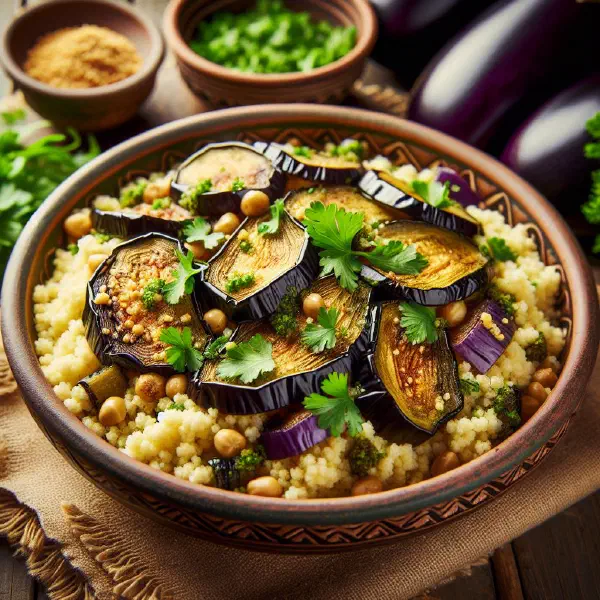
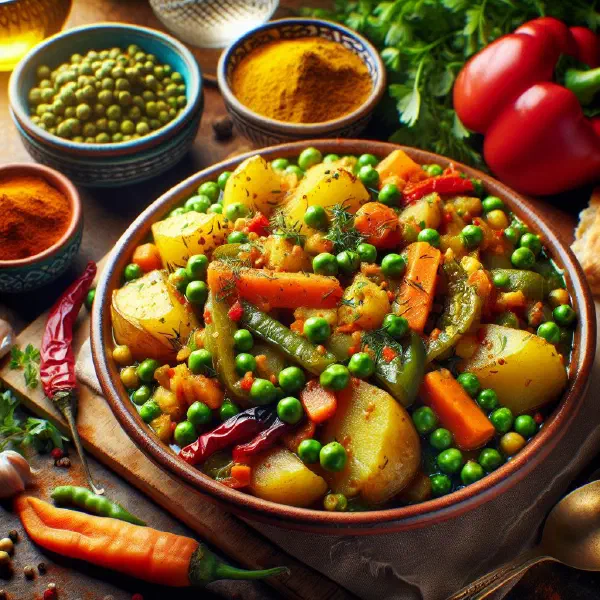
Courgette, turnip and pumpkin are the classic additions, cooked in the broth rather than fried. Harissa on the side lets everyone set their own heat. Raisins and a pinch of cinnamon make the sweeter style eaten in the west of the country, which divides opinion sharply.
Ingredient substitutions
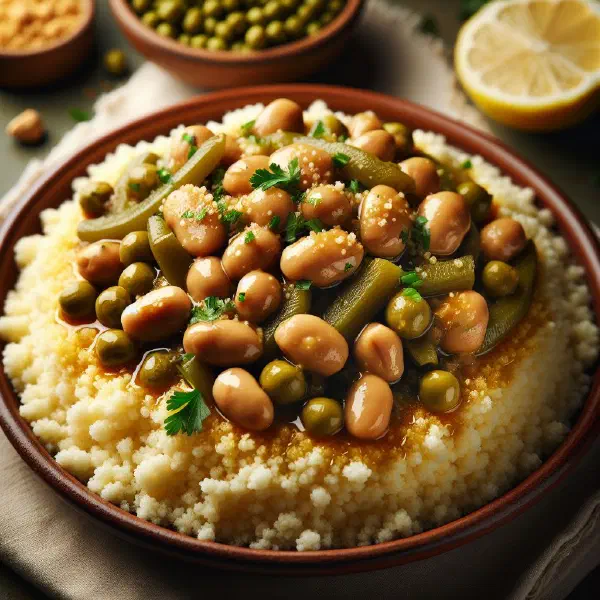
Chickpeas can be swapped for broad beans or lentils. Ras el hanout replaces the cumin and paprika with more complexity. Chicken or lamb stock in place of vegetable stock gives a fuller flavour if you are not keeping it vegan.
Drink pairing ideas
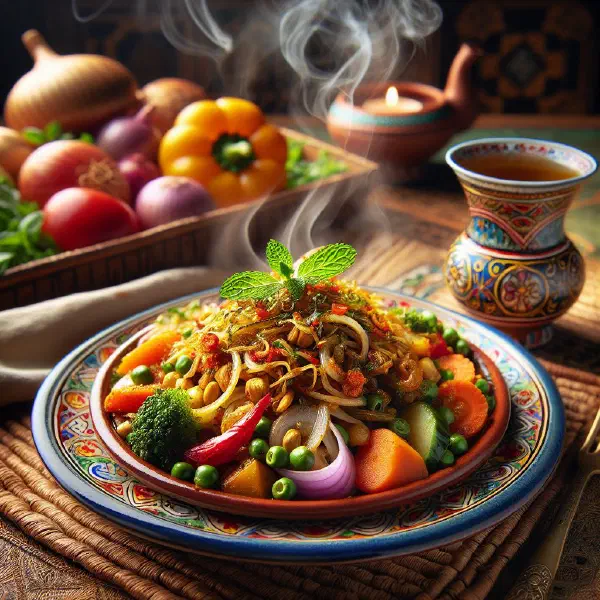
Mint tea, poured from a height, follows the meal rather than accompanying it. Leben, the thin fermented milk drink, is the traditional partner at the table. Algerian wine exists and the reds from Mascara handle spiced food well.
Serving and presentation ideas
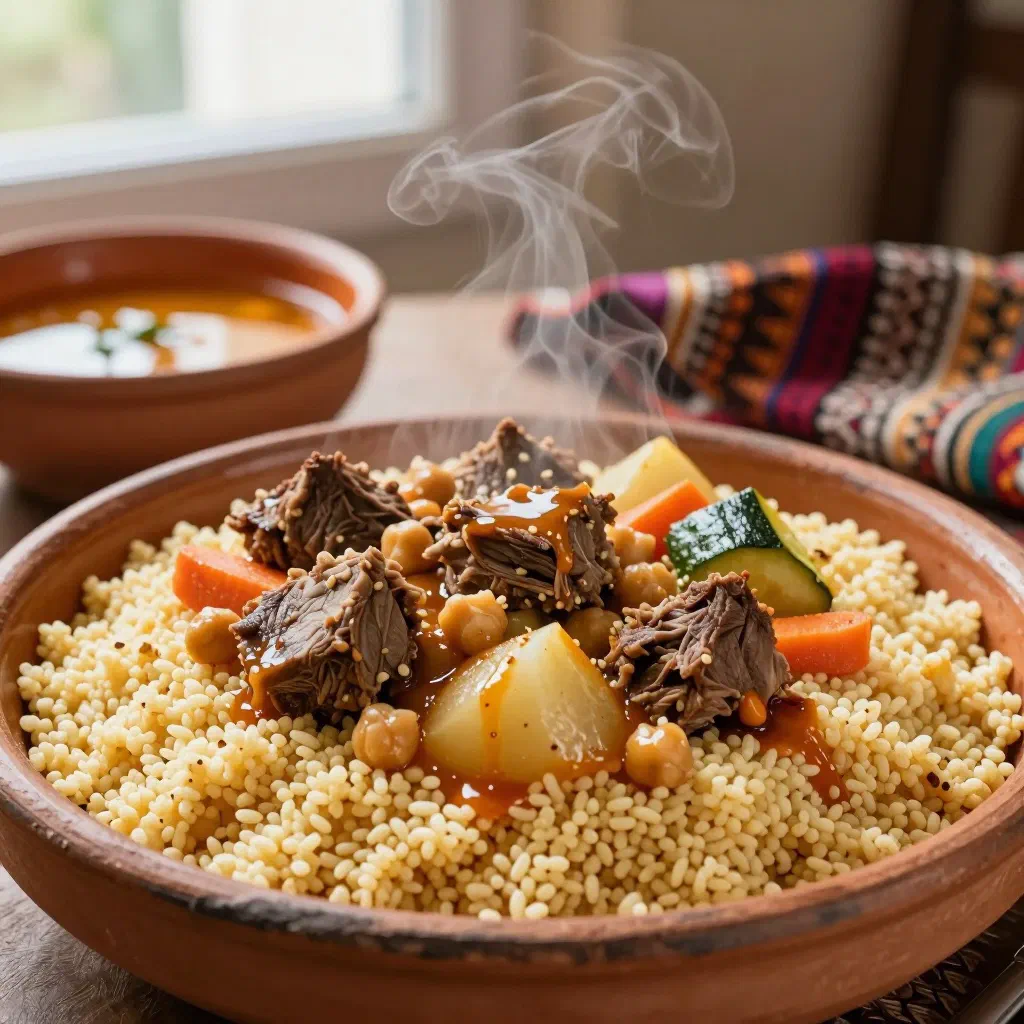
Pile the couscous in a wide shallow dish, make a well in the middle, and spoon the vegetables and broth into it. Everyone eats from the same platter. Serve extra broth in a jug, because the grain drinks it and the second helping needs more. Harissa belongs on the table in a small bowl.
A bit of history
Couscous is old. Cooking vessels that look like couscoussiers turn up in Berber archaeological sites from the ninth century, and the dish predates Arab arrival in North Africa. It remains the centre of Algerian cuisine, with regional versions running from the lamb couscous of the north to the broad bean version of the interior and the sweet milk couscous eaten for breakfast.
More recipe ideas
Summary: Couscous
Couscous is steamed semolina served under vegetables and broth. Keep the liquid ratio honest, fluff with a fork, and put harissa on the table so everyone can set their own heat.