National Dish Angola: Bebida de Bombó (Recipe)

In this article
Bebida de Bombó is what happens when grated cassava sits in water for a few days: a cloudy, faintly sour, lightly fizzing drink with barely any alcohol in it. Angolan households have made it for generations, sweetened to taste and sharpened with lime, and it is served at gatherings the way lemonade is elsewhere.
About Bebida de Bombó
Bebida de Bombó is a traditional fermented drink made from grated cassava, prepared in Angola for generations. Several days of fermentation in water produce a lightly sour, gently sparkling drink, usually rounded out with a little sugar. It is refreshing, very low in alcohol and made for sociable occasions, the household equivalent of a soft drink, brewed in a covered pot on the kitchen floor.
Ingredients (serves 1–2)
- 300 g fresh cassava, peeled and grated
- 800 ml water
- 2–3 tablespoons sugar, to taste
- Juice of ½ lime
- Ice cubes, to serve
Shopping for the ingredients
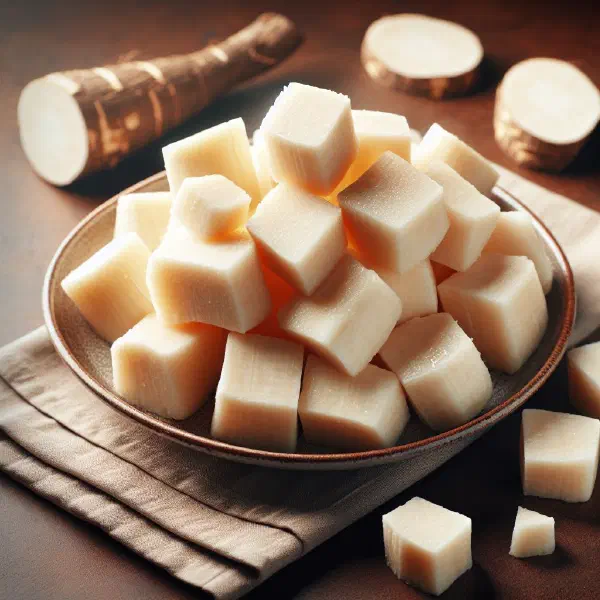
Buy firm cassava with unblemished flesh, cut into it and any grey or black streaking means it is past its best. Bitter cassava varieties must not be used raw; the sweet variety sold in European and African grocers is the right one, and it should still be peeled thoroughly and the woody core removed.
Preparing the dish
Peel the cassava completely, including the pink layer under the bark, and cut out the fibrous central core. Grate it coarsely. Use a clean glass or ceramic vessel for the fermentation and cover it with cloth rather than a lid, so gases escape and dust stays out.
Step-by-step instructions
- Peel the cassava thoroughly and remove the woody core.
- Grate it coarsely into a clean bowl.
- Cover with the water and stir well.
- Cover with a cloth and leave at room temperature for 2–3 days, stirring once a day.
- It is ready when it smells pleasantly sour and shows fine bubbles.
- Strain through a fine sieve or muslin, pressing the pulp.
- Sweeten to taste and stir in the lime juice.
- Chill thoroughly and serve over ice.
Gluten-free / lactose-free version
The drink is naturally free of gluten, lactose and everything else, cassava, water, sugar and lime. No adaptation is needed for any dietary restriction.
Tips for vegans and vegetarians
Bebida de Bombó is vegan by definition. Nothing in it comes from an animal, and the fermentation relies on wild yeasts and bacteria already present on the root.
More tips and tricks
Use only sweet cassava and peel it properly. This matters more than any other step, since cassava skin and the bitter varieties contain compounds that must be removed. Taste it daily; two days gives a mild drink, four gives a distinctly sour one. And keep it cold once strained, as fermentation continues in the fridge.
Adapting the recipe to your taste
Ginger added to the ferment is common and gives a warming bite. Pineapple skins speed the fermentation and add fruitiness. A longer ferment produces something closer to the beer-like ualende drunk in the Angolan interior.
Ingredient substitutions
Maize or millet can be fermented by the same method. These produce the related drink kissangua. Lemon substitutes for lime. Honey or palm sugar can replace the sugar.
Drink pairing ideas
This is the drink, and in Angola it accompanies grilled food, espetada, roasted cassava, chicken from the coals. Nothing else is required alongside it.
Serving and presentation ideas
Serve bebida de bombó cold in tall glasses over plenty of ice, with a wedge of lime. It is cloudy by nature, so do not try to clarify it. At gatherings it comes to the table in a large jug and is poured continually.
A bit of history
Cassava arrived in Angola from Brazil with Portuguese ships in the sixteenth century and became the country’s staple crop, replacing older grains across much of the territory. Fermented cassava and grain drinks are made all across central Africa under many names, prepared by women in the household and drunk fresh. It offers a genuine window onto Angolan cuisine.
More recipe ideas
Summary: Bebida de Bombó
Bebida de Bombó is grated cassava fermented in water for a few days, then strained, sweetened and sharpened with lime. Peel the root properly, taste it daily, and serve it very cold.