National Dish Angola: Matapa (Recipe)
In this article
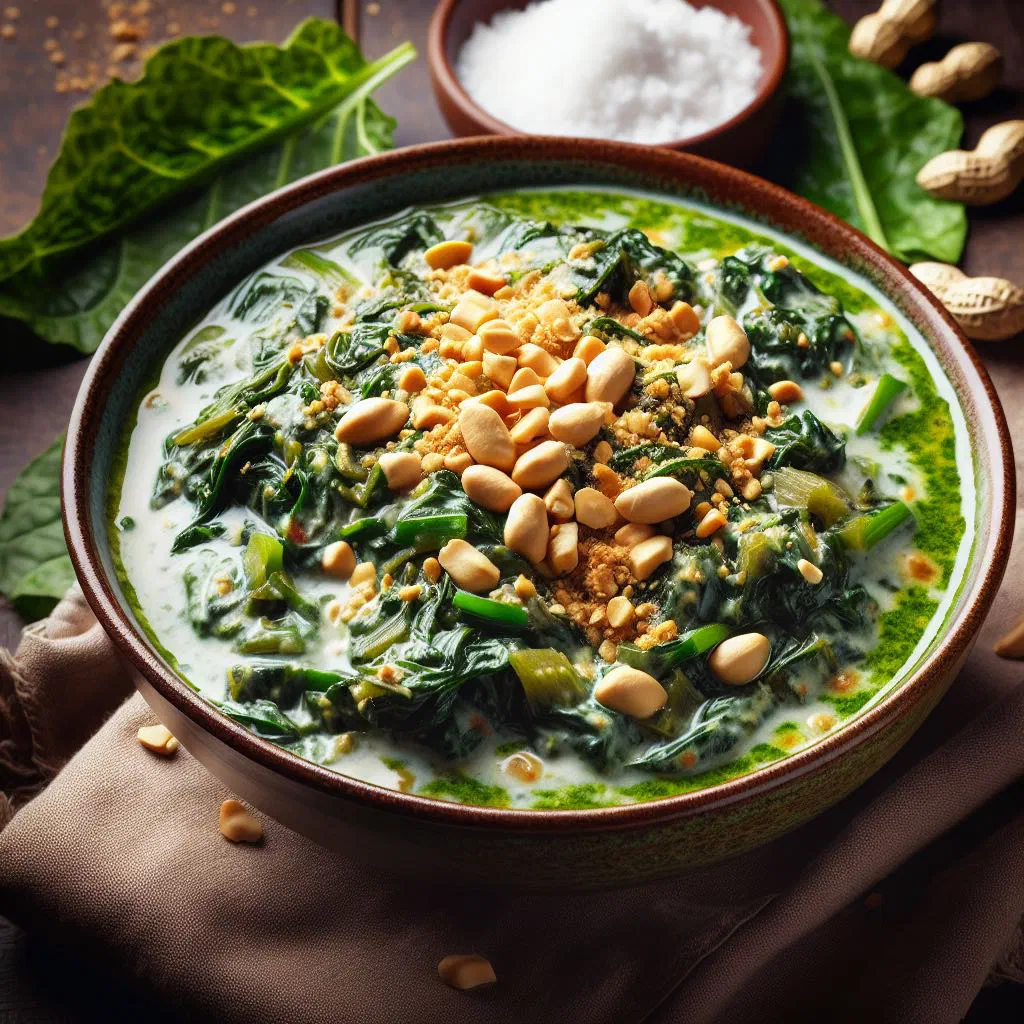
Meet Matapa, a rich, green stew that sits right at the heart of Angolan home cooking. Tender cassava leaves are simmered slowly with ground peanuts and coconut milk until the whole pot turns velvety and fragrant, then finished with fish or meat for a properly satisfying meal. It is generous, nourishing food, the sort of dish that appears at family gatherings and celebrations, and one that welcomes you to the table straight away.
About Matapa
Matapa is a traditional Angolan dish that reflects the culinary variety of the country. This delicious speciality is made mainly from cassava leaves, peanuts and coconut milk, which together give it a unique and deeply aromatic flavour. Matapa is often served with fish or meat, turning it into a nourishing and hearty meal. It is a wonderful expression of Angola’s warm hospitality and works beautifully for special occasions as well as relaxed family dinners.
Ingredients (serves 1–2)
- 300 g fresh cassava leaves
- 100 g peanuts, ground
- 200 ml coconut milk
- 1 onion, finely chopped
- 2–3 garlic cloves, crushed
- 400 g fish or meat, as you prefer
- Salt and pepper to taste
- 2 tablespoons vegetable oil
Shopping for the ingredients
To gather the ingredients for matapa, local markets and supermarkets are both good starting points. Bear in mind that fresh cassava leaves can be hard to track down in many regions, so it is often worth looking in a specialist African grocery. Peanuts and coconut milk are usually available in any well-stocked food aisle. The fresh elements such as fish or meat should be of good quality and ideally sourced locally, as this makes the biggest difference to the finished flavour.
Preparing the dish
Before you start cooking matapa, it pays to have everything prepared. The cassava leaves should be washed thoroughly and cut into small pieces. The peanuts need grinding in advance so they blend evenly into the sauce. It is also sensible to cut the fish or meat into bite-sized pieces so the cooking time stays manageable. Groundwork like this keeps the whole process running smoothly and lets the aromas come through at their best.
Step-by-step instructions
- Heat the vegetable oil in a large pan and add the chopped onion and the garlic. Fry until golden brown.
- Add the fish or meat and cook until done through.
- Now stir in the cassava leaves and mix everything together well.
- Add the ground peanuts and the coconut milk. Leave everything to simmer over medium heat until the leaves are tender.
- Season with salt and pepper and stir well until the dish reaches the consistency you want.
Gluten-free / lactose-free version
Matapa is naturally gluten-free and can also be made lactose-free, since coconut milk contains no lactose at all. For anyone with a gluten intolerance or lactose intolerance, this dish is an excellent option that can be enjoyed without a second thought. Simply take care that the other ingredients you choose are gluten-free too. That way matapa remains a safe and thoroughly tasty choice for everyone at the table.
Tips for vegans and vegetarians
For vegans and vegetarians there are easy adjustments to the matapa recipe. Plant proteins such as tofu or seitan make an excellent alternative to fish or meat. These ingredients bring the flavour you need and the texture many people appreciate in the original dish. You can also add vegetables such as carrots or peppers to make the dish healthier still and give it more colour, much as you would in a hearty Sopa De Legumes.
More tips and tricks
To make matapa even more aromatic, various spices such as cumin or chilli can be added. This gives the dish an extra kick and pairs beautifully with the flavours already there. The stew should also not be cooked for too long, so the nutrients in the cassava leaves are preserved. Another good tip is to garnish matapa with fresh herbs such as coriander or parsley before serving, which freshens up both the colour and the flavour.
Adapting the recipe to your taste
Matapa is extremely versatile and easy to adjust to personal preference. You can vary the level of heat, for example, by using more or less chilli. The choice between fish and meat opens up plenty of possibilities too, so there is something to suit every palate, a fish version sits close in spirit to Mufete De Peixe. Other nuts or seeds are also worth trying to achieve different textures and flavours.
Ingredient substitutions
If some of the ingredients are hard to come by, there are plenty of alternatives. Frozen cassava leaves work in place of fresh ones, and spinach or cabbage can also step in as a substitute. If coconut milk is not available, almond drink is a suitable option for keeping the dish creamy. Be creative and try out different combinations to create your own personal version of matapa, the same generous peanut base also underpins Moamba De Ginguba.
Drink pairing ideas
Drinks that complement the flavours of the dish are the ones to reach for with matapa. A refreshing lemonade or a fruity iced tea makes an ideal companion and helps balance the heat against the creamy textures. A light wheat beer or a fruity rosé is another refreshing choice. Drinks like these broaden the whole experience and turn any meal into something a little more special.
Serving and presentation ideas
The presentation of matapa should be visually inviting, as this only adds to the pleasure of eating. Serve the dish in an attractive bowl and garnish it with fresh herbs. You can also scatter a few roasted peanuts over the top to create a lovely contrast. Using colourful crockery or an appealing table setting turns the meal into a festive occasion that will impress your guests.
A bit of history
Matapa has its origins in African culture, where native ingredients and traditional cooking methods dominate. It is a dish prepared in many Angolan households as a matter of tradition and is often served at festivals and special occasions. The combination of cassava, peanuts and coconut milk reflects the natural abundance and variety of the ingredients found widely across the country. In this way matapa connects not just the palate but also the cultural heritage of Angolan cuisine.
More recipe ideas
Summary: Matapa
Matapa is far more than a simple delicacy; it is an expression of Angolan culture and tradition. The combination of wholesome ingredients such as cassava leaves, peanuts and coconut milk makes it a nourishing dish for the whole family. With the freedom to adapt it to personal taste and the sheer range of ingredients that can be used, matapa remains a genuine pleasure. Dive into Angolan cooking and let this time-honoured dish win you over.