National Dish Angola: Moamba de Galinha (Recipe)
In this article
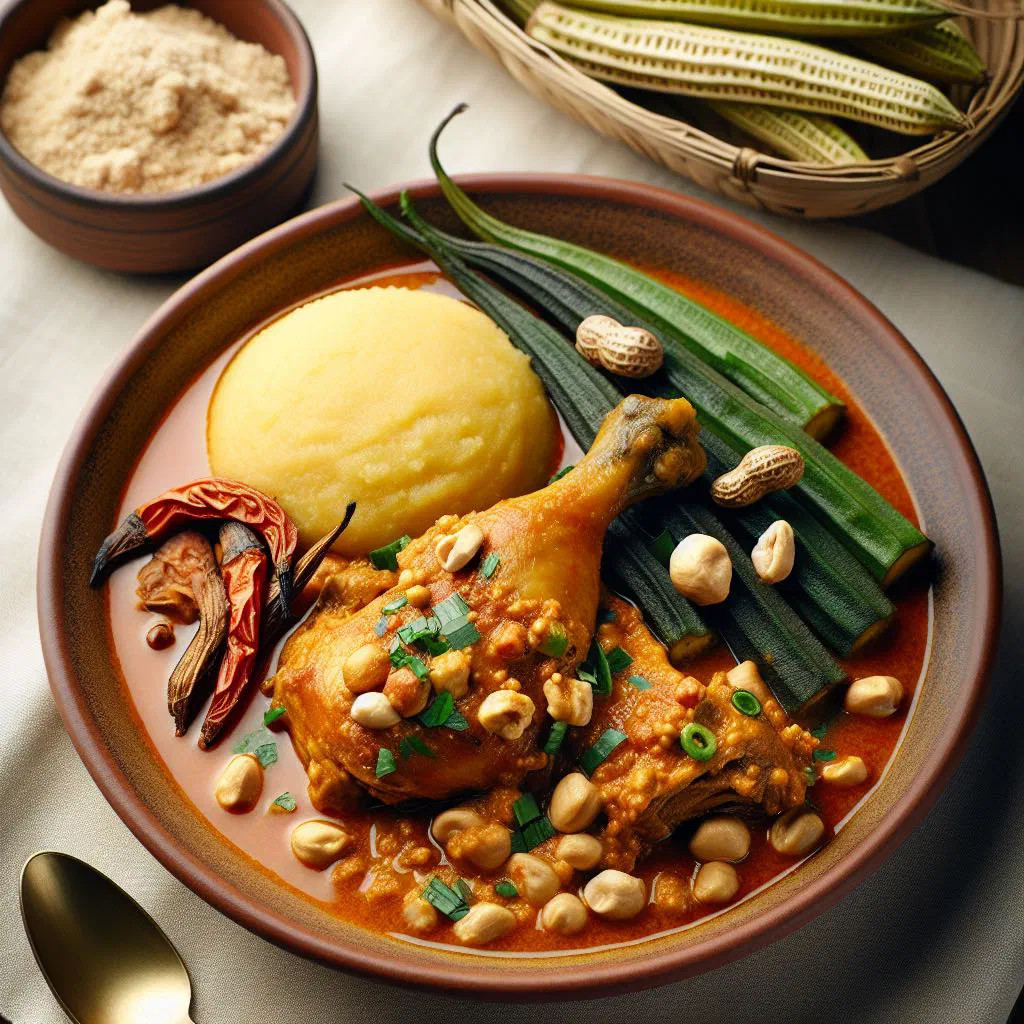
Moamba de Galinha is chicken cooked in red palm oil until the sauce turns deep orange, with okra thickening it and chilli behind. The palm oil is the whole point. Substitute it and you get a decent chicken stew, but you do not get moamba.
About Moamba de Galinha
Moamba de galinha is Angola’s national dish and the one that appears at every celebration worth the name. Chicken is browned in dendê, the unrefined red palm oil of West and Central Africa, then simmered with onion, garlic, tomato and okra. It is served with funge, the stiff cassava porridge that is Angola’s true staple, and eaten by hand.
The name comes from moamba, which in Kimbundu refers both to the palm paste and to the sauce made from it.
Ingredients (serves 1–2)
- 2 chicken thighs
- 2 tablespoons red palm oil
- 1 medium onion, diced
- 2 cloves of garlic, chopped
- 2 medium tomatoes, diced
- 1 teaspoon chilli powder, or to taste
- 150 g okra pods, sliced
- 500 ml chicken stock
- Salt and pepper to taste
Shopping for the ingredients
Red palm oil is sold in African and Brazilian grocers, usually labelled dendê or azeite de dendê. It is solid at room temperature and deep orange. Do not confuse it with the refined, colourless palm oil used in industrial food, which tastes of nothing. Buy small okra pods, bright green and firm enough to snap; large ones are woody.
Preparing the dish
Trim the okra stalks without cutting into the pod. Cutting through the pod releases the mucilage that makes okra slippery, which is fine in some dishes and not wanted here. Use thighs rather than breast: they hold up to thirty minutes of simmering.
Step-by-step instructions
- Heat the palm oil in a pan and brown the chicken thighs in it.
- Add the onions and garlic and fry until they turn translucent.
- Now add the tomatoes, chilli powder, salt and pepper, and let everything simmer for a few minutes.
- Add the okra pods and the chicken stock to the pan and bring it all to the boil.
- Leave the moamba de galinha to simmer over a low heat for about 30 minutes, until the chicken is cooked right through.
Gluten-free / lactose-free version
Moamba contains no gluten and no dairy. Funge, made from cassava or maize flour, is likewise gluten-free, so the whole plate is safe as it stands. The only thing to check is a shop-bought stock cube.
Tips for vegans and vegetarians
The palm oil and okra base carries a vegan version well. Use firm tofu, aubergine or butter beans in place of the chicken and vegetable stock instead of chicken stock. It will not taste like moamba de galinha, but the sauce is the interesting part and it survives the swap intact.
More tips and tricks
Add the okra with the stock rather than earlier, and do not stir it hard. Both keep the sauce from turning slippery. Brown the chicken properly in the palm oil before anything else goes in, because that colour is what the finished sauce is built on. And taste for salt at the end; palm oil flattens salt and the pot usually needs more than you expect.
Adapting the recipe to your taste
Ginger and a bay leaf deepen the base. Sweet potato or pumpkin cooked in the sauce makes it a fuller meal. Some households add a spoonful of groundnut paste, which thickens it and pushes it towards Moamba de Ginguba, the peanut version.
Ingredient substitutions
Sunflower oil with a teaspoon of paprika approximates the colour of palm oil but not the flavour. Frozen okra works and is often better than tired fresh pods. Guinea fowl is the traditional bird in rural Angola and is worth trying.
Drink pairing ideas
Cold Cuca or NGola, the Angolan lagers, are what this is drunk with. A robust red handles the palm oil well. Without alcohol, bebida de bombó, the fermented cassava drink, is the local answer.
Serving and presentation ideas
Serve moamba in a deep bowl with a mound of funge beside it. Funge is torn off in pieces with the fingers, pressed into a hollow with the thumb, and used to scoop the sauce. A dish of piri piri sits on the table for anyone who wants more heat. This is shared food and it comes to the table in the pot.
A bit of history
Palm oil has been pressed in the region for centuries, and moamba predates Portuguese arrival, though the chicken version as it is now cooked owes something to the colonial kitchen. The dish is common to Angola and both Congos, and it anchors Angolan cuisine alongside Mufete de Peixe and Muzongué.
More recipe ideas
Summary: Moamba de Galinha
Moamba de galinha is chicken simmered in red palm oil with tomato, chilli and okra. Use real dendê, add the okra late, and serve it with funge and your hands.