National Dish Angola: Pé-de-Moleque (Recipe)
In this article
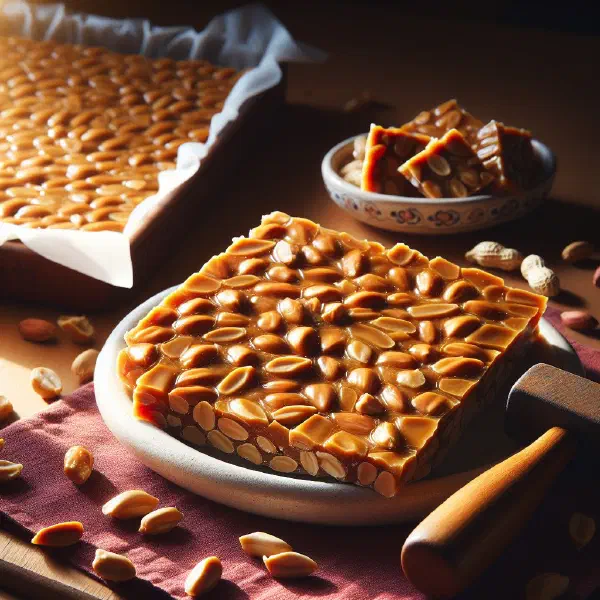
Discover Pé-de-Moleque, Angola’s very good peanut caramel treat. Just a handful of everyday ingredients, peanuts, sugar and a splash of water, turn into a golden, crackling brittle that snaps beautifully between your teeth. It is quick to make, endlessly moreish and every bit as welcome at a celebration as it is with a quiet afternoon cup of tea. A small sweet with a big slice of African tradition behind it.
About Pé-de-Moleque
Pé-de-Moleque has its home in Angola and counts among the country’s best-loved traditional sweets. It is simple to prepare, and its flavour has won admirers far beyond Angola’s borders. The dish showcases the creativity of African cooking, bringing together a few humble flavours in a way that stirs memories of home. With its thoroughly natural ingredients, Pé-de-Moleque is an excellent starting point for anyone keen to explore authentic Angolan cuisine.
Ingredients (serves 1–2)
- 200 g peanuts (unsalted)
- 150 g sugar
- 100 ml water
- 1 pinch of salt
- A squeeze of lemon juice
Shopping for the ingredients
The first step towards a good Pé-de-Moleque is shopping well. Most of what you need sits on the shelves of any ordinary supermarket, though unsalted peanuts and specialist sugars are often easier to track down in an African or Asian grocery. Choose good-quality peanuts, as they shape the flavour of the finished sweet more than anything else. Buy everything as fresh as you can for the best possible result.
Preparing the dish
Before you start cooking, gather and prepare everything you need. The peanuts can be roughly chopped or left whole, depending on the texture you prefer. It also pays to line your work surface with baking parchment so the caramel has somewhere to cool undisturbed. These small preparations keep the cooking itself smooth and unhurried, caramel waits for nobody.
Step-by-step instructions
- Heat the water with the sugar and the pinch of salt in a pan until the sugar has completely dissolved.
- Add the peanuts and stir continuously until the mixture takes on a golden-brown colour.
- Add a squeeze of lemon juice to stabilise the caramel.
- Pour the mixture out onto the prepared baking parchment and leave it to cool.
- Cut the cooled slab into small pieces once it has set firm.
Gluten-free / lactose-free version
Pé-de-Moleque is naturally gluten-free and lactose-free, which makes it a wonderful snack for anyone managing an intolerance. Because it relies on simple, natural ingredients, nobody has to sit this one out. Those qualities make it a flexible choice for a table with mixed dietary needs. Enjoy it without a second thought about allergens.
Tips for vegans and vegetarians
Pé-de-Moleque is naturally vegan and vegetarian, so every guest can tuck in. Just double-check that none of your ingredients hide animal-derived additives. You can also experiment with different nuts or alternative sweeteners to shift the texture and flavour. Nothing stands between you and this African delicacy, much like the equally plant-based Madesu.
More tips and tricks
A few small habits make all the difference. Above all, keep stirring while the mixture cooks so that nothing catches and burns on the base of the pan. Play with the degree of caramelisation to reach a lighter or darker colour, depending on how deep you like the flavour. You can also work in different nuts or dried fruit to discover new combinations.
Adapting the recipe to your taste
Pé-de-Moleque adapts easily to personal preference. Try almonds, walnuts or cashews in place of the peanuts for a different character altogether. Spices such as cinnamon or vanilla add another layer of warmth. The ratio of sugar to water can be adjusted too, if you would rather the finished sweet were less cloying.
Ingredient substitutions
If something is missing from the cupboard, there are creative alternatives that keep the authentic spirit of the dish intact. Instead of white sugar you might use agave syrup or coconut blossom sugar for a gentler option. Roasted and salted nuts make an interesting variation too, sharpening the contrast with the sweetness. A similar peanut richness runs through Moamba de Ginguba, so it is a flavour well worth exploring.
Drink pairing ideas
Plenty of drinks round off a plate of Pé-de-Moleque nicely. Fresh fruit juice, black tea and fruity cocktails all work, each in its own way. They draw out the peanut and caramel notes rather than competing with them. A peanut drink such as Sumo de Ginguba makes a particularly fitting local pairing.
Serving and presentation ideas
Presentation shapes the whole impression this little sweet makes. Serve the caramel pieces on a festive plate or tucked into small preserving jars for an inviting look. A garnish of fresh fruit or edible flowers lifts the picture further. A little creativity here means your guests enjoy the sweet twice over, first with their eyes, then their teeth.
A bit of history
Pé-de-Moleque originates in Angola and belongs firmly to African tradition. Its pairing of sweetness and nuttiness reflects not only the country’s culinary influences but its social and cultural customs as well. Generations of families have passed the recipe down and refined it, until it became a delicacy woven deep into everyday life. Today it enjoys international popularity and is often served at celebrations and festivals, much like the sweet Pudim de Mandioca.
More recipe ideas
Summary: Pé-de-Moleque
Pé-de-Moleque wins people over with its straightforward method and its unmistakable flavour. The combination of crunchy peanuts and sweet caramel makes it a perfect snack or dessert. Whether for a special occasion or simply to nibble on between meals, this little treat brings a piece of African culture to your table. Experiment with the variations and enjoy every crackling bite.