National Dish Armenia: Chashushuli (Recipe)
In this article
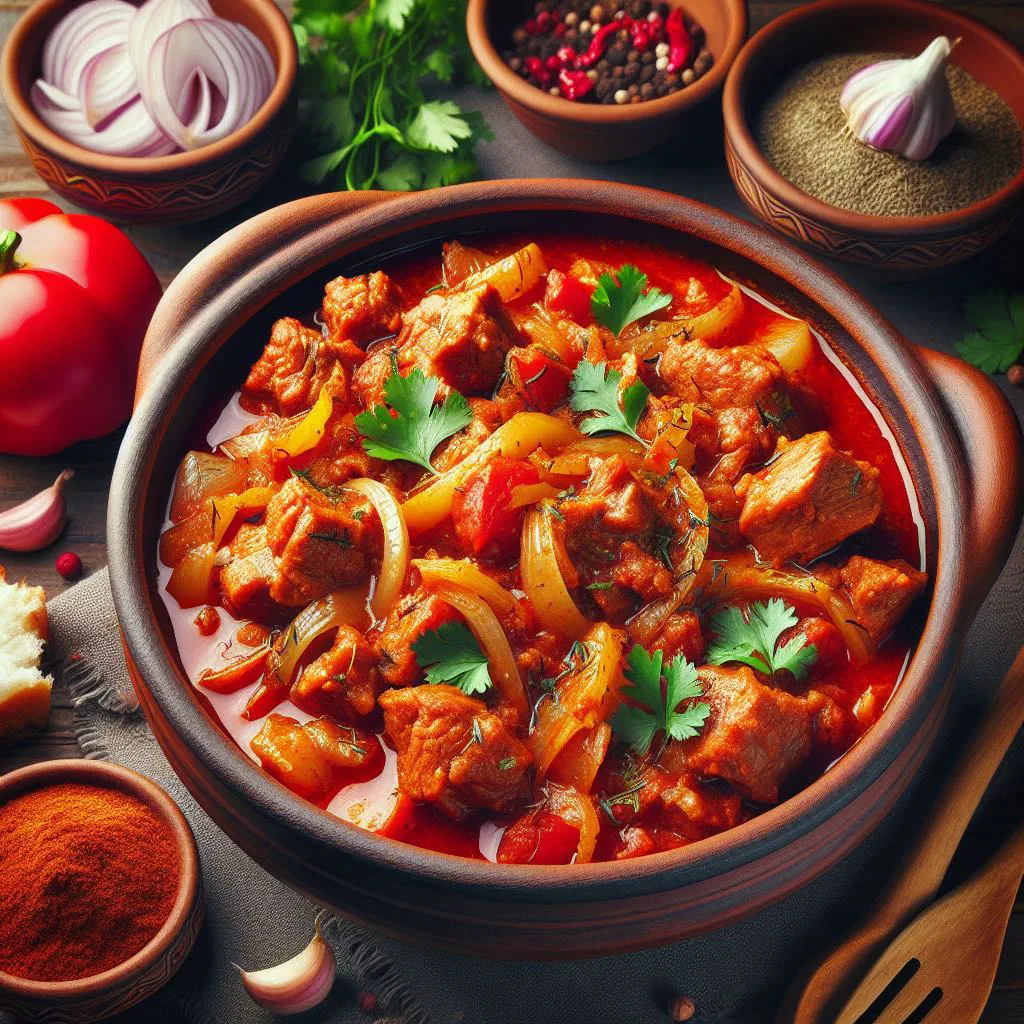
Discover Chashushuli, a slow-simmered beef stew that sits proudly among Armenia’s most comforting dishes. Tender chunks of beef, sweet golden onions and strips of red pepper melt into a gently spiced tomato sauce, cooked low and slow until everything turns rich and glossy. Traditionally made in an earthenware pot, it fills the kitchen with a deep, savoury aroma long before it reaches the table, the kind of dish you make on an unhurried afternoon and remember for weeks.
About Chashushuli
Chashushuli is a traditional Armenian dish known above all for its hearty flavours and the meltingly tender texture of the meat. Beef is cooked here in an aromatic combination of onions, peppers and a piquant tomato sauce. Much of its charm comes from the preparation in a clay pot, which draws out the aromas beautifully and leaves the meat especially tender. The dish represents the rich culinary tradition of Armenia and has won over food lovers well beyond its borders.
Ingredients (serves 1–2)
- 500 g beef (leg or shoulder, for example)
- 2 large onions
- 1–2 red peppers
- 400 g chopped tomatoes (tinned or fresh)
- 2–3 tablespoons vegetable oil
- 1 teaspoon paprika powder
- Salt and pepper to taste
- Fresh herbs (parsley or coriander), to garnish
Shopping for the ingredients
When shopping for chashushuli, pay close attention to the quality of the meat. Fresh, well-sourced beef is decisive for both the flavour and the texture of the finished stew. The vegetables, onions and peppers alike, should be firm and deeply coloured. Choose organically grown produce where you can, as it intensifies the natural sweetness that carries the sauce.
Preparing the dish
Preparation for chashushuli begins with cutting the beef into evenly sized pieces so that it cooks at the same rate throughout. The onions and peppers should likewise be cut into smaller pieces, which helps them release their aromas during cooking. Make sure everything is measured out and within reach before you start, as this makes the process considerably easier. Good groundwork keeps things running smoothly and makes the cooking itself far more enjoyable.
Step-by-step instructions
- Heat the vegetable oil in a clay pot over medium heat.
- Add the diced onions and fry until golden brown.
- Add the chopped beef and brown it on all sides.
- Stir in the peppers and the paprika powder, mixing everything well.
- Pour in the chopped tomatoes and season with salt and pepper.
- Cover the pot and let the dish simmer over low heat for about 1.5 to 2 hours, until the meat is tender.
- Serve garnished with fresh herbs.
Gluten-free / lactose-free version
Chashushuli is naturally gluten-free and lactose-free, since it consists mainly of meat and vegetables. Simply check that the spices and other ingredients you use contain no gluten-based fillers. You can also swap in a different oil for frying if you react badly to certain oils. Adjustments like these make the dish suitable for anyone with particular dietary needs, much like the naturally light Khashlama.
Tips for vegans and vegetarians
For vegans and vegetarians, chashushuli can be prepared in a plant-based version. Instead of beef, vegetables such as aubergine, courgette or mushrooms give the stew a hearty, satisfying texture. A mixture of different beans adds substance too. Season the dish much as you would the original so the familiar aromas remain intact, and you have a wholesome vegan meal in the same spirit, in the tradition of the classic Pasuts Tolma.
More tips and tricks
The most important ingredient in a successful chashushuli is patience. Let the dish cook long enough over low heat so the flavours have time to develop fully. Adding a handful of red lentils is another good idea, lending the stew extra nourishment and an interesting texture.
Adapting the recipe to your taste
Chashushuli is easy to adapt to personal preference. You might raise the heat level by adding fresh chillies, or shift the flavour with additions such as soy sauce. You can also fold in a wider range of vegetables to make the dish more colourful and more nutritious. What matters is finding the balance between the aromas and giving your own creativity room to work.
Ingredient substitutions
If you have no fresh tomatoes to hand, tomato purée or passata will do the job. As an alternative to beef, chicken works well, or tofu for the plant-based version. With the spices you can experiment freely, adding cumin or thyme for extra depth of flavour. Be inventive and adapt the recipe to what is in your store cupboard and to your own taste.
Drink pairing ideas
A hearty dish like chashushuli goes beautifully with a range of drinks. A sweet red wine from Armenia or a fresh white wine will complement the flavours of the food. For an alcohol-free option, try a fruity spritzer or a hibiscus tea, whose floral notes harmonise nicely with the sauce. Choose a drink that underlines rather than competes with the dish’s intense aromas.
Serving and presentation ideas
Presentation can improve the chashushuli experience considerably. Serve the dish in the same clay pot you cooked it in, for a rustic charm that suits it perfectly. Garnish the finished stew with fresh herbs and a drizzle of olive oil to add colour and aroma. Warm flatbread such as Lavash alongside makes the spread complete, and careful plating ensures the dish is a feast for the eyes as well as the palate.
A bit of history
Chashushuli has its origins in the Armenian kitchen, one of the oldest culinary traditions in the world. Cooking in clay pots reflects the traditional methods practised in Armenia for centuries. Every family recipe shows small variations, depending on regional preferences and the ingredients available. Dishes like this one are nourishing and help preserve the cultural identity carried by Armenian cuisine.
More recipe ideas
Summary: Chashushuli
Chashushuli is a wonderful example of Armenian cooking, convincing through its hearty aromas and its traditional preparation. The combination of tender beef, fragrant spices and fresh vegetables appeals to locals and food lovers around the world alike. The flexibility of the recipe means it can be adapted to different diets and preferences without losing its authentic character. Enjoy this delicious stew as part of a festive meal, or simply as a warming supper on a cold evening.