National Dish Armenia: Khorovats (Recipe)
In this article
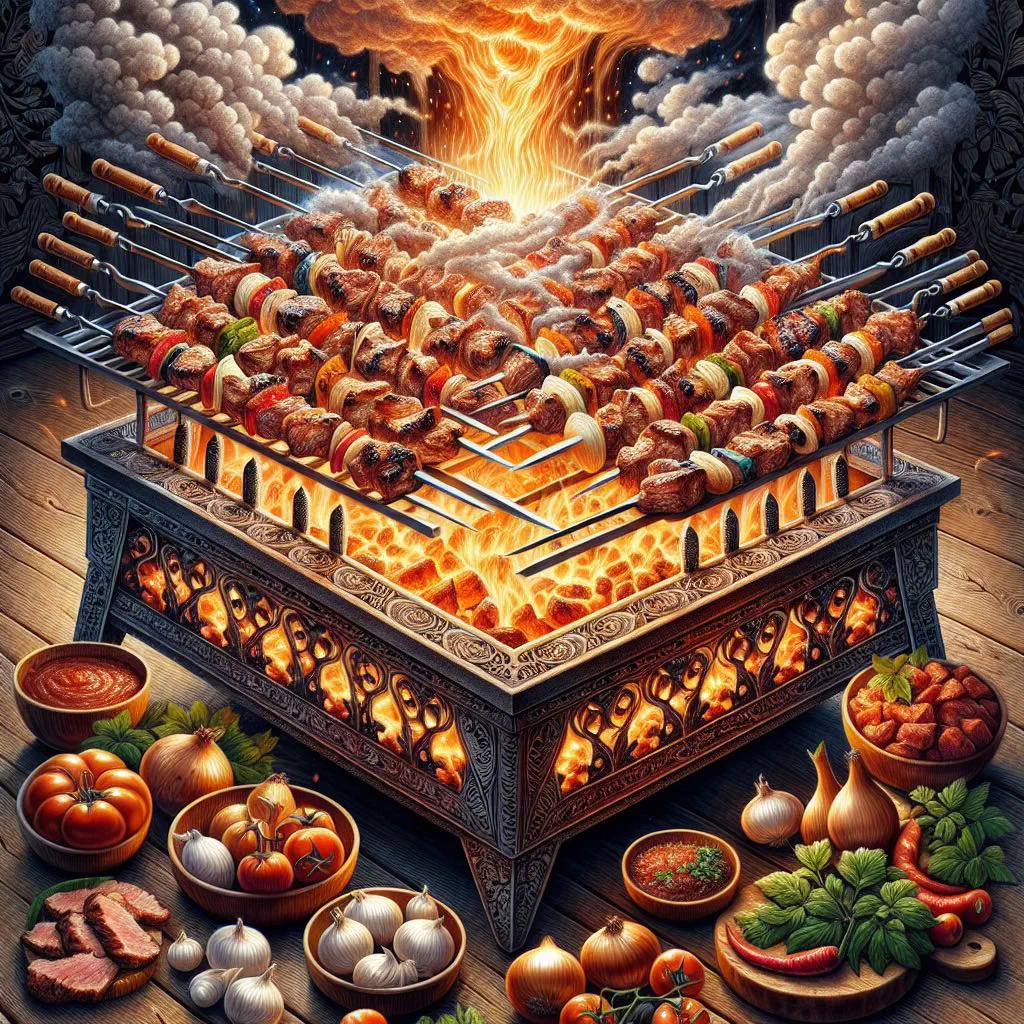
Discover Khorovats, Armenia’s magnificent national dish and the smoky heart of every Armenian celebration. Great cubes of meat are marinated simply, threaded onto skewers and cooked over glowing charcoal until the edges char and the centre stays juicy. What makes it special is the ritual: everyone gathers around the fire, the herbs come out, the bread is warmed, and dinner becomes an event.
About Khorovats
Khorovats is far more than a barbecue; it is an expression of Armenian heritage and a celebration of togetherness. With its straightforward yet delicate preparation and its emphasis on fresh ingredients, it captures the pure essence of Armenian hospitality. What sets this dish apart is the way gathering around the grill turns cooking into a social occasion that brings family and friends together. Served with warm flatbread and a heap of herbs, it is the centrepiece of every summer gathering.
Ingredients (serves 1–2)
- 500g lamb, pork or beef, cut into large cubes
- 2 tablespoons olive oil
- 1 large onion, sliced into rings
- 1 teaspoon salt
- ½ teaspoon freshly ground black pepper
- Fresh herbs (parsley or coriander), to garnish
- Optional marinade: garlic, spices and herbs to taste
Shopping for the ingredients
Look for fresh, locally reared meat, ideally from a butcher you trust. The freshness and quality of the meat are decisive for the flavour of your khorovats, so it is worth paying for a good cut rather than a bargain one. For an authentic taste, seek out regional herbs and season according to your own preferences. A good greengrocer will also supply the onions, pomegranates and flatbread that round out the meal.
Preparing the dish
Prepare the meat a few hours before grilling by laying it in a marinade of olive oil, onion rings, salt and pepper. Further spices and crushed garlic can be added if you like. Let the meat rest in the fridge so the aromas can work their way deep into the flesh. This unhurried step is what separates a good khorovats from a merely acceptable one.
Step-by-step instructions
- Take the marinated meat out of the fridge and let it come up to room temperature.
- Heat your grill — ideally use charcoal for that authentic smoky aroma.
- Thread the meat onto skewers if you have them and lay them over the hot coals.
- Grill the meat, turning regularly, until it reaches the doneness you want.
- Lift the meat off the grill and let it rest briefly so the juices can settle.
- Garnish with fresh herbs before serving.
Gluten-free / lactose-free version
Khorovats is naturally gluten-free and lactose-free, since the dish itself is nothing but meat, onions and seasoning. Take care only with the accompaniments: swap traditional lavash for a gluten-free flatbread if you are avoiding wheat, and check that any shop-bought marinade or spice blend carries no hidden wheat starch. For a lactose-free spread, serve tahini or an herb oil instead of yoghurt-based sauces.
Tips for vegans and vegetarians
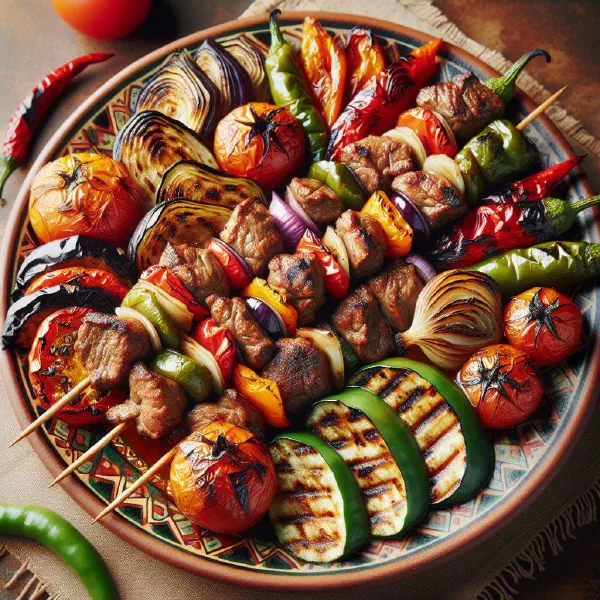
The grill is just as generous to plant-based eaters. Thick slices of aubergine, peppers, tomatoes and courgette take beautifully to the same marinade and char, and are traditionally served in Armenia as a dish in their own right. Halloumi-style grilling cheese or firm smoked tofu works for a heartier vegan skewer. Pair them with a herb-packed Jengyalov Hats for a fully meat-free spread.
More tips and tricks
For even cooking, cut the meat into pieces of equal size so nothing dries out while the rest catches up. Using sprigs of fresh herbs as a brush to baste the meat with marinade during grilling adds an extra layer of aroma. Resist the urge to move the skewers constantly, let each side build a proper crust before turning, and keep a cooler zone on the grill for pieces that colour too quickly.
Adapting the recipe to your taste
Adjust the marinade to suit yourself. If you like things hotter, add chilli and paprika; for a fresher note, lemon juice or vinegar work well. Some cooks stir in a spoonful of pomegranate molasses for a sweet-sour depth that is unmistakably Caucasian. The cut of meat is yours to choose too, from rich shoulder to leaner loin.
Ingredient substitutions
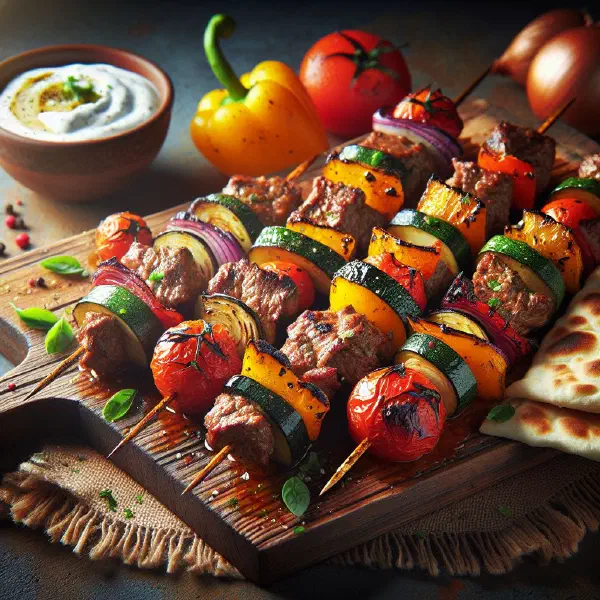
If certain ingredients are not to your liking or simply not available, be creative. Chicken thighs or firm fish fillets make excellent alternatives to the classic red meat. Vegetables such as peppers, tomatoes or courgettes are outstanding for vegetarians, much as they are in Khorovadz mit Gemuese. Dried herbs will stand in for fresh at a pinch, though use roughly half the quantity.
Drink pairing ideas
Khorovats is traditionally enjoyed with Armenian red wine or a light beer, both of which cut through the richness of the grilled meat without overwhelming it. Non-alcoholic options include chilled ayran or freshly pressed pomegranate juice, the latter a particularly Armenian choice. A glass of cold mineral water with lemon is the simplest refresher between mouthfuls.
Serving and presentation ideas
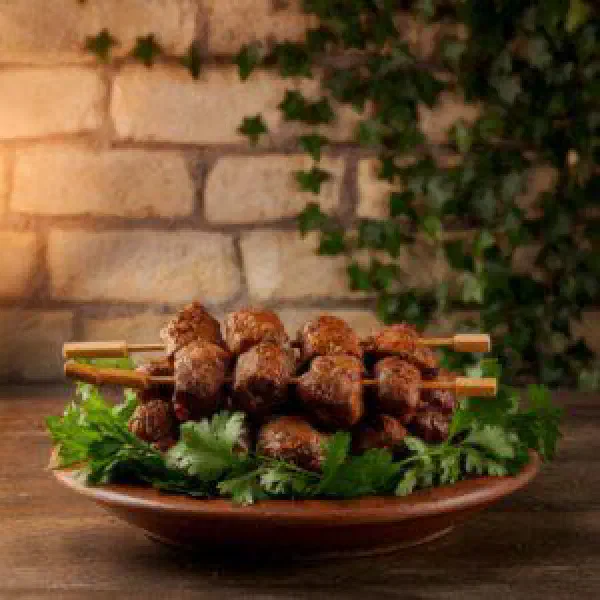
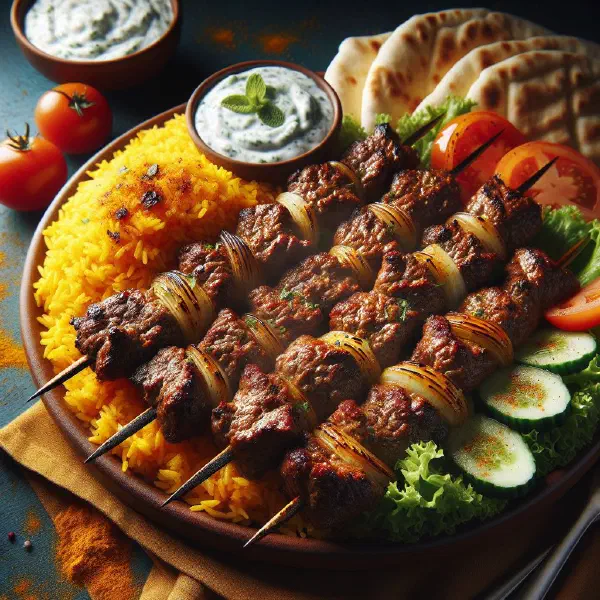
Serve khorovats on a large platter, garnished with fresh herbs and perhaps accompanied by flatbread or a selection of grilled vegetables. Soft Lavash is the classic wrapper, and a bowl of sliced raw onion tossed with sumac makes a sharp, bright counterpoint. Bring the whole platter to the table at once so everyone helps themselves. That communal spirit is the point of the dish.
A bit of history
Khorovats has its roots in the history and culture of Armenia. The tradition of grilling there is said to reach back to the days when meat was roasted over open flames to feed warriors and families at feasts. Over the centuries the practice settled into the ceremonial form it holds today, with the khorovatsapan, the designated grill master, presiding over the fire. It remains one of the proudest expressions of Armenian cuisine.
More recipe ideas
Summary: Khorovats
Khorovats is not merely a barbecue; it is a festival that brings people together and unites joy and flavour in equal measure. With the right ingredients, a little preparation and the tips above, you can recreate this Armenian tradition in your own garden. The technique is forgiving, the seasoning is simple, and the reward is a table of people reaching for the same platter. Light the coals and let Armenia’s greatest classic do the rest.