National Dish Armenia: Satsivi (Recipe)
In this article
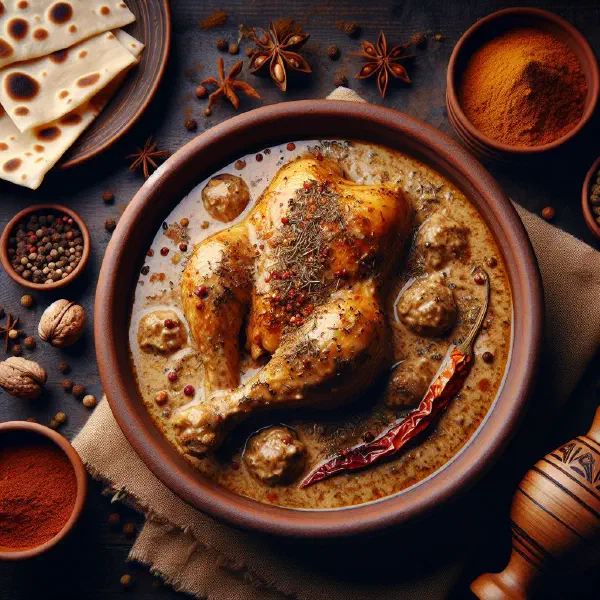
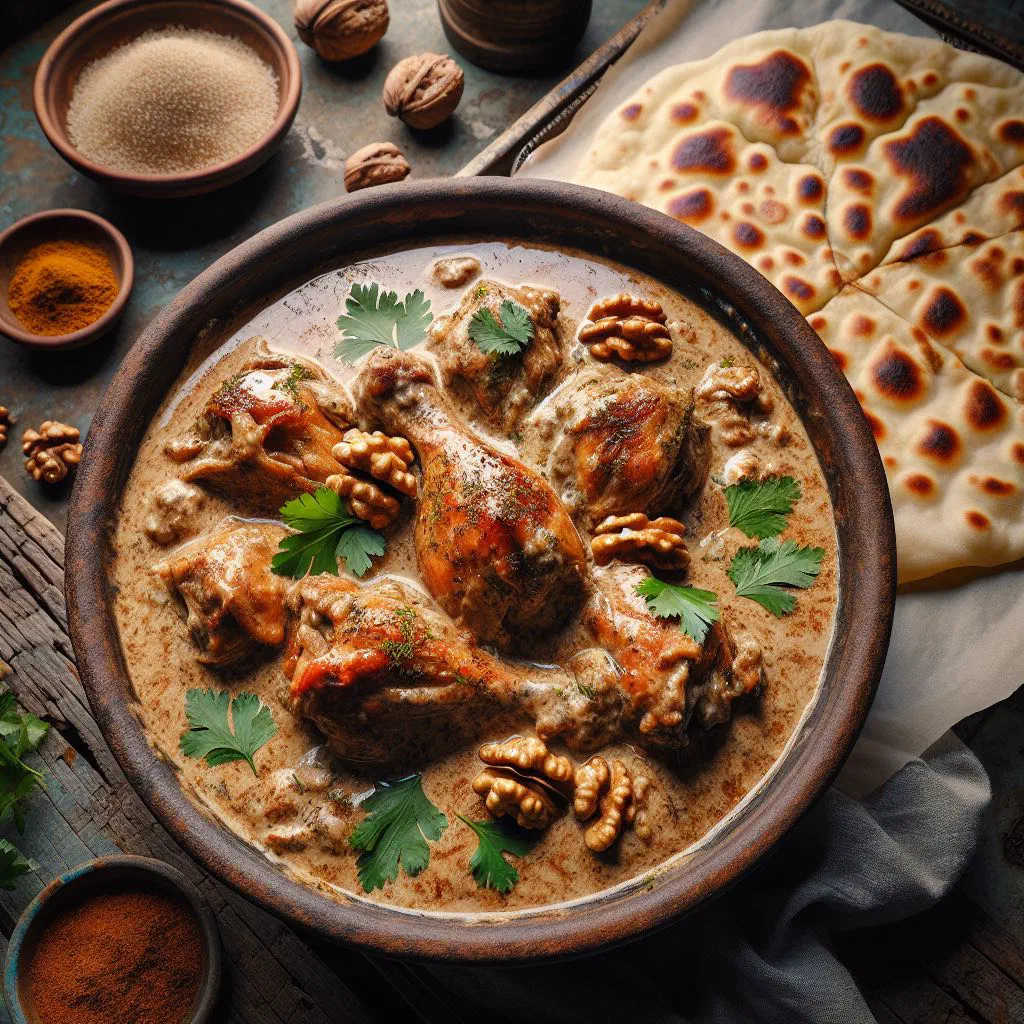
Discover Satsivi, a celebration dish that sits close to the heart of the Armenian table: tender pieces of chicken or turkey bathed in a thick, fragrant walnut sauce. It is rich without being heavy, warmly spiced without shouting, and it carries all the generous hospitality Armenia is known for. Made for feast days and long winter evenings, it is a genuine treat for the senses, and easier to bring to your own kitchen than its reputation suggests.
About Satsivi
Satsivi is a traditional Armenian dish built around tender morsels of chicken or turkey. It is most often served at festive occasions and is famous for its rich walnut sauce, rounded out with a whole range of warming spices. That marriage of flavour and aroma is what makes Satsivi such a feast for the senses. The preparation takes a few steps, but the result is more than worth the effort.
Ingredients (serves 1–2)
- 400 g chicken or turkey breast
- 200 g walnuts
- 1 onion
- 2 cloves of garlic
- 3 tablespoons olive oil
- 2 teaspoons vinegar
- 1 teaspoon ground coriander
- 1 teaspoon sweet paprika
- Salt and pepper, to taste
- Water, as needed
Shopping for the ingredients
With Satsivi it really pays to pay attention to the quality of the walnuts and the meat. Ideally the walnuts should be fresh and unsalted, since they form the backbone of the sauce. Chicken or turkey breast is best bought organic or from free-range, welfare-friendly rearing. The remaining ingredients, the spices and the olive oil, are easy to find in any reasonably well-stocked supermarket.
Preparing the dish
Before you start cooking Satsivi, take a moment to prepare everything properly. Cut the meat into even pieces so it cooks through at the same rate. Finely chop the onion and the garlic to release as much aroma as possible. The walnuts can either be roughly chopped or blitzed to a paste in a blender, depending on how smooth you want the sauce to be.
Step-by-step instructions
- Fry the chicken or turkey pieces in a pan with olive oil until golden brown on all sides.
- Add the onion and garlic and cook for a few minutes until softened.
- Stir in the walnuts, vinegar, coriander, paprika, salt and pepper.
- Pour in water until the sauce reaches the consistency you want, and stir everything together well.
- Let the dish simmer gently over low heat for around 20 minutes so the flavours can develop.
Gluten-free / lactose-free version
One of the great advantages of Satsivi is that it is naturally gluten-free and lactose-free. That means it can be enjoyed without worry by anyone with an intolerance. Just check your ingredients for possible traces of gluten, particularly in ground spices. Adapting this dish to special dietary requirements is, as a rule, refreshingly straightforward.
Tips for vegans and vegetarians
Vegans and vegetarians can adapt Satsivi beautifully by swapping the meat for a plant-based alternative. Pan-fried tofu or seitan both make a tasty base. The walnut sauce stays exactly as it is and continues to give the dish its rich, aromatic character. This vegan version is every bit as satisfying and stays true to Armenian culinary tradition, much like the meat-free classic Pasuts Tolma.
More tips and tricks
To make cooking Satsivi simpler, prepare and lay out all your ingredients before you start. Experiment with different spices to shape the flavour to your own taste. Coriander and paprika are essential, but there is plenty of room for personal preference alongside them. It is also well worth letting the sauce stand for a while before serving, so the aromas have time to deepen.
Adapting the recipe to your taste
Satsivi is a flexible dish that takes readily to personal tweaks. If you like heat, add a little chilli or cayenne pepper. If you enjoy more exotic notes, try experimenting with cumin. Other nuts work too, cashews, for instance, give an entirely different flavour experience. Options like these turn the dish into an exciting culinary project every time you make it.
Ingredient substitutions
There are plenty of alternatives for the ingredients in Satsivi, depending on what is available and what you prefer. Instead of chicken or turkey breast you could use lamb or beef, as in the hearty Khashlama. If walnuts are hard to come by, hazelnuts or almonds make a tasty stand-in. The vinegar can be replaced with lemon juice if you would like a fresher, brighter finish.
Drink pairing ideas
Several drinks complement Satsivi and bring out its flavours. A glass of dry rosé wine works excellently with the nutty character of the sauce. Alternatively, a refreshing sparkling water with lemon or mint lightens the meal nicely. Freshly brewed herbal teas are another very good choice. Any of these will round the meal out into a balanced and memorable experience.
Serving and presentation ideas
Presentation can make a real difference to how Satsivi is enjoyed. Serve it in a decorative bowl, perhaps garnished with a sprig of fresh coriander or parsley. Handsome plates or a rustic wooden board give the dish a special touch, and a basket of warm Lavash alongside is almost obligatory. Spoon the sauce carefully over the meat so the textures and colours show themselves off properly.
A bit of history
Satsivi has a long history in Armenian cooking. It is closely associated with celebrations and feast days, being the kind of dish that brings a great many people together around one table. Traditionally it was made during the colder months, when nourishing, substantial food was most needed. Today it is prepared and treasured not only in Armenia but across the many countries touched by Armenian cuisine.
More recipe ideas
Summary: Satsivi
In short, Satsivi is a wonderful dish that wins people over with a walnut sauce that is simple to make yet complex in flavour. It is perfect for festive occasions and adapts readily to different diets. With a little creativity you can create your own variations, fascinating for guests and family alike. This dish is a shining example of Armenia’s rich culinary heritage, and it deserves a place on your table.