National Dish Austria: Apricot Dumplings (Recipe)
In this article
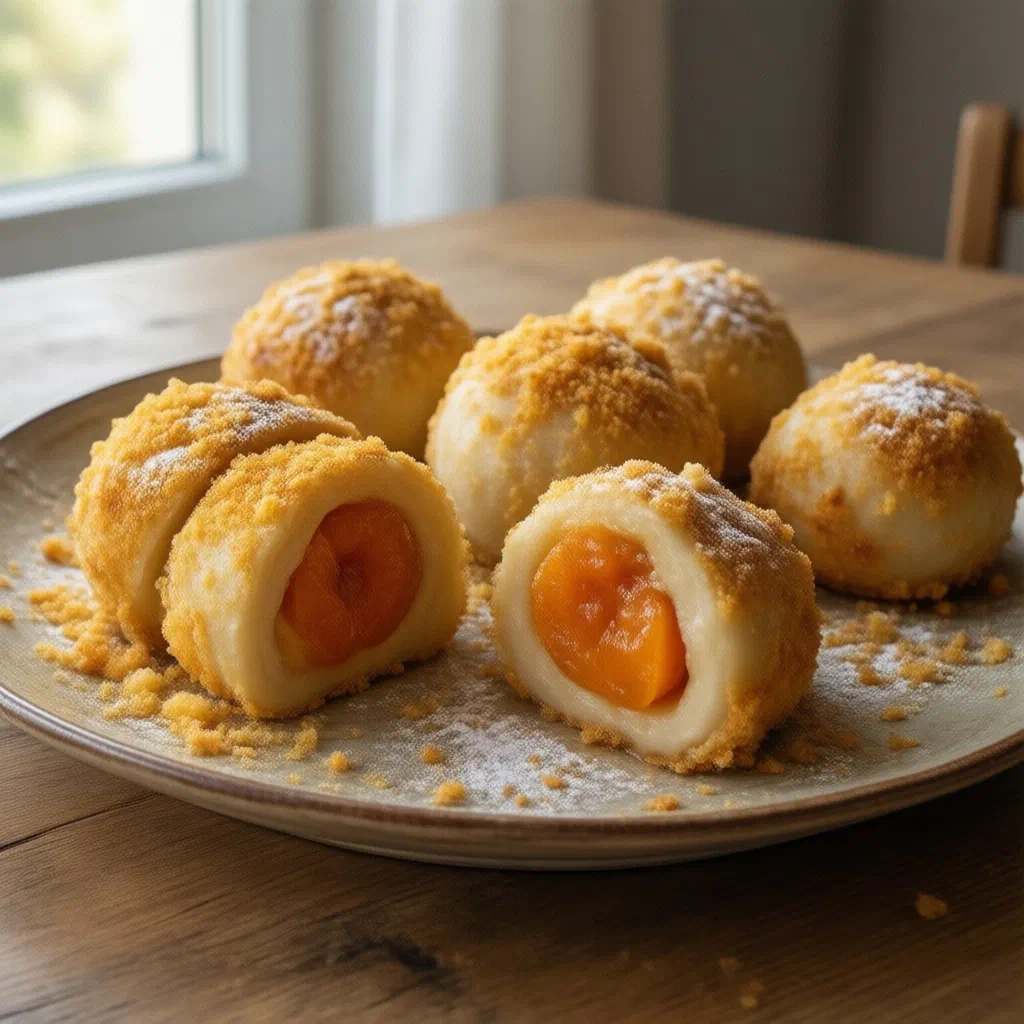
Few sweets capture the spirit of an Austrian summer quite like apricot dumplings. Tender parcels of soft dough cradle a whole ripe apricot, then roll in golden, buttery breadcrumbs and a snowfall of icing sugar. Light yet wonderfully comforting, they sit happily as either a sweet main course or a memorable pudding. Make them when the orchards are heavy with fruit and bring a true taste of Austria to your own kitchen.
About Apricot Dumplings
Apricot dumplings are a beloved classic of Austrian cooking and a genuine highlight for anyone with a sweet tooth. Each dumpling is built around a juicy apricot wrapped in a light, fluffy dough. Traditionally they are finished with toasted breadcrumbs and sugar, which give them their unmistakable texture and flavour. Apricot dumplings are always a treat. Their origins reach back to the Austrian empire, where they were said to be a favourite of Emperor Franz Joseph. Today they remain a cherished part of countless Austrian cookbooks and a fixture on restaurant menus, offering a little piece of Austria in every bite.
Ingredients (serves 1–2)
- 6 ripe apricots
- 200g quark
- 50g butter
- 1 egg
- 100g plain flour
- 1 tablespoon sugar
- 1 pinch of salt
- 50g breadcrumbs
- 2 tablespoons butter, for the breadcrumbs
- Icing sugar, for dusting
Shopping for the ingredients
For the best results you will need fresh, ripe apricots, as they form the heart of each dumpling and carry that delicious flavour. Choose good-quality quark, since it has a big influence on the texture of the dough. Organic flour and fresh eggs give the best consistency and an authentic taste. The breadcrumbs should also be fresh and completely dry, with no trace of moisture. These ingredients are easy to find in any well-stocked supermarket, with quark widely available in the chilled aisle.
Preparing the dish
Begin by washing and drying the apricots. Remove the stones, and if you like, slip a cube of sugar into each cavity for an extra sweet surprise hidden inside the dumpling. Make sure the butter is soft so it blends smoothly with the other ingredients. Have everything measured and ready before you start, so the cooking runs smoothly from beginning to end.
Step-by-step instructions
- Put the quark, butter, egg, flour, sugar and salt into a bowl and work into a smooth dough. It should be easy to shape and not too sticky.
- Divide the dough into small portions, flatten each one and place an apricot in the centre, then close the dough around the fruit and roll into a neat dumpling.
- Simmer the dumplings in lightly salted boiling water for about 10 minutes, until they float to the surface.
- Meanwhile, toast the breadcrumbs in a pan with the butter until golden brown.
- Lift the cooked dumplings from the water, let them drain briefly, then roll them straight away in the toasted breadcrumbs.
- Dust with icing sugar and serve hot.
Gluten-free / lactose-free version
For a gluten-free version, swap the plain flour for a good gluten-free flour with properties similar to wheat flour. For a lactose-free option, replace the quark and butter with lactose-free alternatives. The flavour stays just as delicious, and the texture of the dumplings is not affected in the slightest, so everyone can join in.
Tips for vegans and vegetarians
For a vegan version, replace the egg with a binder such as apple purée or a flaxseed egg (1 tablespoon ground flaxseed plus 3 tablespoons water, left to swell for 5 minutes). Use soya yoghurt or another plant-based quark alternative in place of the dairy quark, and swap the butter for margarine or a neutral vegetable oil. With these simple adjustments you get a fully plant-based take on this traditional recipe, much like the meat-free spirit behind Mohnnudeln.
More tips and tricks
A few tricks will make your apricot dumplings even better. Chilling the dough in the fridge for a while makes it easier to shape. Lightly flouring your hands, or dampening them with a little water, also stops the dough sticking while you form the dumplings. Feel free to experiment with extra fillings too, such as a small piece of marzipan or a square of chocolate tucked in beside the fruit.
Adapting the recipe to your taste
Depending on your preferences, you can tweak this recipe in all sorts of ways. Some cooks like to add a splash of rum or a little vanilla sugar to the dough for an extra layer of flavour. Others prefer a crunchier coating and toast the breadcrumbs for longer or stir in a pinch of cinnamon. Let your creativity guide you and find the combination that suits your taste best, just as you might when making a comforting Kaiserschmarrn.
Ingredient substitutions
If you have no apricots to hand, swap them for other fruit such as plums, cherries or strawberries, the very switch that turns these into Plum Dumplings or Strawberry Dumplings. Each fruit brings its own flavour and texture. Frozen fruit works too, but thaw and drain it well first. You can be creative with the flour as well, using spelt flour in place of wheat, for instance.
Drink pairing ideas
The sweet, juicy apricot dumplings pair beautifully with a light dessert wine such as a Spätlese or a fruity white. Alternatively, a glass of sparkling Sekt or Champagne makes the occasion feel special. For younger guests, apple juice or a fruity iced tea works well. Try different drinks to discover the perfect match for your own taste.
Serving and presentation ideas
An attractive presentation makes apricot dumplings even more enjoyable. Serve them on a pretty plate and dust generously with icing sugar. A fresh mint leaf or a dollop of whipped cream adds a lovely finishing touch, and for special occasions you can garnish the dumplings with edible flowers.
A bit of history
Apricot dumplings have a long tradition within the Austrian empire and are closely tied to the culture of the country. They originally came from Bohemia and were brought to Austria in the 18th century. Counted among the favourite dishes of Emperor Franz Joseph, they quickly became popular in homes across the land. Today they stand as a symbol of Austrian hospitality and a love of good food, and a delicious entry point into Austrian cuisine.
More recipe ideas
Summary: Apricot Dumplings
Traditional apricot dumplings are simple to make and wonderfully delicious. With fresh, high-quality ingredients and a handful of tips and tricks, this recipe is sure to succeed. Served classically or given a creative twist, apricot dumplings are always a highlight of Austrian cooking. Give them a go and enjoy a little piece of Austria within your own four walls.