National Dish Austria: Christstollen (Recipe)
In this article
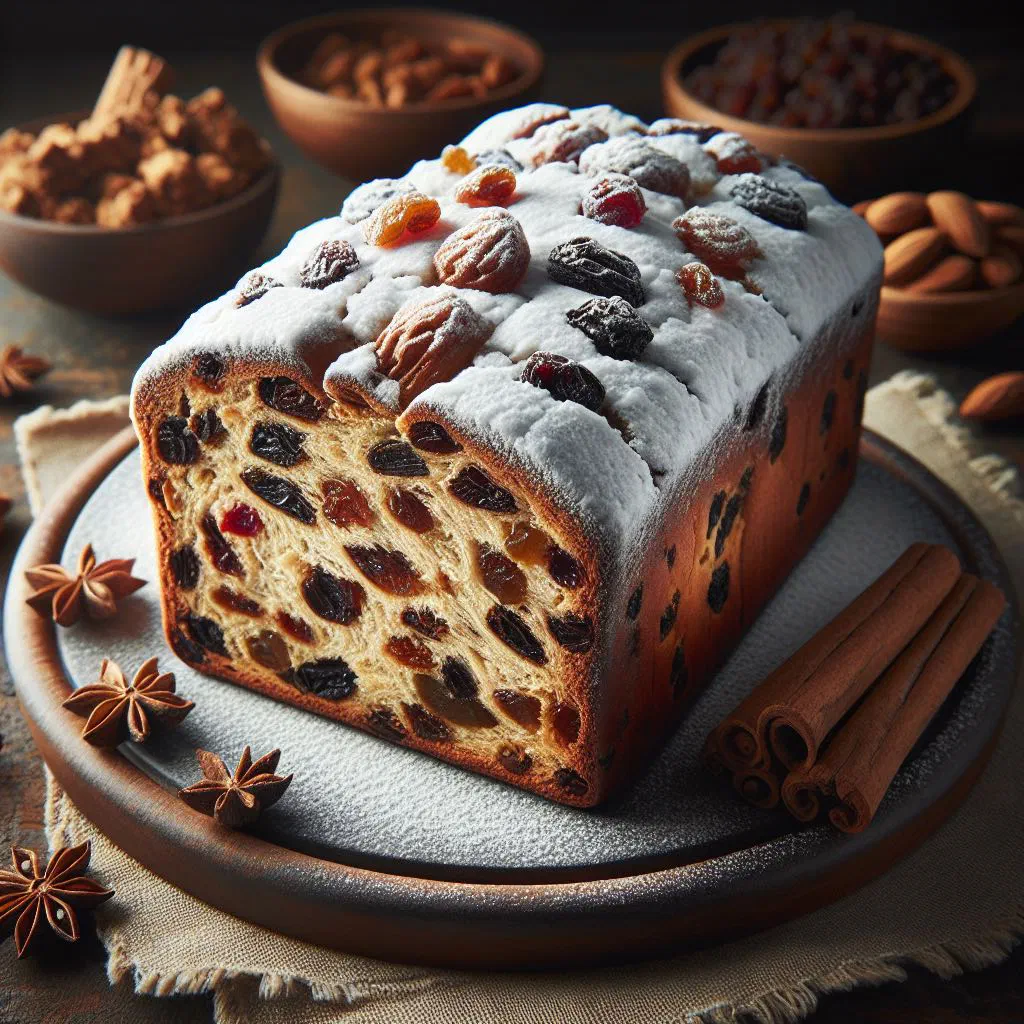
When the days grow short and the scent of spice fills the kitchen, Christstollen is never far away. This rich, fruit-studded Christmas loaf is an Austrian Advent tradition, packed with plump dried fruit, crunchy nuts and warming spices, and finished with a generous flurry of icing sugar. It takes a little time and patience, but the reward is a moist, fragrant bake that turns any festive table into something special. Bring a slice of Austrian Christmas into your own home.
About Christstollen
Christstollen is a traditional Austrian Christmas bake that no festive table should be without during Advent. This sweet, fruity loaf is famous for its mixture of dried fruit, nuts and spices, which together create an incomparable aroma. The lightly dusted coating of icing sugar gives it its characteristic appearance and an extra touch of sweetness. Making a Christstollen can be a small challenge, but with the right recipe and a little patience anyone can succeed.
Ingredients (serves 1–2)
- 500 g plain flour
- 100 g sugar
- 250 g butter
- 150 ml milk
- 1 cube fresh yeast
- 200 g raisins
- 100 g candied lemon peel
- 100 g candied orange peel
- 100 g chopped almonds
- 1 pinch salt
- 1 tsp cinnamon
- 1 sachet vanilla sugar
- Icing sugar, for dusting
Shopping for the ingredients
When shopping for the ingredients for Christstollen, it is important to pay attention to quality. Choose fresh, high-quality ingredients, especially when it comes to the butter and the dried fruit. Organic candied lemon and orange peel can improve the flavour considerably. If you can, buy your yeast from a baker, as it is usually fresher than the supermarket variety. Remember to pick up plenty of icing sugar too, for the finishing touch.
Preparing the dish
Preparing the Christstollen is best started the day before, to give the raisins enough time to soak. Steep them in a little rum or water so they turn lovely and plump. Make sure all the other ingredients are at room temperature before you begin, as this makes the dough easier to work and gives a better result. Lay everything out in advance so it is all within easy reach once the baking starts.
Step-by-step instructions
- Gently warm the milk and dissolve the yeast in it.
- Combine the flour, sugar, vanilla sugar, salt and cinnamon in a large bowl.
- Add the yeast milk, the softened butter and the soaked raisins, and knead everything into a smooth dough.
- Cover the dough and leave it to rise in a warm place for about 1 hour, until doubled in size.
- Then knead in the candied lemon peel, the candied orange peel and the chopped almonds.
- Shape the dough into a loaf and place it on a baking tray lined with baking paper.
- Bake the stollen in a preheated oven at 180°C for about 60–70 minutes, until golden brown.
- Leave the stollen to cool, then dust it generously with icing sugar.
Gluten-free / lactose-free version
For a gluten-free version of Christstollen, you can replace the wheat flour with a gluten-free flour blend. Be sure to choose a mix that is suitable for yeast doughs. For a lactose-free version, simply use lactose-free butter and milk. These alternatives are available in most larger supermarkets or health-food shops and can be used without any loss of quality, much like the swaps that work well in a classic Gugelhupf.
Tips for vegans and vegetarians
To make Christstollen vegan, you will need to swap out a few ingredients. Replace the butter with plant-based margarine and the milk with a plant-based alternative such as almond or oat milk. Take care that all the other ingredients you use are vegan too. With these simple adjustments the stollen turns out just as delicious and moist as the original.
More tips and tricks
One important tip for making a Christstollen is to allow yourself plenty of time. The dough needs to rise sufficiently to become light and airy. After baking, store the finished loaf wrapped in foil in a cool place so it can mature. This is how it develops its full aroma best. A freshly baked stollen tastes wonderful, of course, but with a little resting time it often becomes even better.
Adapting the recipe to your taste
The Christstollen recipe is easy to adapt to individual preferences. Instead of raisins, you could use other dried fruit such as dried cranberries or apricots. If you prefer it less sweet, simply reduce the amount of sugar. Spices such as cardamom or nutmeg can lend the bake an extra note of flavour. Try out different variations to create your own perfect stollen, and pair it later with a slice of Kletzenbrot for a true Advent spread.
Ingredient substitutions
If you do not like or cannot tolerate certain ingredients, there are alternatives. Margarine can be used in place of butter, and soya milk works well instead of regular milk. Candied lemon and orange peel can be replaced with dried cherries or apricots. It is always good to be flexible and to swap ingredients according to your own taste or whatever you have in the store cupboard.
Drink pairing ideas
A slice of Christstollen is best enjoyed with a warm drink. Classic companions are a cup of coffee or a hot tea. A glass of mulled wine or punch also harmonises beautifully with the sweet, spiced flavour of the stollen. For children and anyone who would rather avoid alcohol, a hot chocolate or a wintry fruit tea makes a fitting alternative.
Serving and presentation ideas
The presentation of the Christstollen can make a big difference. Dust the finished loaf generously with icing sugar for that typical look. Place the stollen on a pretty platter and garnish it with a few fir sprigs or star anise for a festive touch. Cut the stollen into even slices to serve it attractively on a plate. Even a simple serving idea with a few Christmassy napkins can work wonders.
A bit of history
Christstollen has a long history and was already mentioned in the 14th century. Originally it was a Lenten bake and was permitted to contain only flour, yeast and water. Over time the recipe was refined and enriched, among other things by the addition of dried fruit and nuts. The Christstollen as we know it today has its origins in Germany, but it quickly became popular in Austria and other parts of Central Europe as well, taking its place among the festive treats of Austrian cuisine. Its shape is said to symbolise the infant Jesus wrapped in swaddling clothes.
More recipe ideas
Summary: Christstollen
Christstollen is a well-known and much-loved Christmas classic from Austria, captivating with its delicious mixture of dried fruit, nuts and spices. The preparation does require a little time and care, but the result is well worth the effort. Variations and adaptations of the recipe are easily made, so there is something to suit every taste. Give this traditional recipe a try and enjoy a slice of Austrian Christmas culture.