National Dish Austria: Gugelhupf (Recipe)
In this article
Meet the Gugelhupf, Austria’s beloved ring-shaped cake and a fixture of any proper afternoon coffee table. With its tall fluted crown and very tender crumb, it is the kind of bake that feels at once homely and quietly elegant. Studded with chocolate, scattered with nuts or laced with fruit, it lends itself to endless variation, yet always delivers that comforting, buttery warmth. Here is how to turn out a Gugelhupf that looks as good as it tastes.
About Gugelhupf
The Gugelhupf is a true piece of baking tradition in Austria and has long held its place as a cherished speciality. With its distinctive ring shape and the sheer number of possible variations, it is the perfect addition to any coffee table. Nuts or fruity additions, the possibilities are almost endless. This much-loved cake is as much a part of the country’s coffee-house culture as the cup of coffee beside it, and it remains a shining example of Austrian cuisine. In this recipe we show you how to prepare a delicious Gugelhupf that wins over the eye just as much as the palate.
Ingredients (serves 1–2)
- 250 g plain flour
- 100 g sugar
- 125 g butter
- 3 eggs
- 1 sachet baking powder
- 1 pinch of salt
- 1/2 cup milk
- Optional: 100 g chocolate chips or nuts
Shopping for the ingredients
To bake a perfect Gugelhupf, it is worth choosing the freshest ingredients you can find. Make sure the flour is finely milled and that the butter has come up to room temperature, as this improves the texture of the batter. For the best flavour, reach for good-quality sugar and fresh eggs. If you plan to fold in extras such as chocolate chips or nuts, prepare them well so they spread evenly through the mixture.
Preparing the dish
Before you start, it pays to gather all your ingredients and organise the kitchen equipment you will need. Make sure you have a Gugelhupf tin to hand, and preheat the oven to 180 degrees Celsius. Good preparation makes the whole process much easier and means nothing gets forgotten. It also helps to grease the baking tin lightly with butter and dust it with flour, so the cake releases cleanly once it is baked.
Step-by-step instructions
- In a large bowl, beat the butter and sugar together until pale and creamy.
- Add the eggs one at a time, mixing well after each addition.
- Sift the flour, baking powder and pinch of salt into a separate bowl and add gradually to the butter-and-sugar mixture.
- Stir in the milk until you have a smooth, even batter. Fold in the chocolate chips or nuts if using.
- Spoon the batter into the prepared Gugelhupf tin and bake for around 50–60 minutes.
- Once baked, take the cake from the oven and let it cool in the tin for 10 minutes before turning it out onto a wire rack.
Gluten-free / lactose-free version
The versatile nature of the Gugelhupf makes it easy to adapt the recipe to be gluten-free or lactose-free. For a gluten-free version you can use gluten-free flour, which is widely available in supermarkets. To make it lactose-free, swap the butter for plant-based margarine and use oat milk or almond drink in place of regular milk. Just be sure that every other ingredient is lactose-free too, so you get the best possible result.
Tips for vegans and vegetarians
For a vegan version of the Gugelhupf, replace the eggs with mashed banana or apple purée, which also lends a lovely flavour. Here too it is important to use lactose-free alternatives such as plant-based milk and vegan butter. Check that your chocolate chips are free from animal products as well. Vegan baking often calls for a little more experimentation, but with the right choice of ingredients you can turn out a delicious Gugelhupf that tastes every bit as good.
More tips and tricks
To make sure your Gugelhupf comes out just right, keep an eye on the baking time. Every oven is different, so you may need to adjust the timing a little. Use the skewer test: insert a wooden skewer into the centre of the cake, and if it comes out clean, the cake is done. You can also rest the batter in the fridge before baking to deepen the flavour and improve the texture.
Adapting the recipe to your taste
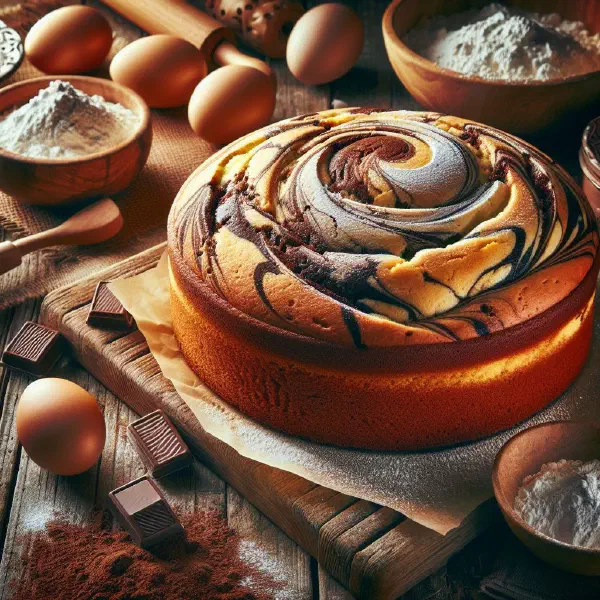
Depending on your own preferences, you can work all sorts of flavours and ingredients into your Gugelhupf. Add spices such as cinnamon or vanilla for an extra layer of warmth, for instance. Fruit such as apples, pears or berries also works beautifully in the batter. More adventurous bakers can play with layered batters, marbling cocoa through part of the mixture to create a marble cake, much like a Ruckzuck Marble Cake.
Ingredient substitutions
If you do not have certain ingredients to hand, there are plenty of alternatives you can turn to. Yoghurt can stand in for some of the butter, for example, to make the cake a little less rich. You could also use honey in place of sugar for a natural sweetness, much as you would when making a Chocolate Cake. Experiment with alternative sweeteners such as agave syrup or stevia to bring down the overall sugar content of your Gugelhupf.
Drink pairing ideas
A perfectly baked Gugelhupf deserves the right drinks alongside it. A hot cup of coffee or tea complements its sweetness beautifully. For children and non-coffee drinkers, a refreshing fruit smoothie or a glass of fruit juice does the job nicely. If you want to offer something a little more special, try a glass of sparkling wine or a fruity wine for a festive coffee table.
Serving and presentation ideas
Presentation can make far more of a difference than you might think. A simple dusting of icing sugar over the cake turns it into a centrepiece on any table. You can also decorate with fresh berries or mint leaves to add colour and freshness. Set the Gugelhupf on a pretty cake stand to give it a special flourish and impress your guests.
A bit of history
The Gugelhupf has a history that reaches back to the 19th century. Originally from continental Europe, it has evolved over the years across many different cultures. The cake’s characteristic shape is a mark of craftsmanship and part of a cultural heritage. Today the Gugelhupf is an indispensable part of coffee culture in countless households, bringing a touch of cosiness to many a gathering, rather like a slice of Linzer Torte or a piece of Sachertorte.
More recipe ideas
Summary: Gugelhupf
The much-loved Gugelhupf is simple to prepare and remarkably adaptable. With its many variations and possibilities, it can suit every taste and is guaranteed to be a hit on any occasion. The Gugelhupf is always a treat. Give it a try and bring a little Austrian baking tradition into your own kitchen.