National Dish Bahrain: Arabic Coffee (Recipe)

In this article
Step into the warm world of Arabic Coffee, one of Bahrain’s most cherished traditions. Known locally as gahwa, this fragrant, lightly spiced brew is far more than a morning pick-me-up. It is a symbol of welcome, poured for guests as a gesture of generosity and good company. Delicate, golden and scented with cardamom, it has been prepared the same way for generations. Bring a little of that timeless hospitality into your own kitchen with this simple recipe.
About Arabic Coffee
Arabic Coffee, widely known as gahwa, is a cornerstone of Bahraini culture and is often served on special occasions. Its preparation is an artful tradition passed down through the generations, prized for its distinctive taste and its wonderfully aromatic scent. Over time it has become a true emblem of hospitality. More than a simple pleasure, Arabic coffee is a deeply rooted ritual that draws people together and encourages sociable, unhurried gatherings.
Ingredients (serves 1–2)
- 2 cups water
- 2–3 teaspoons Arabic coffee grounds
- 1 teaspoon cardamom (optional)
- 1–2 teaspoons sugar (to taste)
Shopping for the ingredients
To make Arabic coffee, the ingredients are widely available and can be found in most supermarkets. Be sure to choose a good-quality Arabic coffee blend, as this makes all the difference to the final taste. Cardamom is a favourite spice that lends the coffee its signature note and is worth seeking out fresh. If you follow a sugar-free diet or have particular dietary needs, you can simply leave the sugar out altogether.
Preparing the dish
Before you begin, it is worth getting your ingredients ready. Measure out the coffee grounds and the cardamom, and make sure you have your water to hand. The quality of the water has a noticeable effect on the finished cup, so use fresh, clean water where you can. Once everything is prepared, you can move on to the brewing itself with a calm, steady rhythm.
Step-by-step instructions
- Bring the water to the boil in a small pot.
- Add the coffee grounds and, if using, the cardamom.
- Reduce the heat and let the coffee gently simmer for around 10 minutes.
- Carefully pour the coffee into small cups and add sugar to taste.
Gluten-free / lactose-free version
Arabic coffee is naturally gluten-free and lactose-free. The basic ingredients, water, coffee grounds and perhaps a little spice, contain no gluten or lactose whatsoever, so you can enjoy this delicious brew with complete peace of mind, whatever your dietary requirements. It is always sensible to double-check the packaging of your ingredients, especially if you are particularly sensitive to gluten or lactose.
Tips for vegans and vegetarians
Arabic coffee is a superb choice for vegans and vegetarians, as it contains no animal products at all. You can enjoy it without a second thought, and even experiment by using different plant-based sweeteners. Agave syrup or coconut blossom sugar, for example, both work beautifully in place of ordinary sugar. The coffee also takes well to a splash of plant-based milk if you fancy something a little creamier.
More tips and tricks
A crucial factor in a great cup of Arabic coffee is the quality of the beans. It is well worth grinding them freshly to release their full aroma. Take care not to let the coffee boil too hard, as this can turn the flavour bitter. Experiment with different blends and additions to create the perfect brew to suit your own palate, small adjustments can make a surprising difference.
Adapting the recipe to your taste
To tailor Arabic coffee to different preferences, simply vary the amount of coffee grounds and spices. If you like a stronger cup, add a touch more coffee. To bring out the sweetness, you can reach for honey or syrup as well as sugar. Other spices such as cinnamon can also be added for an extra layer of flavour, much as they do in a warming Cardamom Tea.
Ingredient substitutions
If you are not keen on cardamom, you can leave it out or swap it for another spice such as cinnamon or nutmeg. The type of sugar can vary too; instead of refined sugar, brown sugars or honey both work well. For anyone sensitive to caffeine, there are plenty of decaffeinated coffees that can serve as a base. Experiment with different combinations to discover your own favourite blend, or try the aromatic Spiced Arabic Coffee for a bolder twist.
Drink pairing ideas
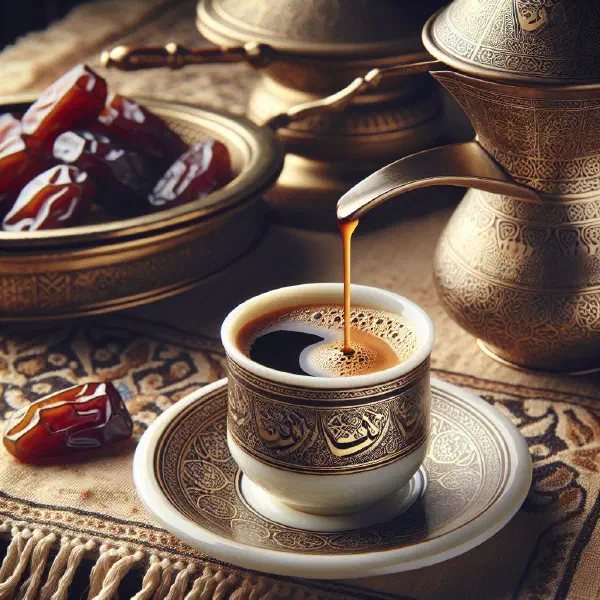
Arabic coffee pairs wonderfully with traditional Arabic sweets and snacks such as Baklava or fresh dates. Different teas, such as mint tea or a ruby-red hibiscus tea, also make a lovely accompaniment to an Arabic coffee tasting. These refined flavours create a balanced treat with something to please every palate. A glass of water is ideal too, refreshing the mouth as you savour the coffee’s full-bodied taste.
Serving and presentation ideas
Presentation plays an important part in the tradition of Arabic coffee. Serve it in small, decorative cups, often finished with golden or colourful detailing. An elegant dallah coffee pot can add greatly to an attractive table setting. Don’t forget to offer small dates or other traditional sweets, such as delicate Luqaimat, to round off the whole Arabic coffee experience.
A bit of history
The tradition of Arabic coffee traces its roots back to the 15th century in the region of Yemen, where the coffee plant was first cultivated. Over time, its preparation spread throughout the Arab world and eventually took on cultural and even academic significance. Arabic coffee is often bound up with rituals of preparation that underline a sense of togetherness and community. This deeply rooted tradition remains a central part of the culture in Bahrain and across the other Gulf states, and is a proud pillar of Bahraini cuisine.
More recipe ideas
Summary: Arabic Coffee
Arabic coffee is far more than just a drink; it represents a significant cultural tradition in Bahrain. With its distinctive taste and the ease with which it can be adapted to personal preference, it is an indispensable part of everyday life for many. Its simple preparation and readily available ingredients also make it wonderfully versatile. Spiced, or paired with sweet snacks, Arabic coffee always offers a truly special experience.