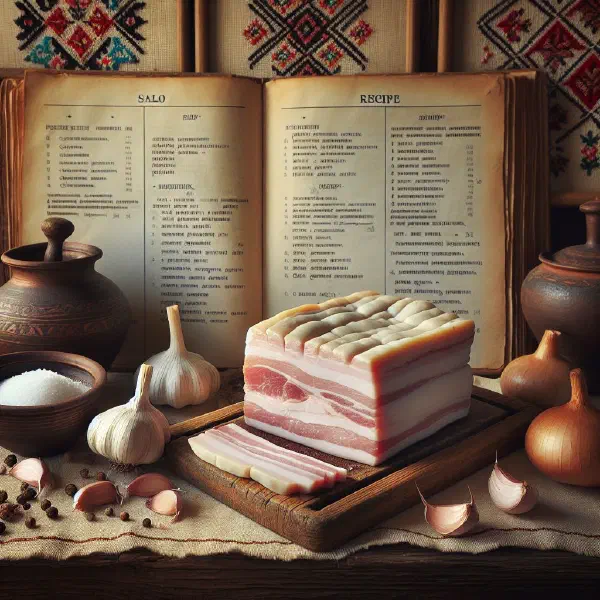
National Dish Belarus: Salo (Recipe)
In this article
Discover Salo, one of the great savoury pleasures of Belarus. Cured pork fat is sliced wafer-thin and served with dark rye bread, crisp onion rings and a scattering of fresh dill. There is almost no cooking involved, yet the result is deeply satisfying, salty, silky and unmistakably Slavic. It never fails to draw people to the table.
About Salo
Salo is a traditional dish enjoyed throughout Belarus and across many other Slavic countries. It consists of cured pork fat, usually served in thin slices as a very good snack. The combination of intense flavour and remarkably simple preparation makes salo something of a culinary landmark. Whether offered as an appetiser or as part of a substantial meal, it is a genuine highlight on any table, much like the hearty Verashchaka that often shares the same spread.
Ingredients (serves 1–2)
- 200 g cured pork fat
- 1 small onion
- Fresh dill
- 2 slices of rye bread
- Salt and pepper, to taste
Shopping for the ingredients
Choosing good pork fat matters more than anything else here, the dish stands or falls on the quality of its main ingredient. Take care to buy fresh vegetables too, such as onions and dill, which lift and sharpen the flavour. Many grocers and most butchers stock fat that has been specifically cured for this purpose, and it is well worth asking for it by name rather than settling for an untreated cut.
Preparing the dish
Preparing salo is straightforward and takes only a few steps. First, slice the cured pork fat very thinly so its full flavour comes through on the palate. Next, peel the onion and cut it into fine rings. The dill can be roughly chopped, serving both as a decorative garnish and as an extra layer of aroma. These simple steps are what allow you to plate the dish harmoniously and let all the flavours show at their best.
Step-by-step instructions
- Cut the cured pork fat into thin slices.
- Peel the onion and slice it into fine rings.
- Roughly chop the fresh dill.
- Arrange the slices of salo on a plate and garnish with the onion rings and dill.
- Serve alongside fresh rye bread.
Gluten-free / lactose-free version
Salo is naturally gluten-free and lactose-free, since the main components are nothing more than pure pork fat, onions and dill. To keep the whole plate gluten-free, use a gluten-free loaf or simply serve the salo on its own with the accompaniments. That way anyone with a gluten intolerance can enjoy the full experience. Do check the bread carefully, though, so no unwanted ingredients slip onto the plate.
Tips for vegans and vegetarians
Although salo is built entirely around pork fat, there are ways to recreate something of its character for vegans and vegetarians. Plant-based fats such as coconut oil or vegan margarine make an interesting starting point, especially when seasoned with smoked spices and aromatic herbs. Smoked tofu also works well as a savoury side, delivering protein while coming surprisingly close to the depth of the original.
More tips and tricks
For the best salo experience, let the dish stand at room temperature for a few minutes before serving. This improves both flavour and texture noticeably. The quality of the bread you serve it with makes a real difference too: a good rustic rye bread is a perfect match for the salty fat. Fresh accompaniments such as cucumbers or tomatoes add a welcome bright note, and a bowl of Holodnik alongside makes a refreshing contrast.
Adapting the recipe to your taste
The recipe adapts easily to personal preference. If you want a bolder flavour, rub the pork fat with punchy seasonings such as paprika or garlic. The accompaniments are just as flexible, so feel free to experiment with different herbs or even a spicy dip. Try a few combinations, see what appeals to you most, and build your own version of this hearty snack.
Ingredient substitutions
If cured pork fat proves hard to track down, streaky bacon will give you a similar effect. You might also experiment with a less heavily salted fat, or prepare a comparable dish using pork marinated in a robustly spiced mixture, the same approach that gives Shashlik its character. The aim is to preserve the rich, rounded flavour of the original, though lighter variations are perfectly possible.
Drink pairing ideas
The right drink can amplify the whole experience. Traditionally salo is served with a good, strong vodka, which cuts through and complements the salty notes beautifully. A well-made beer or a warming tea punch offers an interesting alternative, while Kvas is the classic non-alcoholic choice. Sparkling mineral water with lemon also balances the richness of the fat nicely.
Serving and presentation ideas
Presentation lifts the pleasure considerably. A rustic wooden board makes an ideal base, while fresh herbs such as dill or parsley add visual appeal. Arranging the onion rings and thick pieces of bread thoughtfully rounds out the picture. An inviting platter with additional sides such as pickled vegetables completes the spread and turns the dish into a real centrepiece on any table.
A bit of history
Salo is more than a dish; it forms part of the cultural identity of many Eastern European countries. The tradition of curing fat developed over centuries and reflects the practical need to preserve meat. In rural regions it served for generations as a vital source of energy, above all through the long winter months. That tradition has endured and is passed down from one generation to the next, making salo an integral part of Belarusian cuisine.
More recipe ideas
Summary: Salo
In short, salo is a defining dish of Belarusian cuisine, valued as much for its cultural weight as for its flavour. Making and serving it is simple and open to endless personal variation. Salo brings a piece of Slavic food culture straight to your table. Let it inspire you and dive into the flavours of Belarus.