National Dish Belgium: Kipkap (Recipe)
In this article
Kipkap is Flemish nose-to-tail cooking from the era when nothing was thrown away. Pork cheek and a piece of rind go into a spiced stock, the meat is chopped and packed, and the collagen-rich liquid sets it into a firm, sliceable block. Cider vinegar keeps it bright. It is eaten cold, thinly cut, with mustard and bread.
About Kipkap
Kipkap is the substantial Belgian cold brawn made from the meat of the pig’s head. Cooked in a well-spiced stock and pressed into a firm jelly, the dish embodies the resourceful tradition of Flemish butchery, in which every part was used. Thinly sliced and served with mustard and crusty bread, kipkap puts a piece of genuine Belgian culinary heritage on the plate.
Ingredients (serves 1–2)
- 400 g pork cheek
- 1 piece of pork rind, for the setting power
- 1 onion, quartered
- 2 bay leaves, 4 peppercorns, 1 clove
- 80 ml mild cider or white wine vinegar
- Salt and freshly ground pepper
- 1 bunch parsley, finely chopped
Shopping for the ingredients
Ask the butcher for pork cheek and a strip of rind together, the rind costs almost nothing and supplies all the gelatine the terrine needs. Cider vinegar gives a slightly rounder, fruitier acidity than wine vinegar and suits the pork well. Flat-leaf parsley has more flavour than curly.
Preparing the dish
Score the rind so it releases its collagen. Put everything in a heavy pot with cold water, starting cold draws out more gelatine than dropping meat into boiling water. Allow three hours of simmering and a full night in the fridge.
Step-by-step instructions
- Put the pork cheek, scored rind, onion and spices in a pot and cover with cold water.
- Bring slowly to a simmer and skim off the foam.
- Cook gently for about 3 hours, until the meat pulls apart with a fork.
- Remove the meat, discard the rind and chop the meat coarsely.
- Strain the stock through muslin and reduce it to roughly 300 ml.
- Stir in the vinegar and season firmly with salt and pepper.
- Combine the meat with the parsley, pack into a loaf tin and pour over the stock.
- Chill under a weight overnight, then turn out and slice thinly.
Gluten-free / lactose-free version
Kipkap is naturally gluten-free and lactose-free. Everything in it comes from the pig, the stockpot or the herb garden, only the bread served alongside needs substituting.
Tips for vegans and vegetarians
The dish is meat by definition. A vegetarian table can serve a mushroom and root vegetable terrine set with agar and seasoned the same way, mustard, vinegar and parsley do most of the flavour work here in any case.
More tips and tricks
Start the meat in cold water and never let it boil, or the stock turns cloudy and the finished terrine looks grey. Test the set by chilling a spoonful of the reduced stock; if it does not firm up, reduce further. And slice it straight from the fridge.
Adapting the recipe to your taste
Chopped gherkins or pickled onions folded through add sharpness and are common in Flanders. A spoonful of mustard in the stock deepens it. Thyme and juniper alongside the bay give a more aromatic result.
Ingredient substitutions
Pork shoulder works with an extra piece of rind for setting. Pork trotter is the traditional gelatine source if you can get one. White wine vinegar substitutes directly for cider vinegar.
Drink pairing ideas
A Flemish brown ale such as an oud bruin matches the vinegar note beautifully. A dry white works at the table. Apple juice or sparkling water with lemon suits it without alcohol.
Serving and presentation ideas
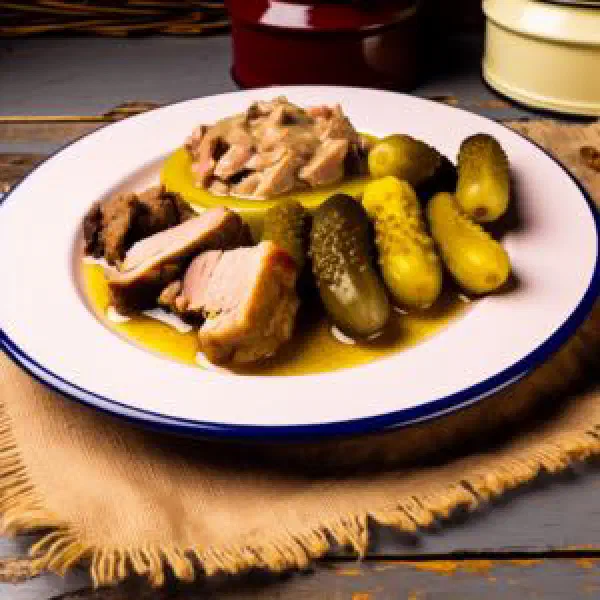
Serve kipkap thinly sliced on a wooden board with mustard, pickles and dark rye bread. In Flemish cafés it arrives as a plate of cold cuts with a beer. Do not dress it up, the point is the clean cut through meat and clear jelly.
A bit of history
Pressed head meat is one of the oldest preserved foods in northern Europe, made at the slachtfeest when a household’s pig was killed in late autumn. The Flemish name is onomatopoeic, from the chopping of the cooked meat. Butchers across Flanders each had their own version, varying in vinegar, spice and coarseness. It offers a genuine window onto Belgian cuisine.
More recipe ideas
Summary: Kipkap
Kipkap is pork cheek slow-simmered with rind, chopped with parsley and set in vinegared jelly. Start it in cold water, never let it boil, and chill it overnight under a weight.