National Dish Benin: Akassa (Recipe)
In this article
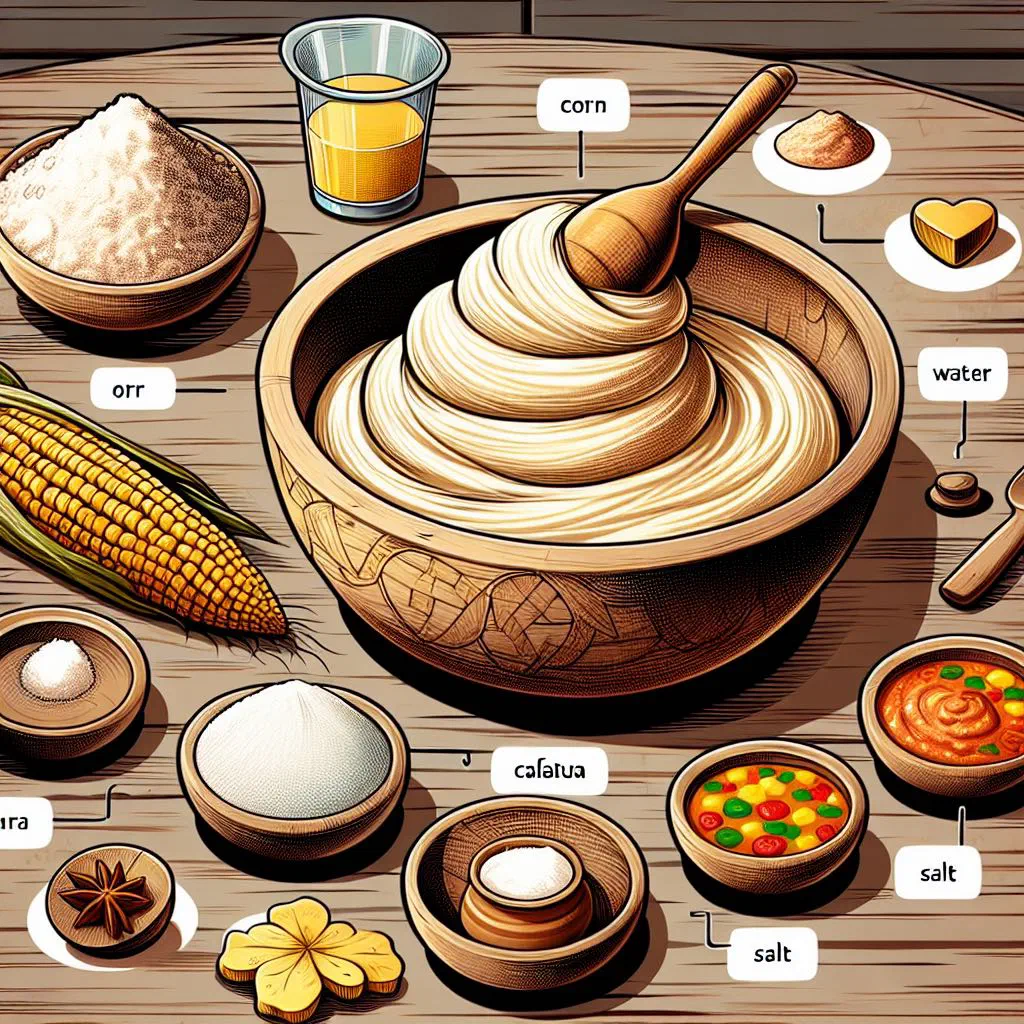
Discover Akassa, one of the everyday staples of Benin and a wonderfully gentle introduction to West African cooking. Made from nothing more than fermented corn flour, water and a little salt, it turns into a soft, faintly tangy dough that soaks up sauces beautifully. Simple, filling and endlessly adaptable, it is the kind of dish that quietly anchors a whole meal, and it is far easier to make at home than you might expect.
About Akassa
Akassa is a much-loved dish from Benin, known for its simplicity and its satisfying flavour. It consists mainly of fermented corn flour and is both nourishing and remarkably versatile. Akassa is usually served with a spicy sauce or with vegetables, which turns it into a complete meal in its own right. The dish is an excellent way to explore the rich culture of West African cooking and to enjoy its distinctive aromas.
Ingredients (serves 1–2)
- 250 g fermented corn flour
- 500 ml water
- 1 teaspoon salt
- Optional: 1 teaspoon oil (palm oil works well)
- Spicy sauce or vegetables of your choice
Shopping for the ingredients
The ingredients for akassa are widely available in African or Asian grocery shops. Fermented corn flour is often sold in special packaging, as it is a traditional product with a short shelf life once opened. If there is no such shop near you, it can also be ordered online. Do check that the flour really has been properly fermented, as this makes all the difference to the flavour of the finished dish.
Preparing the dish
Preparing akassa is straightforward and takes only a few steps. Start by laying out all the ingredients so that the cooking process runs smoothly. The fermented corn flour needs to be mixed thoroughly with water until you have a smooth, lump-free batter. It is worth checking the consistency of the mixture carefully, as it directly determines the texture of the finished dish.
Step-by-step instructions
- Mix the fermented corn flour thoroughly with 500 ml water and 1 teaspoon salt in a bowl.
- Tip the mixture into a pan and bring it to the boil over medium heat, stirring constantly.
- After about 5–10 minutes, once the mixture begins to thicken, keep stirring to prevent lumps forming.
- Cook until you reach the consistency you want, then transfer the akassa to a mould or bowl.
- Serve with a spicy sauce or vegetables and enjoy.
Gluten-free / lactose-free version
For a gluten-free version of akassa, simply make sure the corn flour you use is certified gluten-free. Corn flour is naturally free of gluten, but it is still worth checking the packaging for traces from shared production lines. Akassa is also naturally lactose-free, as long as you avoid adding dairy to the sauce or to any side dish. That makes it an excellent choice for anyone with particular dietary requirements, much like a bowl of Telibo.
Tips for vegans and vegetarians
Akassa is already a vegan dish, provided you use plant-based ingredients for the sauce and the accompaniments. You can swap the water for vegetable stock to give it extra depth of flavour. If you like to experiment, add vegetables such as carrots, peppers or spinach for more colour and nutrients. The seasoning can be enriched too, with herbs and spices borrowed from whichever cuisines you love most.
More tips and tricks
The single most important factor for good akassa is your stirring technique. Stir the mixture continuously as it heats to avoid lumps and to guarantee an even consistency. If you prefer individual portions rather than one large block, spoon small amounts into bowls once cooked and add the sauce only afterwards. Exotic spices can also be worked in to give the dish a personal signature.
Adapting the recipe to your taste
The recipe for akassa is flexible and easy to adjust to your own preferences. Experiment with different sauces to vary the flavour, a peanut-based sauce such as Sauce d’Arachide is a particularly delicious option. You can also increase or reduce the quantity of spices depending on how hot you like your food. It is equally possible to use other types of flour to achieve different aromas and textures.
Ingredient substitutions
If fermented corn flour proves hard to find, rice flour makes a workable alternative. Other flours such as millet or buckwheat can also be used for variations on the recipe. These substitutes will change both the consistency and the taste, so it is sensible to experiment with small quantities first. Make sure everything you use is fresh and of good quality to get the best possible result.
Drink pairing ideas
Akassa goes well with a wide range of drinks. A fresh fruit juice, pineapple or mango for example, complements the spicy notes of the sauce beautifully. You could also serve sparkling mineral water or a light African beer alongside it. For something sweeter, a glass of spiced tea or a ginger drink such as Gnamankoudji is an excellent match, as is a chilled hibiscus Bissap.
Serving and presentation ideas
Presentation plays a real part in making this dish appealing. Use colourful vegetable sides and creative sauces to bring visual interest and flavour together. Akassa can be served in a handsome bowl and scattered with fresh herbs just before it reaches the table. Traditional West African serving platters or woven baskets make the experience feel that bit more authentic.
A bit of history
Akassa has a long history in Beninese culture and forms part of the daily diet for many people. This traditional meal has its roots in West African agriculture and relies on locally available ingredients. The process of fermentation is valuable for the flavour it develops and for nutrition, as it makes nutrients more accessible and extends shelf life. Akassa is not merely a plain dish but a genuine part of the social and culinary identity of Benin cuisine.
More recipe ideas
Summary: Akassa
Akassa is a simple yet flavourful dish from Benin that is easy to prepare and prized for its versatility. It comes from long-standing West African traditions and is made from fermented corn flour. With different sauces and side dishes it can be adapted to suit almost any taste. Akassa is a wonderful way to explore African cooking and to understand a little of its cultural significance.