National Dish Bhutan: Phaksha Datsi (Recipe)
In this article
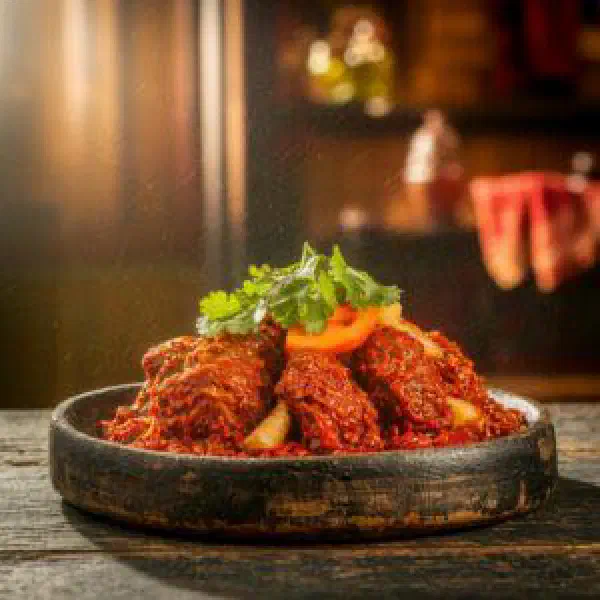
Discover Phaksha Datsi, the dish that sums up Bhutan on a single plate. Tender pork, fiery chillies and soft, melting cheese come together in a sauce that is rich, warming and utterly moreish. It is the sort of food the Himalayan kingdom has been cooking for generations, and it is far simpler to make at home than you might expect. One spoonful and you will understand why Bhutanese cooks never tire of it.
About Phaksha Datsi
Phaksha Datsi is the best-loved national dish of Bhutan and captures everything that makes the country’s cooking distinctive: a handful of simple ingredients treated with real care. At its heart are pork and chillies, brought together with cheese that melts into a thick, savoury sauce. The interplay of heat and richness makes it very good, and it has won over international food lovers as readily as locals. The name itself translates as “pork with cheese”, which tells you a great deal about the honesty of Bhutanese food.
Ingredients (serves 1–2)
- 300 g pork (shoulder or leg)
- 2–3 green or red chillies, to taste
- 100 g Bhutanese cheese (or an alternative such as feta)
- 1 onion, diced
- 2 garlic cloves, chopped
- 1 teaspoon turmeric
- Salt to taste
- Water as needed
Shopping for the ingredients
When shopping for phaksha datsi, it is worth seeking out a specialist market or an Asian grocery to find the best possible ingredients. The pork should be fresh and of good quality, as it carries the flavour of the whole dish. Choose your chillies carefully and pick firm, fresh ones, since they set the character of the sauce. The right cheese, ideally savoury and good at melting, is what gives the dish its authentic note.
Preparing the dish
Preparing the dish begins with cutting the pork into small, evenly sized pieces. Dice the onions and chop the garlic so their aromas are released readily during cooking. The chillies can be left whole or sliced, depending on how much heat you want. Lay everything out in advance: a tidy work surface makes the cooking straightforward and gets you to the table that much faster.
Step-by-step instructions
- Simmer the pork in a pan with a little water for about 30 minutes, until tender.
- Add the onions and garlic and continue cooking until the onions turn translucent.
- Stir in the turmeric and the sliced chillies and mix well.
- Add the cheese and let everything simmer together for about 5 minutes, until it has melted into a sauce.
- Season with salt and serve.
Gluten-free / lactose-free version
Phaksha datsi is naturally gluten-free, since none of the main ingredients contain any gluten at all. For a lactose-free version, simply swap the cheese for a lactose-free cheese or another flavourful alternative such as a vegan one. Do check the labels on any spices or stock you use, as these are where hidden ingredients tend to lurk. That way you can enjoy the dish with complete peace of mind, much like the reliably simple Kewa Datshi.
Tips for vegans and vegetarians
Vegans and vegetarians can adapt phaksha datsi easily by replacing the pork with tofu or seitan. Both take on the surrounding flavours beautifully and make an excellent source of protein. For the cheese, use a vegan alternative that melts well, or try a blend of ground nuts and nutritional yeast to build that cheesy depth. These small changes leave the dish every bit as satisfying as the original.
More tips and tricks
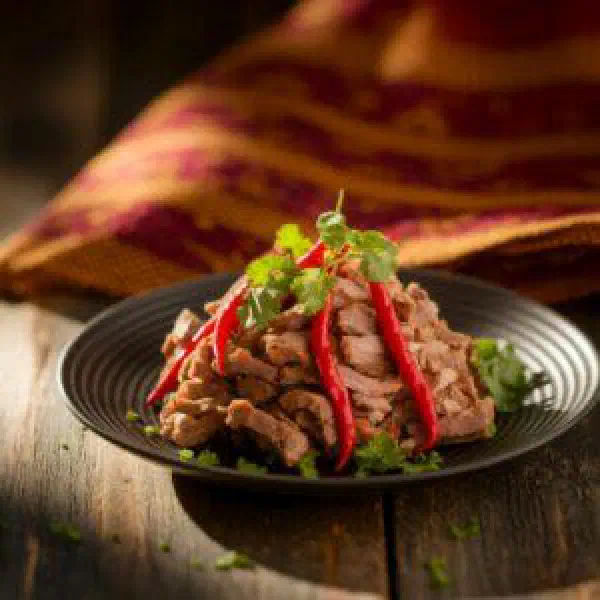
To draw the most flavour from your ingredients, marinate the pork before cooking so the seasoning has time to penetrate the meat. Keep the heat low and let the sauce develop slowly rather than rushing it. It is also worth experimenting with different chilli varieties to find the level of heat that suits you. A scattering of fresh herbs such as coriander at the very end adds a welcome lift.
Adapting the recipe to your taste
Phaksha datsi is an exceptionally forgiving dish. You can dial the chillies up or down, or shift the balance between meat and vegetables however you please. Adding extra vegetables such as peppers or carrots makes it more colourful and more nourishing, in the spirit of a hearty Shamu Datshi. There is plenty of room here for improvisation, so treat the recipe as a starting point rather than a rulebook.
Ingredient substitutions
If you cannot get hold of traditional Bhutanese ingredients, good alternatives are easy to find. In place of the special local cheese, feta or mozzarella both work well. For the chillies, jalapeños or serranos make sensible stand-ins depending on the heat you are after. Combining two or three different cheeses is another way to deepen the flavour, as cooks do in the closely related Chogo Datshi.
Drink pairing ideas
Gentle drinks suit phaksha datsi best: traditional butter tea or simply a glass of sparkling water will take the edge off the chilli heat. A light, fruity beer also works nicely, tying the savoury flavours together without competing with them. If you prefer wine, a fruity white balances the spice well. Beyond that, just follow your own taste and that of your guests.
Serving and presentation ideas
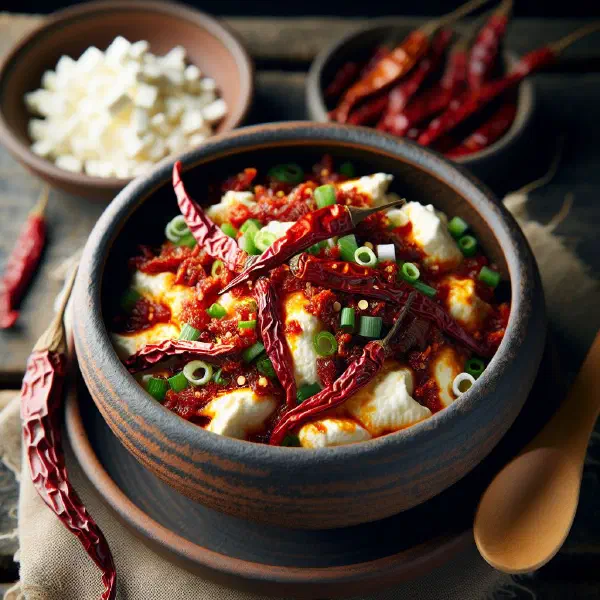
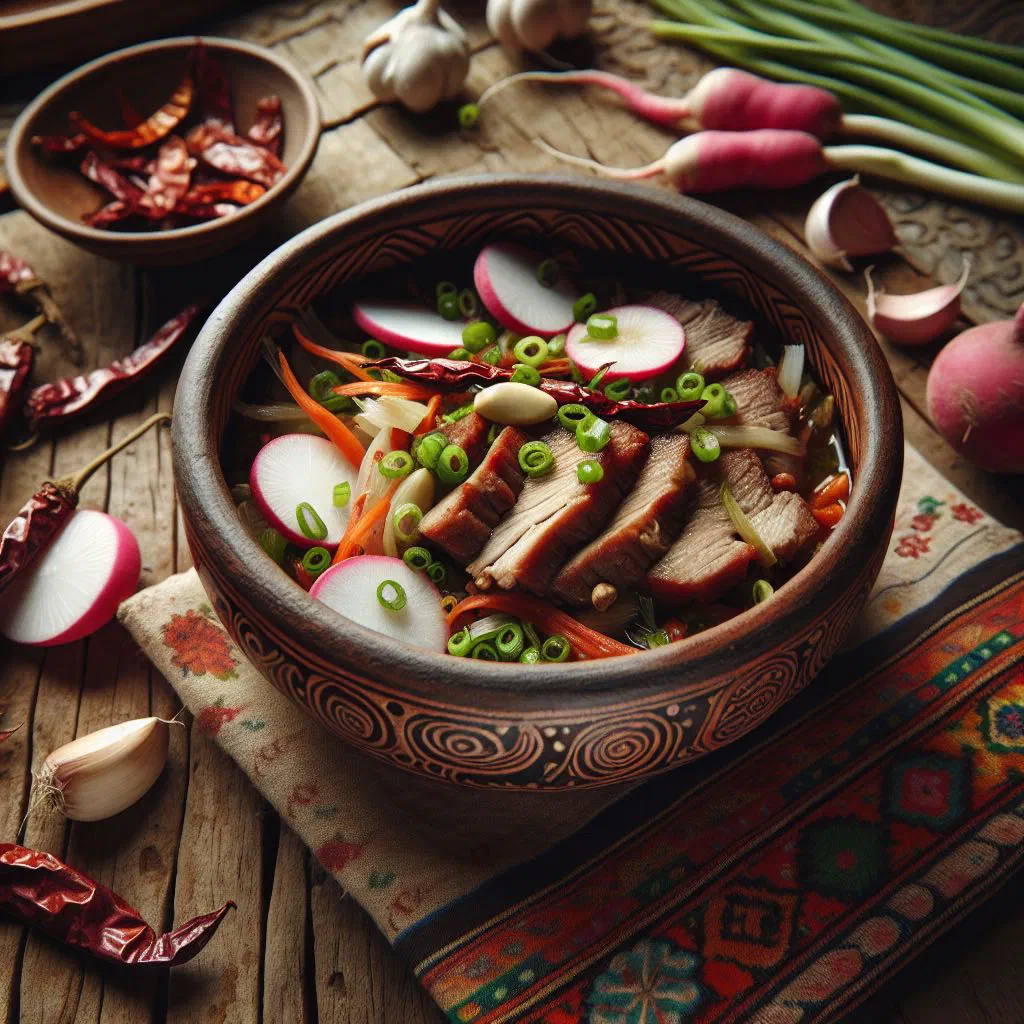
Presentation can lift the whole phaksha datsi experience considerably. Serve it in an attractive bowl and garnish with fresh coriander or spring onions for a touch of colour. A side of steamed vegetables or red rice rounds the plate out handsomely. Mixing bowls and plates of different sizes is a simple way to make the table look more inviting.
A bit of history
The story of phaksha datsi is woven deeply into Bhutanese culture, where the recipe has passed from one generation to the next. It reflects how people here have always cooked: with simple, nourishing ingredients and no fuss. The pairing of meat and fierce chillies shows the national appetite for bold flavour, an appetite that runs right through Bhutanese cuisine. Over the years the dish has found admirers well beyond the Himalayas and become a culinary emblem of the kingdom.
More recipe ideas
Summary: Phaksha Datsi
Phaksha datsi is a hearty, deeply comforting dish that captures the flavours and culture of Bhutan perfectly. Its handful of humble ingredients combine into something wonderfully spicy and creamy, which is why it appeals to visitors just as strongly as it does to locals. The recipe bends readily to personal taste, and vegetarians and vegans need not miss out either. Give phaksha datsi a try and bring a piece of the Himalayas into your own kitchen.