National Dish Botswana: Seswaa (Recipe)
In this article
Seswaa has three ingredients: beef, water and salt. It is boiled for hours and then pounded until the meat collapses into threads. No spice, no onion, nothing else. It is served at every wedding and funeral in Botswana, and the restraint is deliberate.
About Seswaa
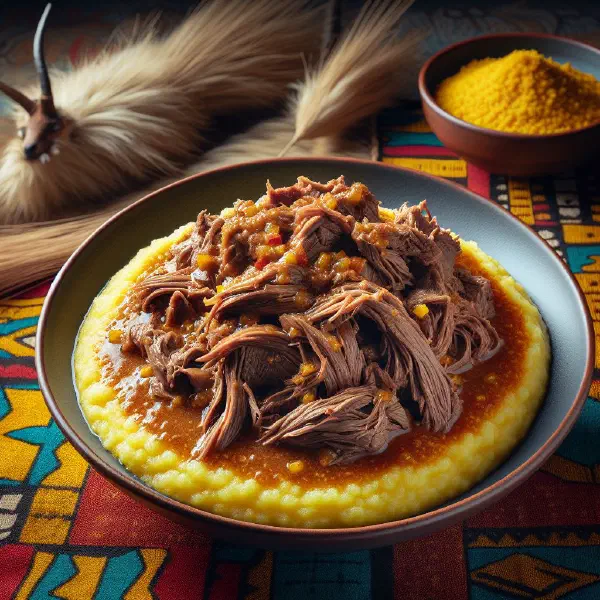
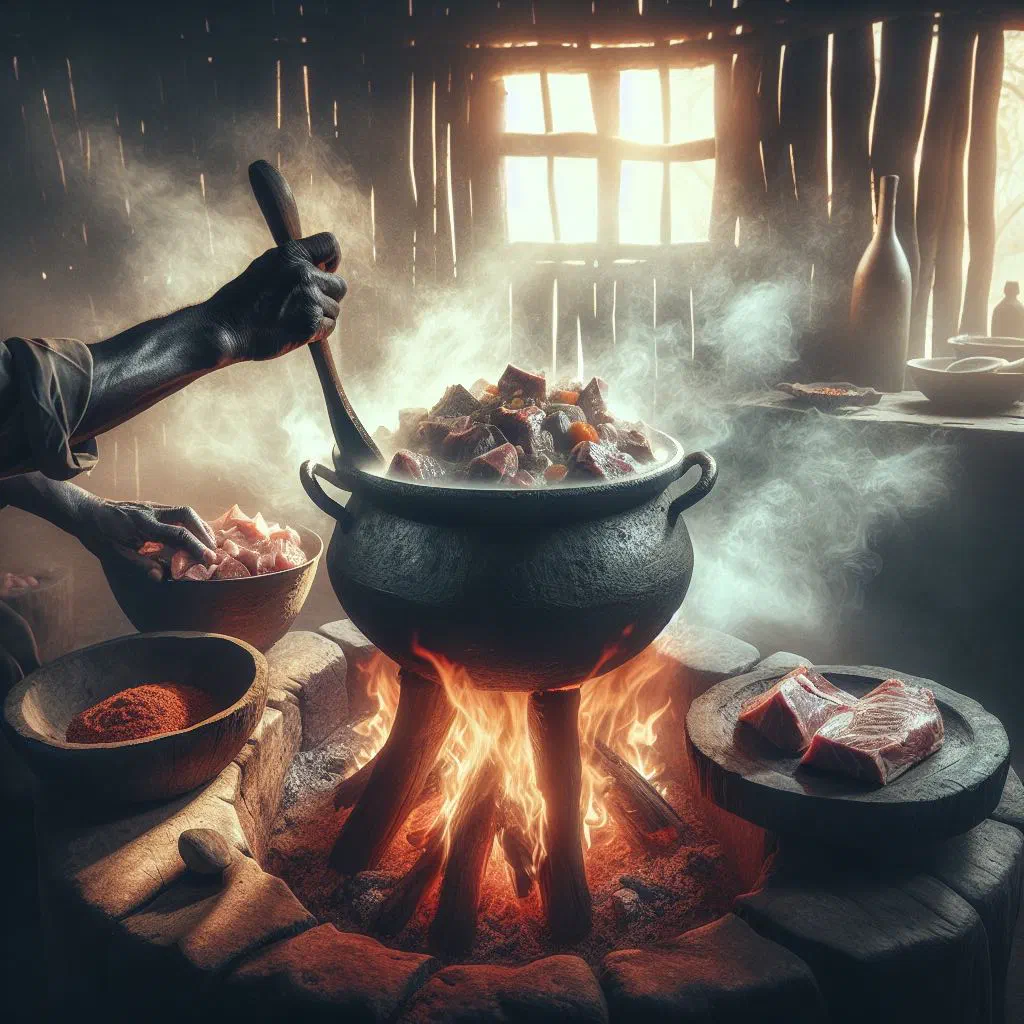
Seswaa is Botswana’s national dish, and it is traditionally cooked by men in a three-legged iron pot over a fire, in quantities meant for a village. The meat is simmered until it falls apart, then pounded in the pot with a wooden stick until it is fibrous and soft.
The absence of seasoning is not an oversight. Seswaa is meant to taste of beef, and Botswana beef is very good, which is the whole argument.
Ingredients (serves 1–2)
- 500 g beef (shoulder or neck work best)
- 2 litres water
- Salt to taste
Shopping for the ingredients
Shoulder, neck or shin are the right cuts. They have the connective tissue that breaks down over three hours and gives seswaa its texture. Bone-in is better than boneless, since the bones enrich the broth. Lean steak is exactly wrong here.
Preparing the dish
Cut the beef into large pieces, roughly fist-sized, rather than dicing it. There is nothing else to prepare. Set aside three hours and check on the pot occasionally.
Step-by-step instructions
- Place the beef in a large pot.
- Add enough water to cover the meat completely.
- Bring to the boil, then reduce the heat and let the meat simmer gently for 2–3 hours.
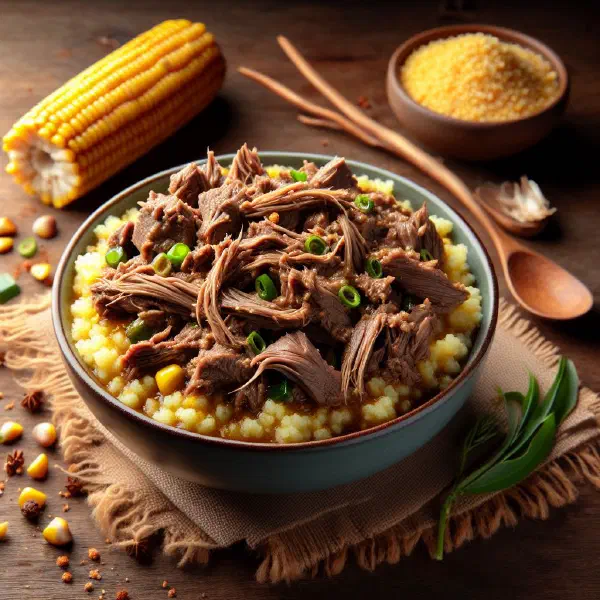
- Once cooked, lift the meat out, remove any bones, and shred it with two forks or a masher until it reaches a soft, fibrous, almost pulpy consistency.
- Season the shredded beef with salt and serve piping hot.
Gluten-free / lactose-free version
Beef, water and salt contain neither gluten nor lactose. Served with pap, the maize porridge, the whole meal remains suitable. This is about as unproblematic as a dish gets.
Tips for vegans and vegetarians
Seswaa is beef and nothing else, so there is no version of it without meat. Botswana’s vegetable side dishes stand up well on their own: morogo wa dinawa, the cowpea leaves, and samp and beans make a full plate with pap.
More tips and tricks
Salt at the end, not the start. Salting early tightens the meat and lengthens the cooking. Keep the pot at a bare simmer; a rolling boil makes the meat stringy rather than soft. And pound it while it is still hot, because cooled meat will not break down.
Adapting the recipe to your taste
Goat is used as often as beef and cooks slightly faster. Some cooks add an onion to the pot, which is a modern concession. A little of the cooking broth stirred back into the pounded meat keeps it moist.
Ingredient substitutions
Goat or mutton work by the same method. A pressure cooker cuts the time to about 45 minutes, though the texture is not quite the same. Nothing substitutes for the pounding.
Drink pairing ideas
Rooibos tea is the everyday drink. Gemere, the home-brewed ginger beer, appears at the gatherings where seswaa is served. Cold beer works at a braai.
Serving and presentation ideas
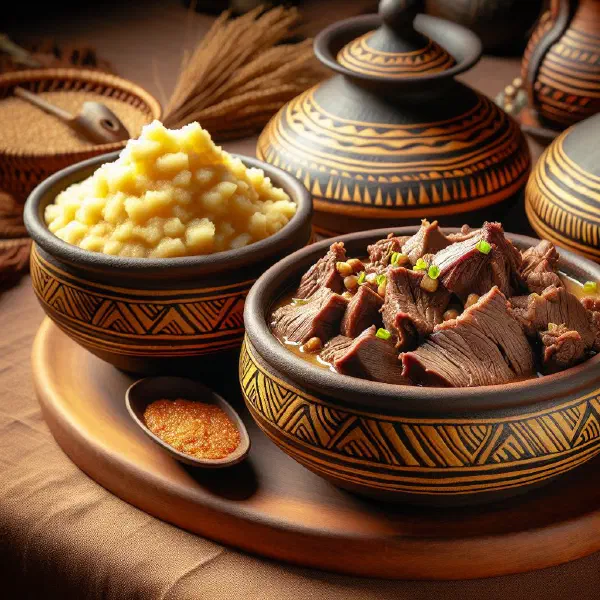
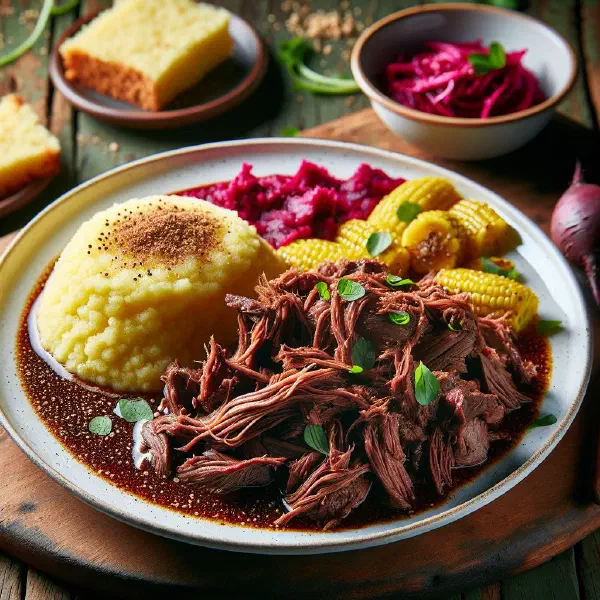
Serve it in a mound beside pap or bogobe, the sorghum porridge, with morogo on the side. It is eaten with the hands, using the porridge to pick up the meat. At functions it comes out in large communal dishes.
A bit of history
Cattle are central to Tswana life in a way that goes beyond food: they are wealth, dowry and social standing, and the phrase kgomo ke banka, cattle are the bank, is still current. Seswaa is what is cooked when a beast is slaughtered for an occasion. It sits at the centre of Botswanan cuisine.
More recipe ideas
Summary: Seswaa
Seswaa is beef simmered for three hours in salted water and then pounded to threads. Use a cut with connective tissue, salt it late, keep the simmer gentle, and pound it hot.