National Dish Brazil: Quirera com Suã (Recipe)
In this article
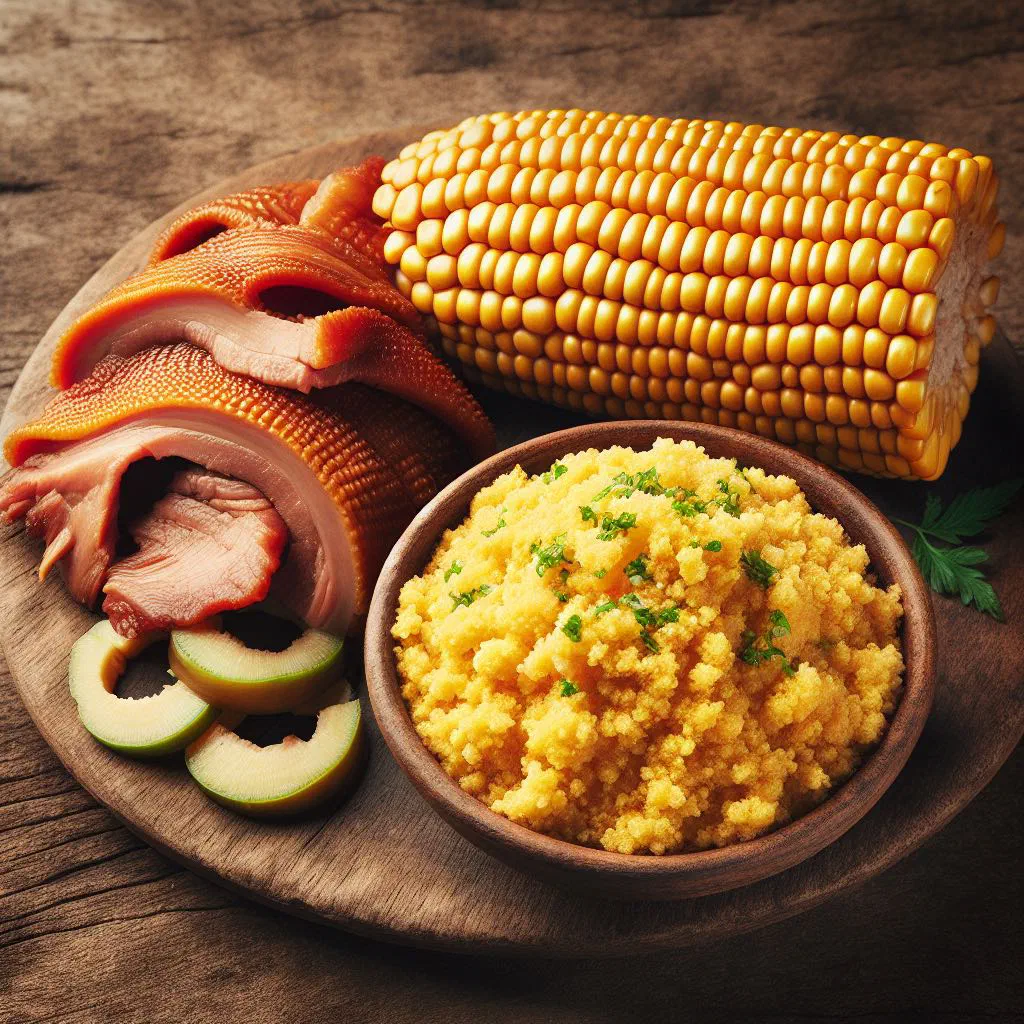
Discover Quirera com Suã, a soul-warming classic from the Brazilian countryside. This hearty dish brings together a creamy, golden mash of cornmeal and tender, slow-cooked pork for a meal that tastes of home. Rich, comforting and built around humble pantry staples, it has long been the kind of food shared around a busy family table. Bring a little of Brazil’s rustic warmth straight to your own kitchen.
About Quirera com Suã
Quirera com Suã is a much-loved traditional dish from Brazil, prized for the way it brings together flavour and genuine heartiness. At its core is cornmeal cooked slowly with tender pork, a pairing that gives the dish its unmistakable character. It is far more than just a meal. It is a piece of Brazilian culture, often served at sociable gatherings where good food and good company go hand in hand. If you are after a dish that will pleasure you and your guests alike, Quirera com Suã may well be the answer.
Ingredients (serves 1–2)
- 200g cornmeal (quirera)
- 300g pork (such as shoulder or neck)
- 1 onion
- 2 cloves of garlic
- 1 litre water or stock
- Salt and pepper, to taste
- Vegetable oil, for frying
- Fresh herbs (coriander or parsley), to garnish
Shopping for the ingredients
To make Quirera com Suã you will want fresh, good-quality ingredients. Visit your local market or a well-stocked supermarket, where you should be able to find everything you need. When buying the pork, look for a fresh cut of good quality to achieve the best flavour. The cornmeal plays a central role in this dish, so choose a reliable brand here too for the best results.
Preparing the dish
Before you start cooking, it is worth getting all your ingredients ready. Finely chop the onion and the garlic so they release their aromas quickly as they fry. The pork is best cut into small cubes so it cooks through evenly. This groundwork is key to making sure the dish cooks uniformly and the flavours come together in harmony.
Step-by-step instructions
- Heat a little vegetable oil in a large pot and add the onion and garlic. Fry until golden brown.
- Add the cubed pork to the pot and brown it well on all sides until cooked through.
- Stir in the cornmeal and toast it briefly to deepen and intensify the aromas.
- Pour in the water or stock and let the dish simmer over medium heat, stirring now and then, until the cornmeal is soft.
- Season with salt and pepper to taste and garnish with fresh herbs just before serving.
Gluten-free / lactose-free version
The recipe for Quirera com Suã is naturally gluten-free and lactose-free, as it is built mainly around cornmeal and meat. You can rest assured that this dish suits people with intolerances too. Do take care, though, that the ingredients you use, such as stock or spice blends, are also free from gluten. That makes it an excellent choice for a wide range of diets.
Tips for vegans and vegetarians
There is plenty of scope to adapt Quirera com Suã for vegetarians and vegans. In place of pork, use vegetable stock and plant-based proteins such as tofu or seitan. These options give a similar texture while keeping the dish rich in flavour. You can also add vegetables such as carrots, courgettes or spinach to make it more nourishing and colourful.
More tips and tricks
Experiment with different spices and herbs to give your Quirera com Suã a personal touch. Paprika, cumin or smoked chilli can add intriguing layers of flavour. Toasting the cornmeal before adding the liquid is another way to draw out even more taste. One more tip: let the dish rest for a few minutes before serving so the flavours have time to settle and develop.
Adapting the recipe to your taste
The beauty of Quirera com Suã lies in its flexibility. Depending on your preferences, you can adjust the ingredients freely. If you like it hotter, add more chilli or paprika. You might also experiment with different meats, beef or chicken, for example, to discover new flavour profiles.
Ingredient substitutions
If you do not have every ingredient to hand, that is no problem at all. The cornmeal can be swapped for polenta, which offers a similar taste and texture and shines just as well in Canjiquinha. For the meat, smoked sausage is a fine choice that lends the dish a different character. Just make sure your substitutes work well together so the result is every bit as satisfying.
Drink pairing ideas
A range of drinks pairs beautifully with Quirera com Suã and rounds out its flavour. A fresh caipirinha made from lime, sugar and cachaça is an excellent choice. If you would rather keep things alcohol-free, a fruity lemonade or a chilled malt drink works nicely. These drinks make for a refreshing accompaniment to such a hearty meal.
Serving and presentation ideas
Presentation plays an important part when serving Quirera com Suã. Bring it to the table in a large bowl where the colours and ingredients can show off to full effect. Garnish with fresh herbs and perhaps a few wedges of lime. An inviting table setting with a few Brazilian touches can round off the whole experience and heighten that holiday feeling.
A bit of history
Quirera com Suã has its roots in Brazilian cooking, which is shaped strongly by the country’s farming traditions. The dish is a symbol of the bond between people and food, and it is often served at family gatherings and celebrations. Its use of corn, a staple ingredient across Brazil, reflects the deeply local influences that run through Brazilian cuisine. Over time it has evolved, yet it remains a much-loved classic, much like the rustic comfort of Vaca Atolada.
More recipe ideas
- Dobradinha — a rich, slow-cooked tripe stew
- Canjicão — a creamy corn-based dish
- Cuscuz — steamed cornmeal as a side
- Torresmo — crispy fried pork crackling
- Macaxeira com Carne — cassava with beef
Summary: Quirera com Suã
Quirera com Suã is more than just a dish; it is an invitation to experience Brazilian culture and its flavours. With its hearty pairing of cornmeal and pork, it becomes a highlight of any occasion. This dish brings joy to the table. Let the variety of flavours and the time-honoured preparation work their magic.