National Dish Brunei: Ambuyat (Recipe)
In this article
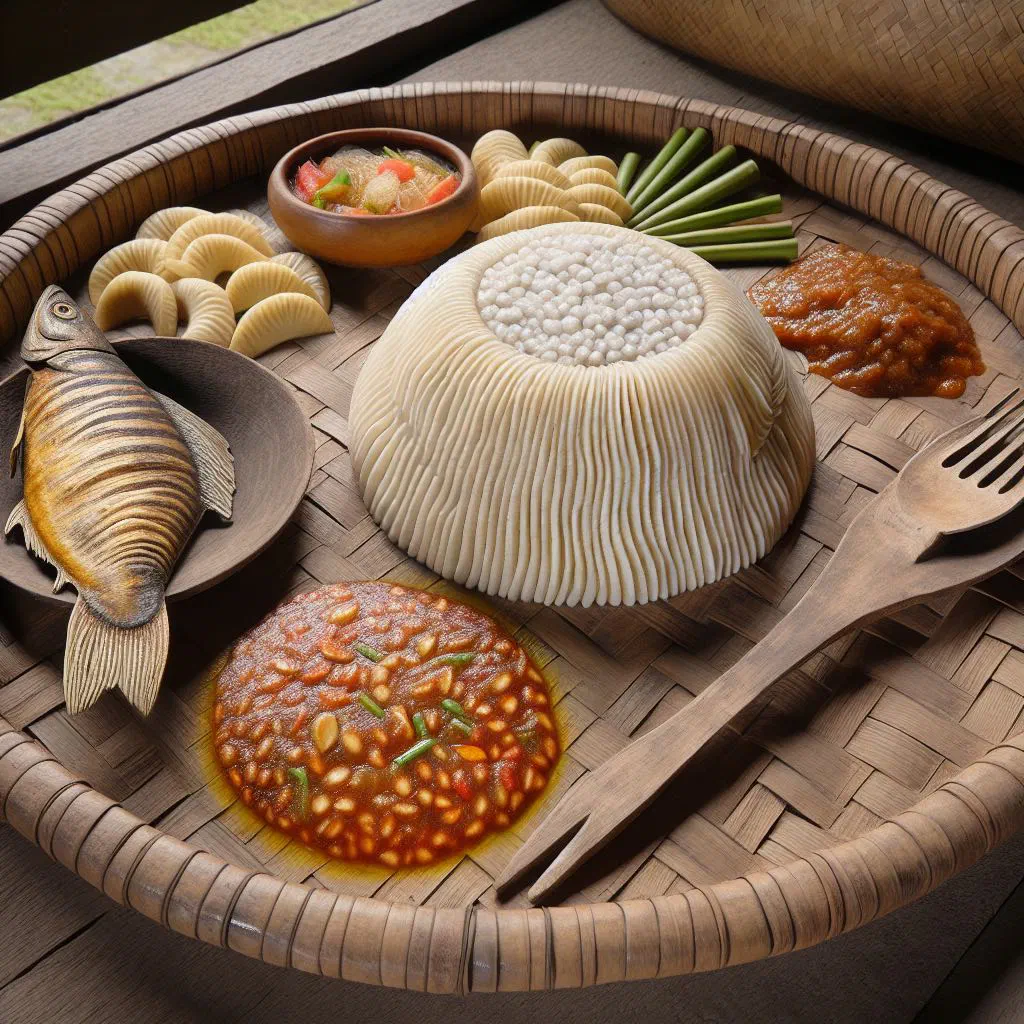
Ambuyat is sago starch and boiling water, stirred until it turns into a translucent, glue-like mass. It has no flavour of its own. That is not a criticism, it is the design: ambuyat is a vehicle for the sauces around it, and it is eaten with a bamboo fork called a chandas.
About Ambuyat
Ambuyat is the national dish of Brunei and it divides visitors sharply. The starch comes from the interior of the sago palm, and the finished dish is sticky enough that you twirl it around the fork rather than spearing it. It is never chewed; you swallow it, which takes some getting used to.
What makes the meal is the accompaniments: cacah, a sour sauce of tamarind or belacan, plus grilled fish, vegetables and sambal.
Ingredients (serves 1–2)
- 200g sago starch
- 500ml water
- Accompanying dips and sauces, of your choice
Shopping for the ingredients
Sago starch, sometimes labelled ambulung or sago flour, is sold in Southeast Asian grocers. It is not the same as sago pearls and not the same as tapioca starch, though tapioca is the closest substitute and behaves similarly. Buy fresh: old sago starch does not gel properly.
Preparing the dish
Mix the sago starch with a little cold water into a slurry first. Boiling water poured onto dry starch gives lumps that never disperse. Have the accompaniments ready before you start, because ambuyat firms up as it cools and is eaten immediately.
Step-by-step instructions
- Bring the water to the boil in a medium-sized pan.
- Gradually add the sago starch, stirring continuously as you go.
- Keep stirring until the mixture turns thick and sticky.
- Once the mass has become translucent, remove it from the heat and transfer it to a bowl.
Gluten-free / lactose-free version
Sago is a palm starch and contains no gluten whatsoever, and there is no dairy in the dish. Ambuyat is one of the most naturally accommodating national dishes anywhere. Check only the sauces, since belacan-based ones sometimes include wheat.
Tips for vegans and vegetarians
The ambuyat itself is vegan. The sauces are where the difficulty lies, since most contain shrimp paste. A tamarind and chilli cacah without belacan works, and sayur lodeh, the coconut vegetable stew, makes a good accompaniment.
More tips and tricks
Use water that is genuinely boiling. Anything less and the starch will not gel, leaving you with cloudy slop. Stir hard and fast in one direction. And judge it by appearance rather than time: the moment it turns from white to translucent, it is done.
Adapting the recipe to your taste
The cacah is where the variation lies. Tamarind, chilli, lime and belacan in different proportions give quite different meals. Durian-based sauces exist for the committed. Grilled ikan bakar is the standard protein alongside.
Ingredient substitutions
Tapioca starch behaves similarly and is easier to find, though the texture is slightly less springy. There is no other substitute worth attempting.
Drink pairing ideas
Brunei is dry, so alcohol does not arise. Iced sweet tea is the usual accompaniment. Cendol works as the dessert and the drink at once.
Serving and presentation ideas
Serve it in a communal bowl in the centre, with several small dishes of sauce and side dishes around it. Each person twirls a portion onto a chandas, dips it, and swallows. It is a shared meal and the sharing is most of the point.
A bit of history
Sago sustained the peoples of Borneo long before rice arrived, and the palm yields enormous quantities of starch from a single trunk. Ambuyat is what that tradition looks like on the table, and it is still eaten across Brunei, Sarawak and parts of Indonesia. It anchors Bruneian cuisine alongside nasi lemak and satay.
More recipe ideas
Summary: Ambuyat
Ambuyat is sago starch stirred into boiling water until translucent and sticky, eaten with a bamboo fork and a sour dipping sauce. Slurry the starch first, use properly boiling water, and serve it at once.