National Dish Brunei: Gulai Daging (Recipe)
In this article
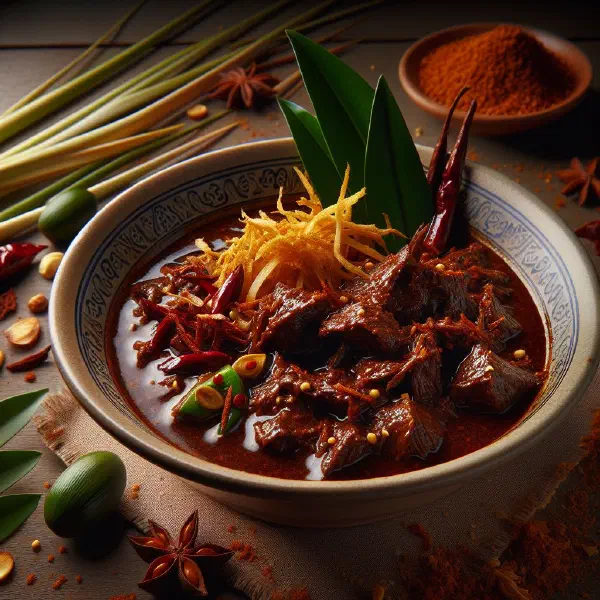
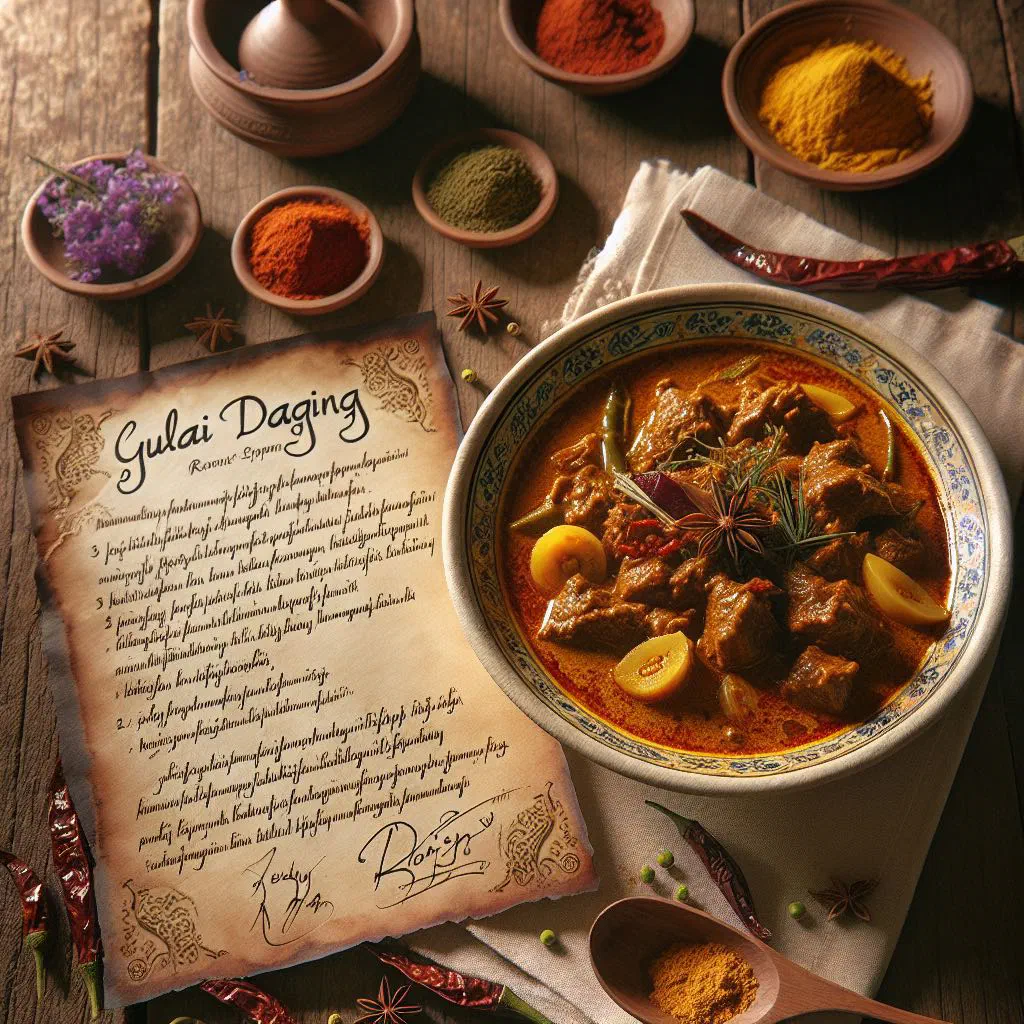
Say hello to Gulai Daging, a rich and fragrant beef curry that sits at the heart of Bruneian cooking. Tender chunks of meat are simmered slowly in a golden sauce of coconut milk and warming spices until they turn meltingly soft. Aromatic, gently spiced and deeply comforting, it is the kind of dish that fills the kitchen with wonderful smells and brings everyone to the table. Bring a taste of Brunei’s culinary heritage straight to your own home.
About Gulai Daging
Gulai Daging is a traditional dish from Brunei that appeals to lovers of Asian cuisine. It is a hearty curry that brings together tender beef in a rich, luxurious sauce. The combination of fragrant spices and creamy coconut milk creates a wonderful flavour that pleases the palate and stirs the senses in equal measure. This dish is a marvellous way to discover the cultural variety of Brunei in your own kitchen.
Ingredients (serves 1–2)
- 300 g beef, cut into cubes
- 400 ml coconut milk
- 2 tablespoons gulai paste
- 1 onion, finely chopped
- 2 cloves garlic, crushed
- 1 piece of ginger, grated
- 2–3 kaffir lime leaves
- Salt and pepper to taste
- Fresh coriander leaves, to garnish
Shopping for the ingredients
To prepare the perfect Gulai Daging, it is important to choose the right ingredients. Visit an Asian supermarket to find the gulai paste and coconut milk that are essential to this flavour. Be sure to buy good-quality beef, as this forms the very base of the dish. Fresh herbs such as coriander and kaffir lime leaves lend the final flourish and should also be bought as fresh as possible.
Preparing the dish
Preparation is the key to a flavourful Gulai Daging. Begin by washing and preparing all the ingredients thoroughly. The meat should be cut into even cubes to ensure it cooks uniformly. Chopping the onions and crushing the other aromatics is just as important, so that every bite delivers a full, rounded flavour.
Step-by-step instructions
- Brown the beef in a pot until it is golden on all sides.
- Add the onion, garlic and ginger, and sweat for a few minutes.
- Stir in the gulai paste and mix well until everything is evenly coated.
- Pour in the coconut milk and add the kaffir lime leaves, then leave to simmer over low heat.
- Season with salt and pepper and continue to simmer for a further 20–30 minutes, until the meat is tender.
- Scatter with fresh coriander just before serving.
Gluten-free / lactose-free version
One of the best things about Gulai Daging is that it is naturally gluten-free and lactose-free. Do, however, make sure that the gulai paste contains no gluten-based ingredients. This means everyone can enjoy this delicious dish without a second thought. For anyone with food intolerances, it is ideal to use homemade or clearly labelled products.
Tips for vegans and vegetarians
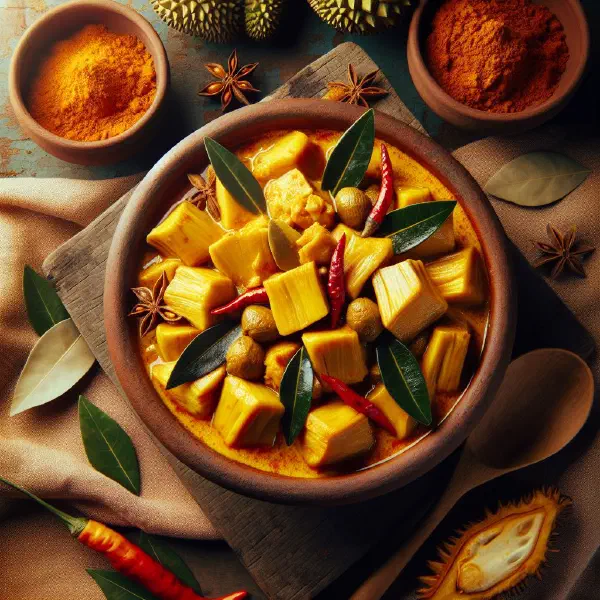
For those who prefer a vegan or vegetarian diet, there are wonderful alternatives to Gulai Daging. In place of beef you can use tofu or plant-based meat, while keeping the base ingredients such as the coconut milk and the spices. These tweaks mean that vegans and vegetarians can enjoy this hearty curry too. Bear in mind that you may need to adjust the cooking time, as tofu tends to cook more quickly. Fans of a meat-free curry might also like Gulai Nangka, made with young jackfruit.
More tips and tricks
To get the most out of your Gulai Daging, a few tips and tricks can be a real help. Experiment with adding different spices such as cumin or cinnamon to give the dish a personal touch. Let the curry rest for a few hours or overnight to allow the flavours to deepen. Serve the dish with fragrant jasmine rice to round off the cooking experience, much as you would with a comforting Nasi Lemak.
Adapting the recipe to your taste
The great thing about Gulai Daging is its versatility. Depending on your personal taste, you can adapt the dish and add your favourite vegetables, such as carrots or peppers. The heat of the dish can also be dialled up or down by using more or less chilli. Try out different variations to create a Gulai Daging that is entirely your own.
Ingredient substitutions
If some ingredients are hard to find in your region, there are plenty of alternatives. Instead of beef, you could use chicken or lamb, the latter working beautifully in the spirit of a slow-cooked Rendang Daging. For the gulai paste, a homemade blend of curry powder, ginger and garlic does the job nicely. Coconut milk can be replaced with soya or almond milk for a lighter version that is still deliciously satisfying.
Drink pairing ideas
Gulai Daging tastes especially good when served with a well-matched drink. A refreshing Thai iced tea harmonises beautifully with the warmth of the curry. Alternatively, fruity cocktails or a cool, well-hopped beer work a treat. For alcohol-free options, a watermelon smoothie or a sweetened iced tea is a great choice.
Serving and presentation ideas
The presentation of your Gulai Daging can lift the whole dining experience. Serve the dish in a wide, shallow bowl, arranged with care. Try using coriander leaves and a few lime wedges as a garnish to bring colour to the dish. An appealing presentation builds anticipation and makes the food look even more appetising.
A bit of history
The origins of Gulai Daging reach deep into traditional Bruneian cooking. This dish is closely tied to the culture and traditions of Brunei and is often served on festive occasions. It reflects the blending of culinary traditions from across the region, drawing on influences from both Malaysia and Indonesia, a heritage it shares with dishes across Brunei cuisine. In this way, Gulai Daging is celebrated as a taste experience and as a piece of history.
More recipe ideas
Summary: Gulai Daging
Gulai Daging is more than just a dish; it is a tour through the flavours and traditions of Brunei. With its aromatic spices and the creamy consistency of the coconut milk, it has the potential to win over every heart. The many ways to adapt it make it a flexible recipe, suited to meat lovers, vegetarians and vegans alike. Enjoy the feeling of experiencing Brunei in your own kitchen, and see first-hand how cultural influences can come together in a single dish.