National Dish Brunei: Kuih Kosui (Recipe)
In this article
Say hello to Kuih Kosui, a jewel-green steamed cake that has been gracing Bruneian tables for generations. Soft and gently wobbling, each little cake carries the fragrant scent of pandan and a mellow sweetness rounded off with a snowfall of freshly grated coconut. It is the kind of treat that feels equally at home at a festive gathering or as a quiet afternoon snack. Simple to make yet quietly show-stopping, this delicate sweet brings a taste of Southeast Asia straight to your kitchen.
About Kuih Kosui
Kuih Kosui is a traditional Bruneian sweet, celebrated above all for its tender, springy texture and the wonderful flavour of pandan and coconut. Its bright green colour makes it a centrepiece on any table. It is often served at festivities or as a snack between meals, yet it also makes the perfect sweet finish to a larger meal. The steaming method keeps the aromas intense and the texture beautifully soft, a treat well worth seeking out.
Ingredients (serves 1–2)
- 1 cup rice flour
- 1 cup coconut milk
- 1/2 cup sugar
- 1 cup pandan juice (fresh or shop-bought)
- 1/2 teaspoon salt
- Grated coconut, to sprinkle (optional)
Shopping for the ingredients
The ingredients for kuih kosui are usually available in Asian grocery shops. The pandan juice in particular can sometimes be tricky to track down, yet it is essential for the cake’s signature flavour and colour. As an alternative, pandan extract works well too when fresh juice is not to hand. Alongside the ingredients for the cake itself, fresh grated coconut or ready-prepared versions can be found in many shops to finish the dish, much as they crown a bowl of Cendol.
Preparing the dish
Before you start cooking, have all your ingredients well prepared. Measure out the liquids and dry ingredients so the process runs smoothly from start to finish. Steaming is the key technique that shapes the cake’s texture, so make sure your steamer is working properly. It is also worth lightly oiling the moulds beforehand to stop the cakes from sticking.
Step-by-step instructions
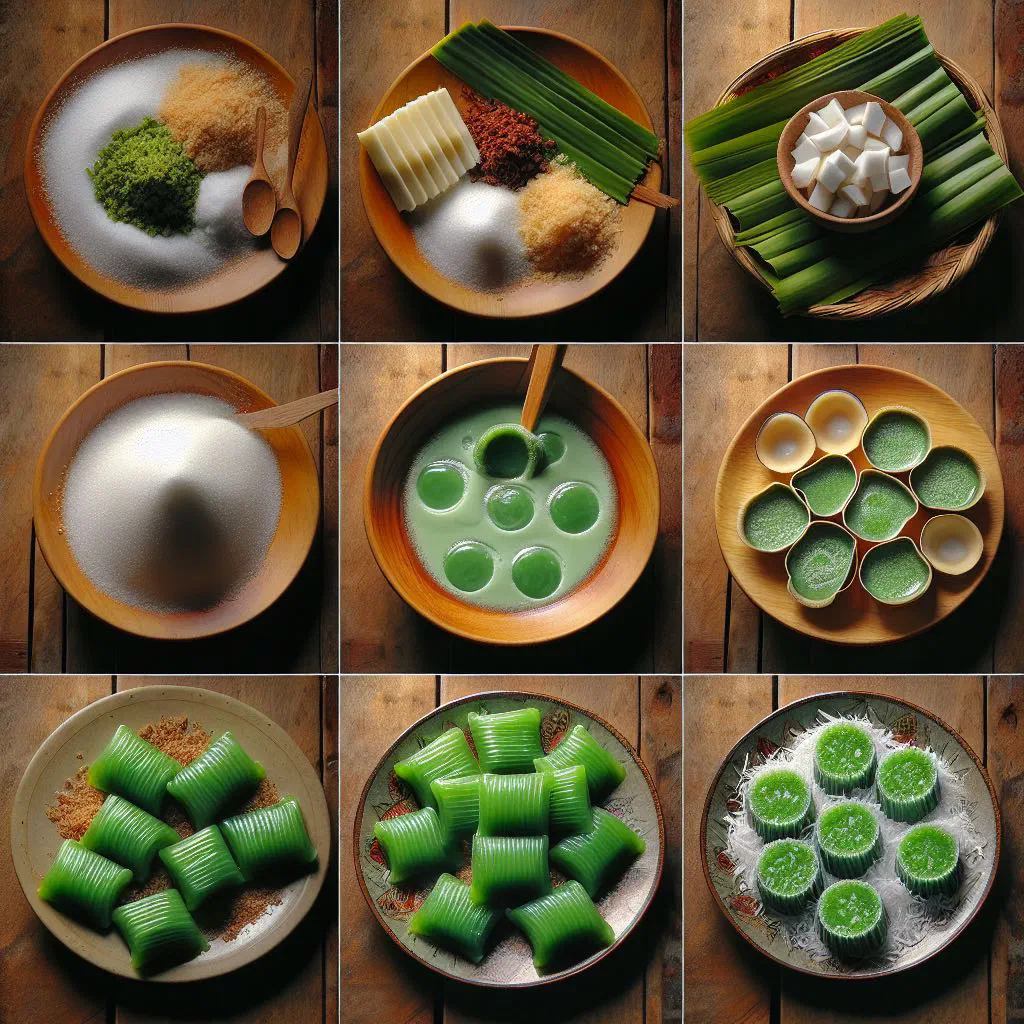
- In a large bowl, combine the rice flour, sugar and salt thoroughly.
- Slowly stir in the coconut milk and the pandan juice until you have a smooth batter.
- Pour the batter into the prepared moulds and set them into the preheated steamer.
- Steam for around 30–40 minutes, until the cakes are firm and a skewer comes out clean.
- Once steamed, turn out of the moulds and finish with a generous sprinkling of grated coconut.
Gluten-free / lactose-free version
For a gluten-free version of kuih kosui, you can swap the rice flour for cornflour or potato starch. The coconut milk is naturally lactose-free anyway, so the recipe suits anyone with an intolerance beautifully. If you are looking for a vegan option, simply make sure that all the sugar and any additives are plant-based and free from animal products. That way everyone can enjoy this delicious dessert.
Tips for vegans and vegetarians
Kuih kosui is naturally a vegan dish, as long as you make sure the sugar you use is vegan. Follow the preparation notes above to enjoy a vegetarian and vegan-friendly dessert. Reach for organic sugar to guarantee the best quality in your cake. Fresh, organic ingredients will always give you the finest flavour and the highest quality result.
More tips and tricks
A crucial point when making kuih kosui is the steaming time. Take care not to leave the batter in the steamer for too long, as this can spoil the texture. To get the most out of the flavour, you can also add a little more pandan juice if you fancy a more intense taste. This recipe adapts wonderfully to your liking, much like the layered Kuih Seri Muka.
Adapting the recipe to your taste
The kuih kosui recipe is a great starting point for exploring your own flavours and ingredients. Feel free to add nuts or fruit for a personal touch. Some people even try folding in a little cocoa powder to create an alternative version of the dessert. With a touch of creativity, you can keep discovering new flavours in this traditional treat.
Ingredient substitutions
If you do not have coconut milk to hand, you can use evaporated milk or another plant-based milk to adapt the dish. Instead of pandan extract, you could also use matcha powder for a unique green colour and a distinctive flavour. These alternatives shift the whole sweet experience towards a fresh and interesting new variation. Be adventurous and experiment.
Drink pairing ideas
Kuih kosui pairs beautifully with green tea, whose gentle bitterness balances the sweetness of the cake. Coconut water is also a refreshing companion and fits the theme perfectly. For a chilled option, an iced tamarind drink makes an interesting choice. A frothy Teh Tarik is another classic accompaniment across the region. These combinations enrich the overall tasting experience and make for a memorable treat.
Serving and presentation ideas
To present kuih kosui attractively, arrange the pieces on a smart platter and decorate with fresh pandan leaves. This lends your dish an authentic touch. Another option is to use small bowls or dessert glasses to separate each portion and present it in style. Adding colourful elements can also give your presentation a special look.
A bit of history
The roots of kuih kosui reach far back and are part of the wider Asian food culture, which draws together many influences. It is a delicacy loved across much of the region, especially in Southeast Asia. Its preparation and use of special ingredients have evolved over generations, and sharing this sweet is often tied to traditional feasts and celebrations. This delicacy stands for a culinary tradition and for the sharing of stories and memories, a hallmark of Brunei cuisine.
More recipe ideas
Summary: Kuih Kosui
Kuih kosui is a delicious Bruneian dessert that wins hearts with its wonderful pandan and coconut aromas. Its simple preparation and adaptability make it a great choice for anyone who loves Southeast Asian cooking. Served as a snack or as a dessert, this traditional cake is a treat and a window into the rich culture of Brunei. Give in to the sweet temptation and enjoy the flavours of this fantastic little pleasure.