National Dish Bulgaria: Baklava (Recipe)
In this article
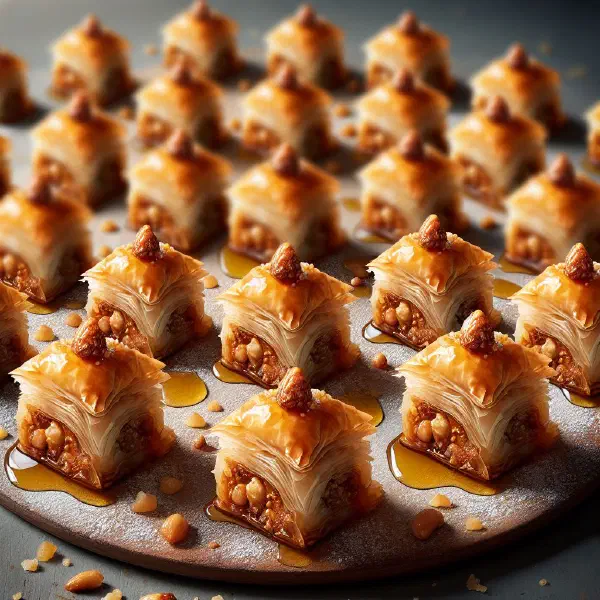
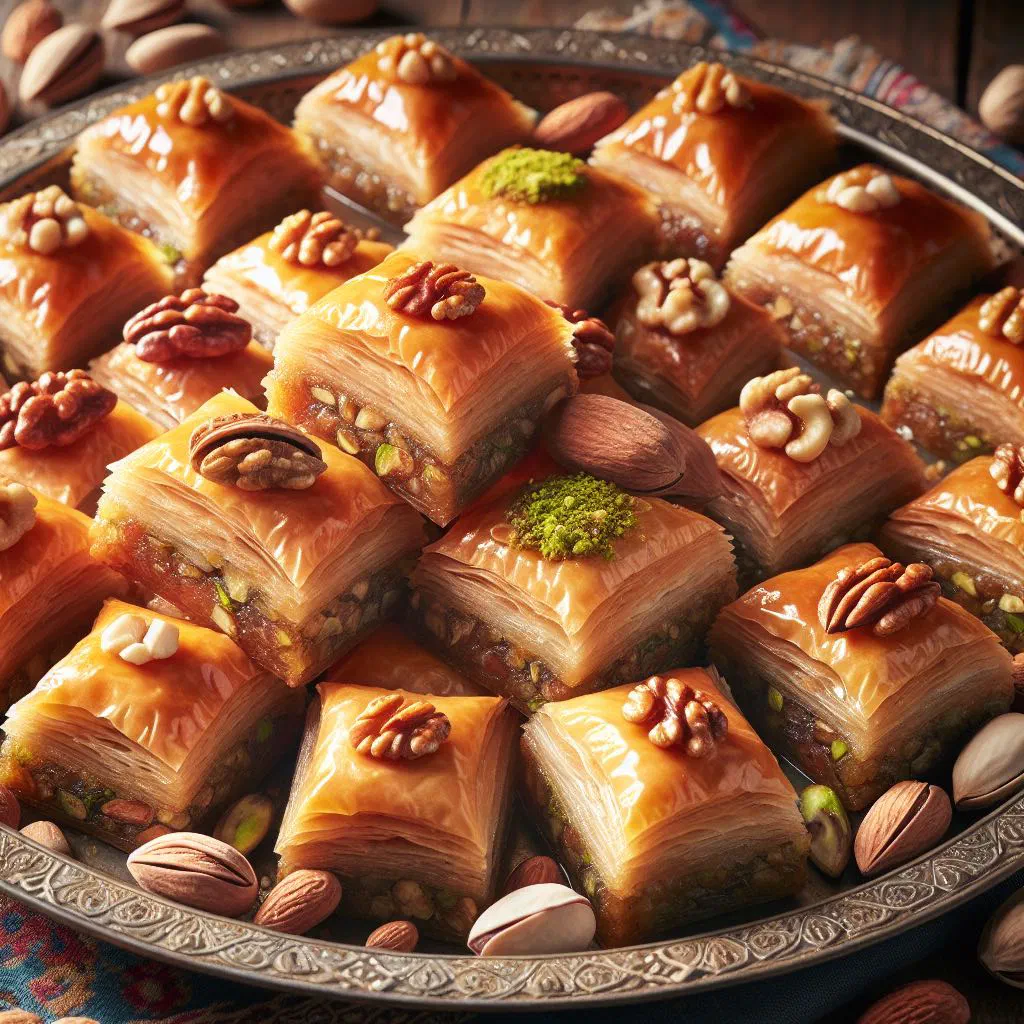
Discover Baklava, the sweet crown jewel of the Bulgarian table. Wafer-thin sheets of filo pastry are stacked with crushed nuts, baked until deeply golden and then drenched in a fragrant honey-and-sugar syrup. Every diamond-shaped piece shatters at the first bite before melting into pure sweetness. It is the dessert Bulgarians reach for at feasts, holidays and any moment that calls for something special, and it belongs beside a small cup of very strong coffee.
About Baklava
Baklava is a sweet masterpiece of Bulgarian cooking that captivates locals and visitors alike. It is built from fine, crisp sheets of filo pastry, layered with a mixture of nuts, usually walnuts or pistachios. That combination is then finished with a honey-sweet syrup that gives the pastry its signature richness. The result is an unmistakable dessert that works just as well on its own as it does with a cup of coffee.
Ingredients (serves 1–2)
- 250 g filo pastry
- 150 g mixed nuts (walnuts and pistachios, for example)
- 100 g butter, melted
- 150 ml honey
- 100 g sugar
- 1 tsp ground cinnamon
- 1 tsp vanilla sugar
- 300 ml water
Shopping for the ingredients
To find the best ingredients for your baklava, it is worth visiting a well-stocked grocer or a Middle Eastern market. Choose fresh nuts above all, as they carry the flavour of the whole dish. The filo pastry is usually found in the freezer section; make sure it has thawed properly before you unroll it. Honey and spices should be of good quality so that the finished pastry tastes as full and rounded as it should.
Preparing the dish
Good preparation is essential if your baklava is going to turn out perfectly. Begin by chopping the nuts coarsely and mixing them with the cinnamon and vanilla sugar. Melt the butter, then get the filo pastry ready by unrolling it gently on a clean tea towel. Handling the dough correctly matters a great deal, because dry filo pastry quickly turns brittle and tears.
Step-by-step instructions
- Preheat the oven to 180 °C.
- Brush an ovenproof dish with a little melted butter.
- Lay a sheet of filo in the dish and brush it with melted butter. Repeat until about five sheets are in place.
- Scatter the nut mixture evenly over the filo.
- Continue layering filo and butter until all the nuts are used up — at least five more layers.
- Finish with a final sheet of filo and score the top into diamonds with a sharp knife.
- Bake the baklava in the preheated oven for about 30–40 minutes, until golden brown.
- Meanwhile, bring the honey, sugar and water to the boil and let the syrup simmer for around 10 minutes.
- Take the baked baklava out of the oven and pour the hot syrup over it straight away.
- Leave it to cool completely before serving.
Gluten-free / lactose-free version
For a gluten-free baklava, gluten-free puff pastry can stand in for the filo. Several brands now offer gluten-free alternatives that behave well in baking. For a lactose-free version, use plant-based butter or another dairy-free fat to achieve a similar richness. Check the labels carefully when shopping so that every component genuinely meets your dietary requirements.
Tips for vegans and vegetarians
Vegans can adapt baklava easily by swapping the butter for vegetable oil or vegan margarine. The honey can be replaced with maple syrup or another plant-based sweetener to make the recipe fully vegan-friendly. When you shop, take care that every ingredient really is plant-based, filo pastry is usually fine, but it is worth a glance at the packet. With those changes, the glorious flavour of traditional baklava stays entirely intact.
More tips and tricks
To get the very best from your baklava, make sure the syrup is well chilled before it meets the hot pastry. That temperature contrast improves absorption and keeps the sheets crisp rather than soggy. Another tip: score the diamonds generously before baking, which makes for neat, even portions later. It is also worth experimenting with different nut combinations, much as you would when baking a Tikvenik.
Adapting the recipe to your taste
Adapting the baklava recipe is simple and makes the dessert your own. Vary the nuts as you please, almonds or cashews are excellent options too. You can also play with spices such as cardamom or nutmeg to add a personal signature. Beyond that, the sweetness is entirely in your hands: use more or less sugar in the syrup to bring it into line with your preferences.
Ingredient substitutions
There are plenty of alternatives to the traditional ingredients you can bring into your baklava. For a lighter version, swap the honey for agave syrup or coconut blossom sugar. If you have no nuts to hand, oats or dried fruit such as raisins make an interesting stand-in. Experimenting with different fillings sparks creativity and can produce flavours you would never have expected, the same spirit of improvisation that shapes a good Banitsa.
Drink pairing ideas
Baklava sits happily alongside a number of drinks that balance its sweetness. Tea, especially green tea or mint tea, is a fine choice and adds a refreshing edge. Coffee lovers should reach for strong black coffee or even a Turkish-style brew to offset the dessert’s richness. Yoghurt and milk drinks work beautifully too, and a small glass of Rakiya is the traditional Bulgarian finish to a festive meal.
Serving and presentation ideas
Presenting baklava well can lift the whole experience considerably. Serve it on a large, handsome plate that shows off the golden-brown diamonds. To make the dessert more striking still, garnish it with a light dusting of icing sugar or cocoa powder. A few fresh mint leaves or a spoonful of thick yoghurt, think of the tang in Kisel Mlyako, add colour and refine the plate.
A bit of history
Baklava has a history reaching back centuries and spanning several cultures. The pastry’s earliest forms are traced to the courts of the East, and it became widely popular across the Ottoman Empire. In Bulgaria, baklava is a cornerstone of traditional feasting, served at holidays and special occasions throughout the year. The method has evolved over time, yet it remains tightly bound to the history and culture of the country and to Bulgarian cuisine as a whole.
More recipe ideas
Summary: Baklava
Baklava is a delicious and thoroughly traditional Bulgarian dessert that wins people over with its sweetness and crisp, shattering texture. Straightforward to make and endlessly adaptable, it has something to offer everyone. Baklava brings a note of celebration to any table. Let this classic tempt you and enjoy a genuine taste of Bulgarian baking.