National Dish Bulgaria: Gyuvecheta (Recipe)
In this article
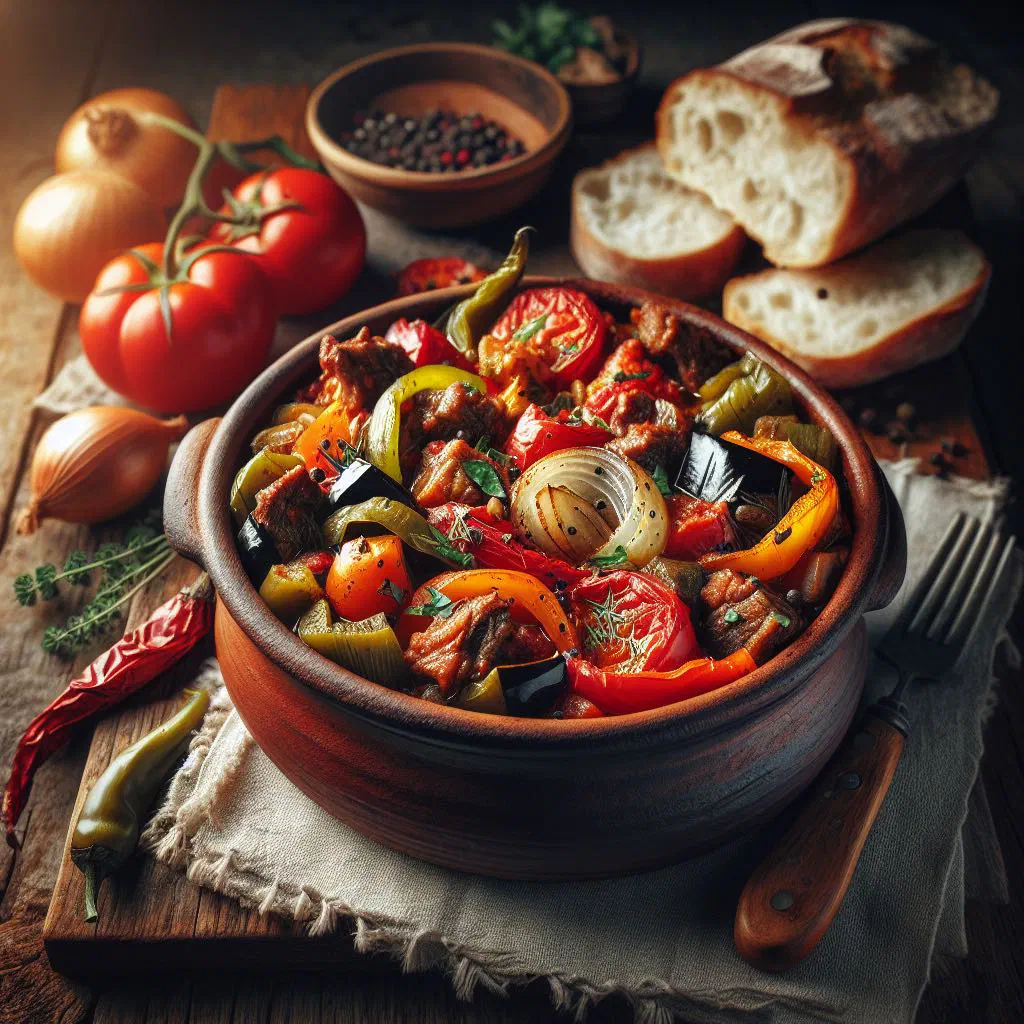
Few dishes capture Bulgarian hospitality quite like Gyuvecheta, sweet peppers, ripe tomatoes and onions baked in a little clay pot until everything turns soft, glossy and fragrant. Crowned with salty feta or a freshly cracked egg, it arrives at the table bubbling and golden, ready to be scooped up with a torn piece of bread. It is the kind of warm, unfussy cooking that suits a festive gathering just as well as a quiet supper for two.
About Gyuvecheta
Gyuvecheta is a traditional Bulgarian baked dish that looks and tastes exactly as generous as the hospitality it comes from. It brings together a colourful mix of vegetables and aromatics, peppers, tomatoes, onions and fragrant dried herbs, all slowly baked in a small earthenware pot. It is often finished with feta or eggs, which give the dish a creamy texture and a pleasantly salty edge. Gyuvecheta has a way of putting a smile on everyone’s face.
Ingredients (serves 1–2)
- 2 medium tomatoes
- 1 red pepper
- 1 onion
- 100 g feta, or 2 eggs
- 2 tablespoons olive oil
- 1 teaspoon dried oregano
- 1 teaspoon paprika
- Salt and pepper, to taste
Shopping for the ingredients
Shopping for gyuvecheta is refreshingly straightforward, as almost every component is available in an ordinary supermarket or at a weekly market. Look out for vegetables that still look fresh and firm, and pick a good-quality feta, since the cheese carries a great deal of the flavour. Most of the ingredients are also regional and seasonal, which means you can make a sustainable choice as well as a delicious one. Choose a decent olive oil too. It makes a noticeable difference to the finished dish.
Preparing the dish
Getting gyuvecheta ready takes only a few minutes, and none of the steps demand any special skill in the kitchen. Begin by washing the vegetables thoroughly and cutting them into small, evenly sized pieces. Chopping everything to a similar size means it all cooks at the same rate and the flavours blend harmoniously. It also pays to have the spices and the feta or eggs standing by before you start, so the cooking runs smoothly from beginning to end.
Step-by-step instructions
- Preheat the oven to 180 °C.
- Cut the onion, pepper and tomatoes into small pieces.
- Heat the olive oil in a pan and fry the onion until translucent.
- Add the pepper and tomatoes and season with oregano and paprika.
- Transfer the mixture to a clay pot or small baking dish and bake at 180 °C for 20 minutes.
- Take the dish out of the oven and top it with feta, or crack the eggs straight on top.
- Return it to the oven for a further 10 minutes, until the cheese is golden and the eggs have set.
- Let it rest for a few minutes before serving, then enjoy.
Gluten-free / lactose-free version
A gluten-free gyuvecheta is no trouble at all, since the base ingredients contain no gluten to begin with. For a lactose-free version, swap the feta for a lactose-free product or a vegan cheese alternative. The dish keeps its aromatic depth and its lovely texture either way, so nothing is lost in the exchange. That means every guest can enjoy it, whatever their dietary needs may be.
Tips for vegans and vegetarians
Vegetarians have an easy time here, as gyuvecheta is built almost entirely on plant-based ingredients. Vegans need only replace the feta with a plant-based alternative and leave out the eggs altogether, the dish stays every bit as tasty and nourishing. A handful of extra seasonal vegetables makes the flavours more varied still, much as they do in a hearty Zelenchuki. Fresh herbs add not just flavour but a splash of colour that makes the whole thing look inviting.
More tips and tricks
To get the very best from your gyuvecheta, play around with different herbs and spices to uncover new flavour profiles. Fresh thyme or basil lends the dish an extra layer of fragrance without overwhelming the vegetables. Keep an eye on the oven temperature as well, so everything cooks evenly and nothing catches at the edges. Trying out different vegetables is another simple way to shape the recipe around your own preferences.
Adapting the recipe to your taste
Gyuvecheta is endlessly forgiving, which makes it a fine dish to adjust as you please. Add a chopped chilli or a pinch of hot paprika if you like a bit of heat, or keep the seasoning gentle for a milder, sweeter result. Some cooks stir in a little rice or a few beans to make the pot more substantial, in the spirit of a rustic Gyuvech. Small changes like these turn the recipe into something that tastes distinctly like your own.
Ingredient substitutions
If you find yourself missing an ingredient, there are plenty of good stand-ins. Instead of feta you can use almost any firm cheese to achieve a similar creamy finish. Vegetables such as courgette or broccoli slot in happily and broaden the range of flavours. A grated carrot is a nice creative touch too, adding a gentle sweetness that balances the acidity of the tomatoes.
Drink pairing ideas
A well-chilled white wine is the natural partner for gyuvecheta, rounding off the flavours without competing with them. A fresh fruit cocktail or a homemade lemonade makes an equally refreshing accompaniment, especially in warmer weather. For something heartier, consider a dark beer or a traditional Bulgarian wine, and for a proper local flourish there is always a small glass of Rakiya. Ultimately the occasion decides the drink, but the choice does shape the whole experience.
Serving and presentation ideas
Presentation can lift gyuvecheta considerably. Serve it straight from the clay pot and scatter fresh herbs over the top to add both colour and aroma. A crisp salad such as Shopska Salata and some freshly baked bread make excellent companions on the table. Smaller portions served in individual pots complete the picture and create a genuinely welcoming atmosphere.
A bit of history
Gyuvecheta has deep roots in traditional Bulgarian cuisine and reflects the country’s rich culinary history. It was often made to gather the family together and to mark traditions and celebrations through the year. The dish speaks of a love of the land and of cooking with whatever is grown close to home. Its shifting mix of ingredients mirrors both regional differences and the rhythm of the seasonal harvest, which is precisely what makes Bulgarian cooking so distinctive.
More recipe ideas
Summary: Gyuvecheta
Versatile and full of flavour, gyuvecheta brings both colour and the taste of Bulgaria to the table. Its generous mix of fresh vegetables makes it a highlight at any sociable gathering or family meal. It unites tradition and togetherness, creating memories that reach well beyond the food itself. Let it inspire you, and enjoy a proper taste of Bulgarian hospitality.