National Dish Burundi: Beans and Bananas (Recipe)
In this article
Beans and Bananas is exactly that: white beans and green plantains cooked in one pot until both are soft. It is the everyday meal in Burundi, eaten most days by most people, and it is a good deal better than the flat description suggests.
About Beans and Bananas
Burundi eats more beans per head than almost any country on earth, and plantains are the other staple. Cooking them together is the obvious move, and ibiharage n’ibitoke is the result. Onion, tomato and garlic go in, but the dish is not heavily spiced. The plantains break down slightly and thicken the pot.
Green cooking plantains are used, not ripe sweet ones. That distinction matters more than anything else here.
Ingredients (serves 1–2)
- 2 large plantains, peeled and cut into 3–4 pieces
- 150g dried white beans, soaked overnight
- 1 medium onion, finely diced
- 2 tomatoes, chopped
- 2 garlic cloves, finely chopped
- 500ml vegetable stock or water
- 1 tablespoon vegetable oil
- Salt and pepper, to taste
Shopping for the ingredients
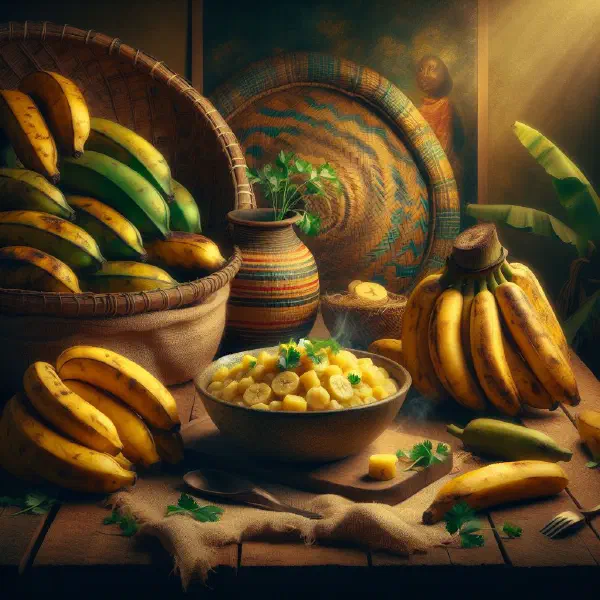
Buy plantains that are green or barely yellow. Anything with black patches is too ripe and will turn sweet and mushy. For the beans, any white bean works; Burundians use small local varieties. Dried beans give a much better result than tinned, since their cooking liquid enriches the pot.
Preparing the dish
Soak the beans overnight, without salt. Peeling green plantains is harder than ripe ones: cut off the ends, score the skin lengthways in three places, and lever it away with your thumb. Oil your hands first, because the sap is sticky and stains.
Step-by-step instructions
- Drain the soaked beans, rinse thoroughly and tip them into a large pan of fresh water. Bring to the boil and cook for 45–60 minutes, until almost tender.
- In a separate pan, heat the oil and gently sauté the onions over medium heat until translucent. Add the garlic and cook briefly.
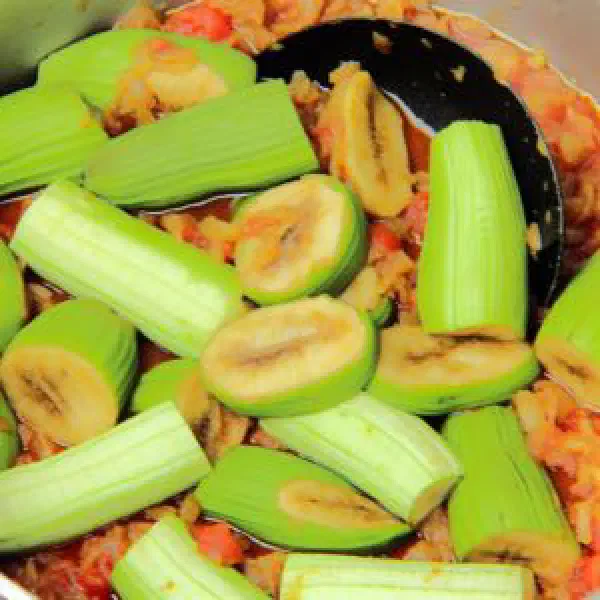
- Add the tomatoes and plantains, then pour in the vegetable stock. Bring to the boil and simmer over low heat, stirring occasionally, for 20–30 minutes, until the plantains are soft.
- Add the almost-tender beans to the plantains and cook everything together for a further 10–15 minutes, until the beans are soft and the flavours have merged. Season to taste with salt and pepper.
Gluten-free / lactose-free version
Beans, plantains and vegetables contain no gluten and no dairy, so the dish is suitable as it stands. Check only a shop-bought stock cube.
Tips for vegans and vegetarians
This is vegan as written, and it is not a substitution: beans and plantains is what Burundi eats, and meat is occasional. Beans and plantain together give a genuinely balanced plate, which is why the combination has lasted.
More tips and tricks
Salt the beans only once they are soft, or the skins toughen. Do not stir hard after the plantains go in; they break up easily and you want recognisable pieces. And mash a few beans against the side of the pot at the end to thicken the liquid.
Adapting the recipe to your taste
Palm oil in place of vegetable oil gives colour and a different flavour. Celery leaves or amaranth greens stirred in near the end are common. A pinch of chilli suits it, though Burundian cooking is not generally hot.
Ingredient substitutions
Kidney beans or borlotti work in place of white beans. Green bananas can substitute for plantains at a pinch. Sweet potato is sometimes added alongside.
Drink pairing ideas
Jus de gingembre, the ginger drink, is the local choice. Black tea with milk is common at meals. Water is what most people drink with it.
Serving and presentation ideas
Serve it in deep bowls, with ugali alongside if you want more starch, and a kachumbari tomato salad for freshness. It is family food and comes to the table in the pot.
A bit of history
Plantains reached East Africa from Southeast Asia over a thousand years ago and became central to the Great Lakes region, where they are eaten as a starch rather than a fruit. Beans arrived much later from the Americas. The pairing is now so basic to Burundian cuisine that it barely counts as a recipe.
More recipe ideas
Summary: Beans and Bananas
Beans and bananas is white beans and green plantains cooked together with onion and tomato. Use green plantains, salt the beans late, and mash a few to thicken the pot.