National Dish Cambodia: Khmer Laksa (Recipe)
In this article
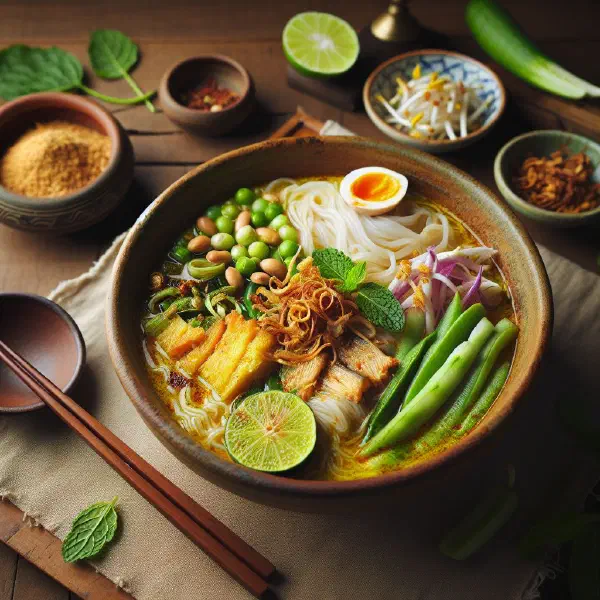
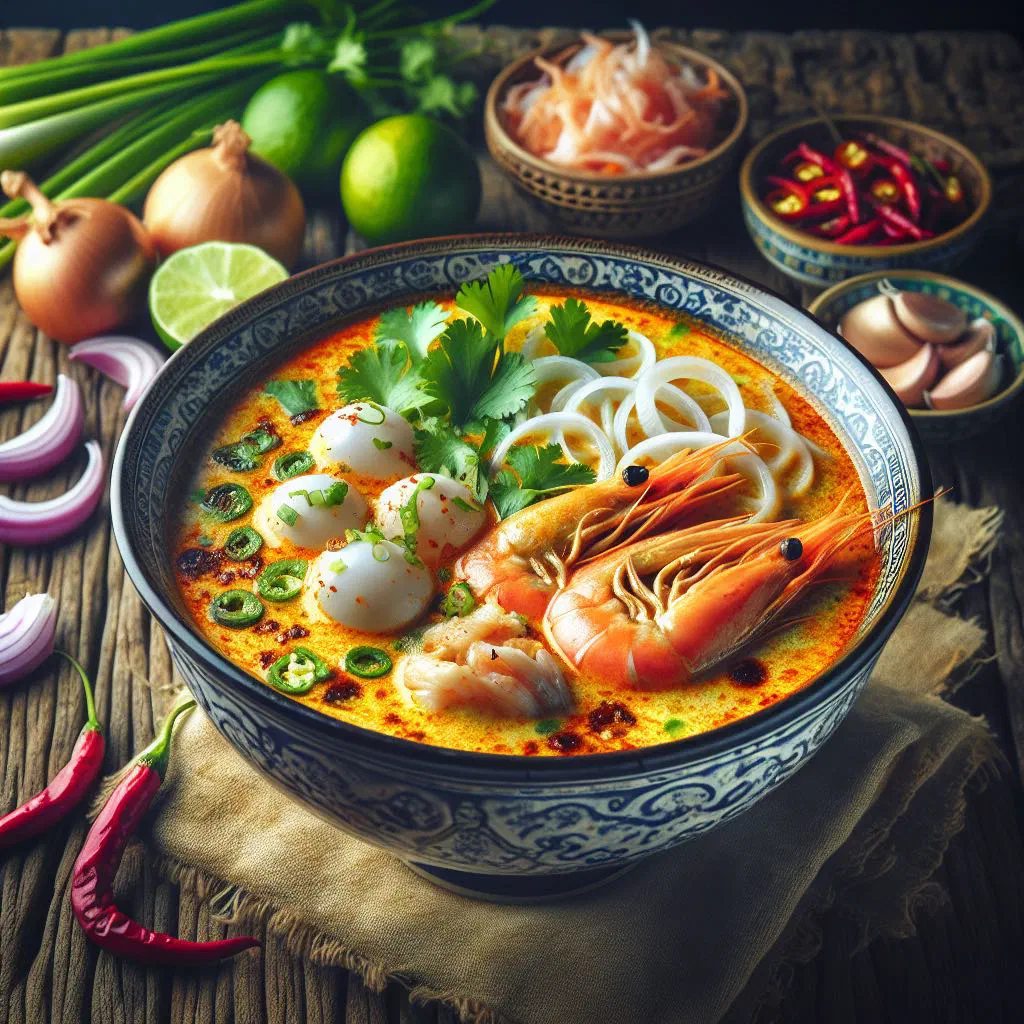
Say hello to Khmer Laksa, a fragrant noodle soup that captures the soul of Cambodian cooking in a single bowl. Tender rice noodles bathe in a creamy, aromatic coconut broth, brightened with fresh herbs and a squeeze of lime. Warming, comforting and endlessly adaptable, it is the kind of dish that welcomes everyone to the table, whether you top it with chicken, prawns or tofu. Bring the flavours of Southeast Asia into your own kitchen with this soul-soothing classic.
About Khmer Laksa
Khmer Laksa is a distinctive dish that showcases the rich culinary tradition of Cambodia. This delicious soup brings together tender noodles and an aromatic coconut milk broth, finished with fresh herbs that give the dish its own unmistakable character. The blend of spices and fresh ingredients creates a harmonious eating experience that appeals to locals and travellers alike. It is often served with protein-rich additions such as chicken or prawns, which round out the whole picture beautifully.
Ingredients (serves 1–2)
- 200 g rice noodles
- 400 ml coconut milk
- 1 litre vegetable stock
- 2 tablespoons red curry paste
- 200 g chicken breast or tofu
- 1 handful fresh herbs (basil, coriander)
- 1 kaffir lime leaf
- Juice of 1 lime
- Chilli flakes, to taste
Shopping for the ingredients
When shopping for Khmer laksa, it is important to choose fresh, good-quality ingredients. The coconut milk and the red curry paste in particular play a decisive role in the flavour of the soup. Many Asian grocery shops stock specialist products that are ideal for making this dish. Don’t forget to look out for fresh herbs as well, since they have a significant influence on the aroma.
Preparing the dish
Before you start making Khmer laksa, it pays to prepare all your ingredients properly. Chop the vegetables and your chosen protein into even pieces so they cook uniformly. It is also a good idea to cook the rice noodles in advance according to the packet instructions, which saves time during assembly. Having everything laid out on your work surface makes the cooking process far easier.
Step-by-step instructions
- Bring the vegetable stock to the boil in a large pan.
- Add the red curry paste and stir well until it has fully dissolved.
- Add the coconut milk and the kaffir lime leaf, then reduce the heat.
- Add the chicken breast or tofu and let it simmer until the protein is cooked through.
- Add the pre-cooked rice noodles to the broth and mix well.
- Season to taste with lime juice and chilli.
- Scatter fresh herbs over the soup and serve.
Gluten-free / lactose-free version
For anyone who wants to avoid gluten and lactose, Khmer laksa is easy to adapt. Make sure you use gluten-free rice noodles, which are available in many supermarkets. You can also swap the coconut milk for other plant-based alternatives that are naturally lactose-free. Take care that the curry paste is gluten-free too, so your whole line-up of ingredients stays suitable.
Tips for vegans and vegetarians
Vegans and vegetarians can adapt Khmer laksa with ease by replacing the chicken with vegetables or extra cubes of tofu. The stock can be swapped for a plant-based version to keep the result full of flavour. Enrich the dish with colourful vegetables such as peppers or broccoli to boost both the nutritional value and the look of the bowl. Fresh herbs add flavour and make a wonderful finishing touch for presentation. For another meat-free idea, try a stir-fried Cha Trakuon.
More tips and tricks
To intensify the flavour of Khmer laksa, you can add ginger or garlic to the broth. These ingredients bring extra layers of aroma and complexity to the dish. Experiment with different spices to find your own favourite balance. Take care not to boil the broth for too long, so the flavours stay fresh and lively.
Adapting the recipe to your taste
The recipe for Khmer laksa is easy to tailor to your personal preference. If you like things spicier, add more chilli or reach for a hotter curry paste. For a milder version, simply reduce the amount of curry paste. The choice of protein can vary too, so you can pick chicken, prawns or plant-based alternatives depending on your taste. Fans of a richer curry might also enjoy the deeper flavours of a Khmer Curry.
Ingredient substitutions
If you don’t have every ingredient for Khmer laksa to hand, there are plenty of alternatives. Instead of rice noodles you could use other kinds of noodles, such as udon or soba, depending on what is available. The coconut milk can be replaced with almond or cashew milk, though you may lose some of the coconut’s richer flavour. There are also special gluten-free versions of curry paste worth trying. Rice noodles feature just as prominently in Khmer Noodles and Nom Banh Chok.
Drink pairing ideas
A wide range of drinks pairs well with Khmer laksa and rounds out the eating experience. A refreshing iced tea with lime is an excellent choice for balancing the heat of the soup. Tea, especially jasmine or green tea, also harmonises beautifully with the flavours of the dish. For a festive touch, consider cocktails based on coconut or pineapple, which underline the Southeast Asian flair.
Serving and presentation ideas
Presentation plays an important part in making Khmer laksa appetising. Serve the soup in a deep bowl and garnish it with fresh herbs, a splash of lime juice and perhaps a little chilli sauce. Adding lime wedges, or even edible flowers, can lift the dish visually. Aim for an attractive arrangement of the ingredients to bring out the colours and textures.
A bit of history
Khmer laksa has its origins in Cambodian cuisine, which has been shaped by influences from China, Thailand and India. The dish has evolved over time, giving rise to regional variations. Laksa soups are popular across many countries of Southeast Asia, yet in Cambodia they take on their own identity. Here the emphasis is on fresh ingredients and bold, aromatic broths that reflect the country’s culinary diversity, a hallmark of Cambodian cuisine.
More recipe ideas
Summary: Khmer Laksa
Khmer laksa is a delicious, aromatic dish that perfectly captures the flavours and culture of Cambodia. With its combination of tender noodles, a creamy coconut milk broth and fresh herbs, it appeals to the palate as much as the eyes. Mild, vegan or vegetarian, this dish offers plenty of room for adaptation. Let this unique recipe inspire you and enjoy a taste of Cambodian cooking in your own home.