National Dish Cambodia: Num Banh Chok (Recipe)
In this article
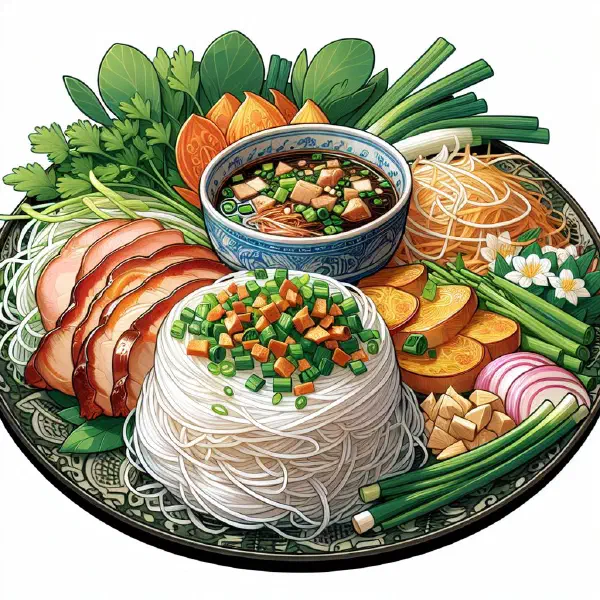
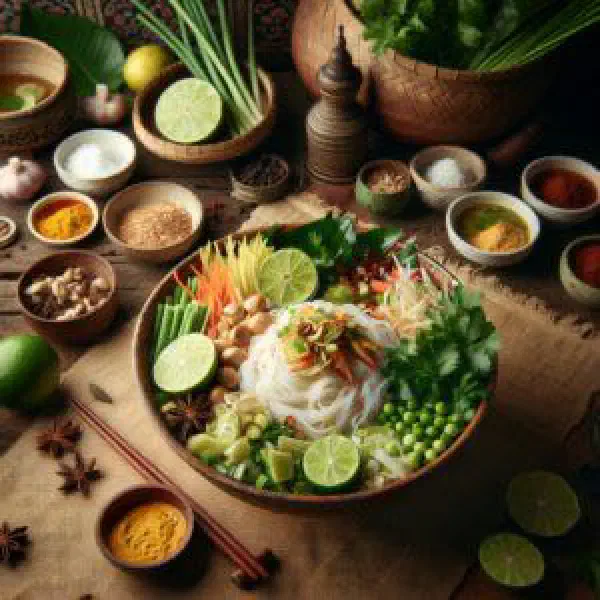
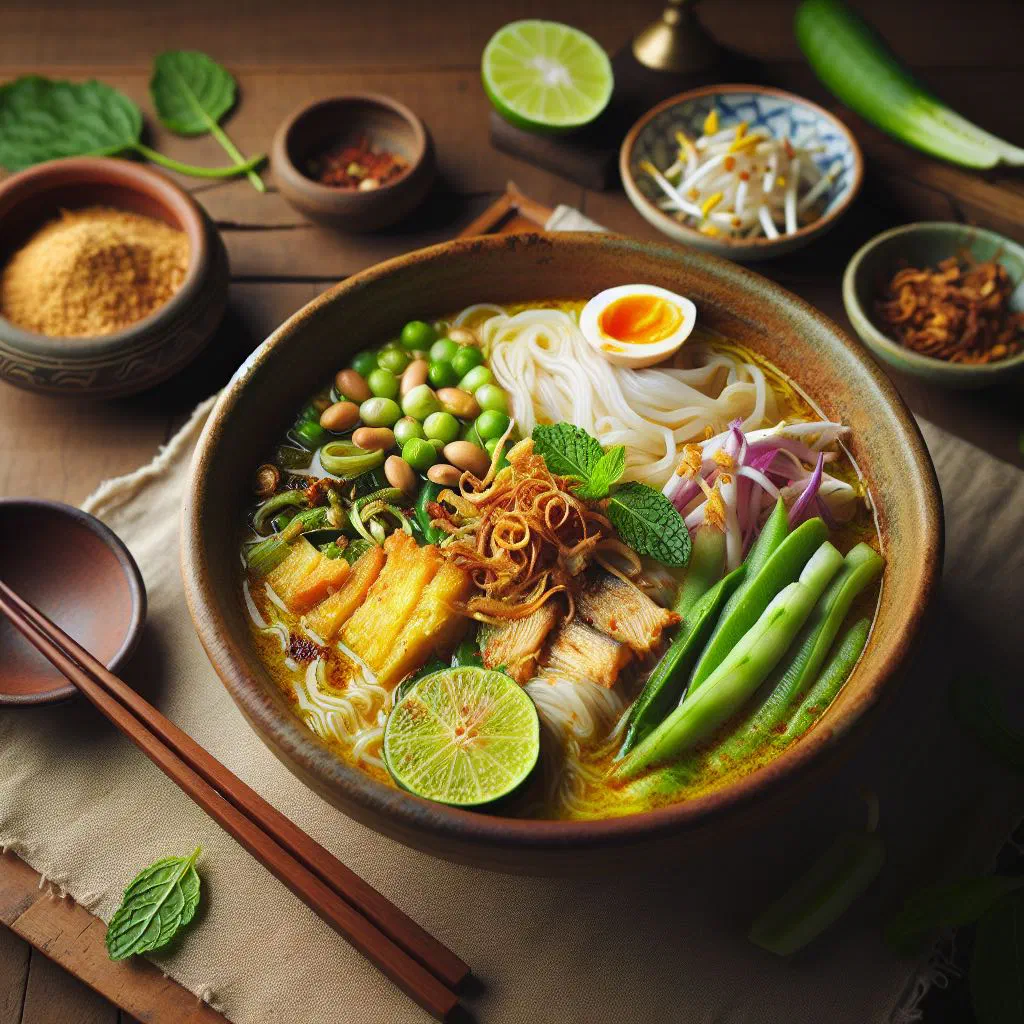
Say hello to Num Banh Chok, the refreshing noodle dish that Cambodians turn to when the weather turns warm. Delicate rice noodles are draped in a fragrant herb sauce and crowned with crisp vegetables and a tumble of fresh leaves. Light yet deeply aromatic, it is enjoyed at breakfast stalls, as a midday snack or as an easy, cooling meal at any hour. Bring a taste of the Khmer kitchen straight to your own table.
About Num Banh Chok
Num Banh Chok is a traditional Cambodian dish that comes into its own during the hottest months of the year. It is a refreshing noodle dish that pairs soft rice noodles with a delicious herb sauce and plenty of fresh vegetables. The ingredients can vary, yet they always work to bring out the unmistakable flavours of Cambodia. Often served for breakfast, it also makes an ideal light snack or an easy meal whenever hunger strikes.
Ingredients (serves 1–2)
- 200 g rice noodles
- 1 small cucumber, cut into strips
- 1 carrot, grated
- 100 g fresh herbs (mint, coriander, basil)
- 250 ml coconut milk
- 2 tablespoons fish sauce
- 1 tablespoon lime juice
- Chilli, to taste
Shopping for the ingredients
For Num Banh Chok it is well worth choosing the freshest ingredients you can find to get the very best flavour. Sustainable, organic produce from a local market is often the ideal choice. Take care to pick up good-quality rice noodles, as they form the backbone of the whole dish. Fresh herbs are essential for the sauce, since they are what give this dish its distinctive, uplifting aroma.
Preparing the dish
Before you start cooking Num Banh Chok, it pays to have all your ingredients prepared and ready. Cook the rice noodles according to the packet instructions and leave them to drain. While that is happening, slice the vegetables and wash the herbs thoroughly.
Step-by-step instructions
- Cook the rice noodles according to the packet instructions, then drain them well.
- In a bowl, whisk together the coconut milk, fish sauce, lime juice and chilli until smooth.
- Arrange the drained noodles on a plate.
- Scatter the vegetables and fresh herbs evenly over the top.
- Pour the sauce over the noodles and vegetables and serve straight away.
Gluten-free / lactose-free version
Num Banh Chok is easy to make gluten-free. Simply use noodles made from 100% rice, which are widely available in most shops. Check that your fish sauce is gluten-free too, as some brands can contain traces of wheat. The coconut milk is naturally lactose-free, which means the dish also suits anyone who is lactose intolerant. Small adjustments like these make it simple to welcome every kind of diet to the table.
Tips for vegans and vegetarians
To prepare Num Banh Chok as a vegan or vegetarian dish, swap the fish sauce for a plant-based alternative or a splash of soy sauce. Feel free to adjust the mix of vegetables and herbs to build a rich, layered flavour. You can also add protein-rich ingredients such as tofu or tempeh to make the dish more substantial. These tweaks add variety and put this classic within everyone’s reach.
More tips and tricks
To coax the best flavour out of your Num Banh Chok, always reach for the freshest ingredients you can. Experiment with different combinations of herbs and vegetables until you land on your own perfect mix. Try not to overload the sauce, so the aromas have room to shine. Another good tip is to serve the noodles chilled, which heightens the refreshing quality and makes the dish especially welcome on hot days.
Adapting the recipe to your taste
Tailoring Num Banh Chok to your own preferences could not be easier. Feel free to vary the vegetables according to the season or whatever you have on hand. If you like more heat, add extra chilli or even a spoonful of pickled vegetables. You can also make the dish milder or bolder simply by adjusting how much sauce you spoon over, so it comes out exactly the way you like it.
Ingredient substitutions
If you do not have rice noodles to hand, other varieties such as glass noodles work well and offer a similar texture. For the sauce, you might experiment with a little peanut butter to achieve a creamier consistency, a nutty richness that also suits a hearty Khmer Curry. You could also replace the coconut milk with another plant-based milk such as almond or soy for a comparable result. Bear in mind that substitutions like these can shift the authentic character of the dish.
Drink pairing ideas
To round off the fresh experience of Num Banh Chok, light drinks are the way to go. A refreshing coconut smoothie or a simple glass of lemon water with mint would be ideal. Cambodian tea also pairs beautifully and is the perfect partner for the gentle spice in the dish. Wherever you can, serve these drinks well chilled to keep that cooling, refreshing character.
Serving and presentation ideas
Presentation matters when it comes to Num Banh Chok, helping to show off the beauty and freshness of the dish. Serve the noodles in a shallow bowl and layer the vegetables and herbs artfully over the top. A few spoonfuls of the sauce can be offered separately in a little dish, so guests can top up as they please. A scattering of extra mint or a garnish of lime wedges gives the whole plate a final flourish.
A bit of history
The origins of Num Banh Chok can be traced back to the Khmer era, when it was already a much-loved dish across Cambodia. It was first prepared as a breakfast for the workers and farmers who needed an energising start to the day. Over time it became a speciality in countless Cambodian homes and at street stalls alike. Today it is a symbol of Cambodian identity and a must-try for anyone keen to explore Cambodian cuisine.
More recipe ideas
Summary: Num Banh Chok
Num Banh Chok is more than just a dish; it is a culinary experience that captures the diversity and cultural flavours of Cambodia. With its simple, fresh ingredients and its endless scope for adaptation, you can prepare it entirely to your own liking. Whether for yourself, for friends or for a special occasion, it is a dish guaranteed to please. Give the recipe a try and set off on an exciting journey into Cambodian cooking.