National Dish Cameroon: Water Fufu and Ekwang (Recipe)
In this article
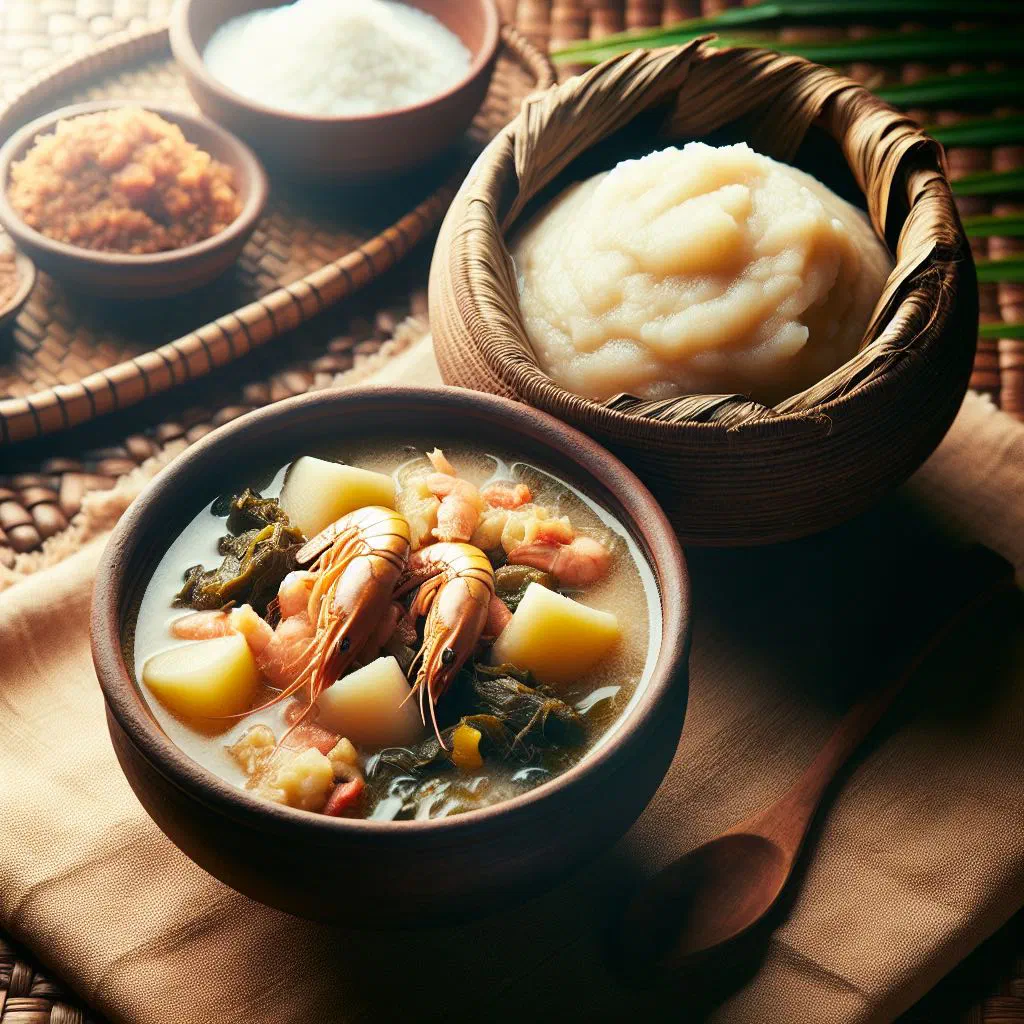
Few plates capture the warmth of Cameroonian home cooking quite like Water Fufu and Ekwang. Smooth, gently tangy fufu made from fermented cassava sits alongside little parcels of seasoned filling wrapped in leaves and steamed until tender. It is a dish built for sharing, the kind that appears at weddings, naming ceremonies and long Sunday afternoons, and it rewards a bit of patience with a flavour that is savoury, comforting and unmistakably West African.
About Water Fufu and Ekwang
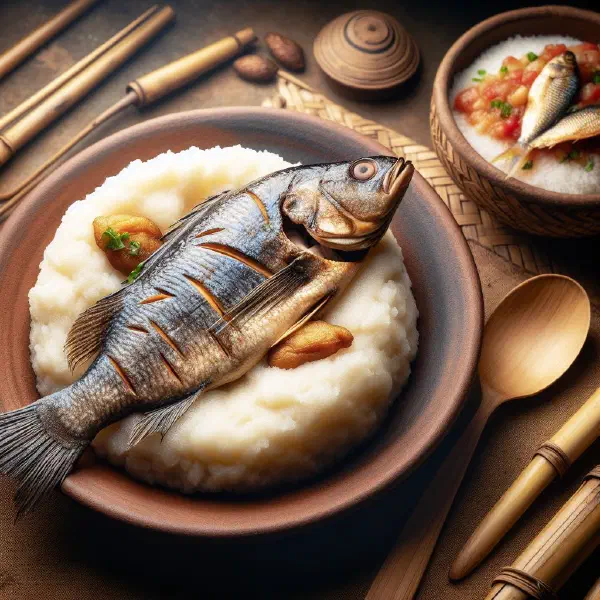
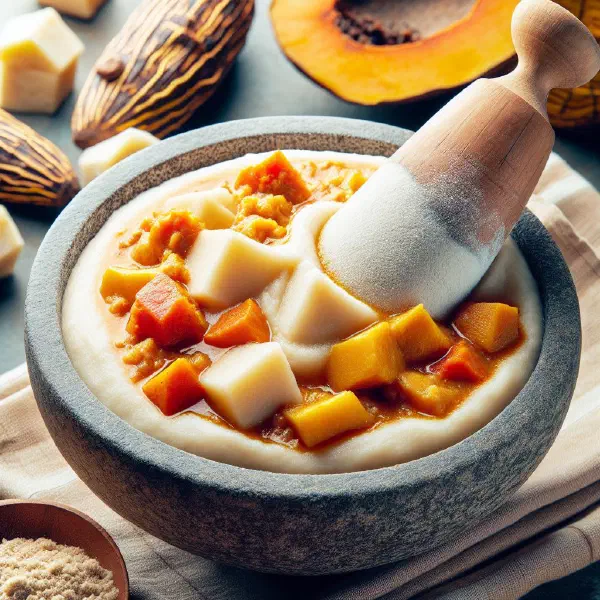
The traditional pairing of Water Fufu and Ekwang is a genuine feast within Cameroonian cooking. It brings together the creamy texture of fufu, made from fresh cassava, and the savoury, well-spiced character of ekwang, filled with a mix of delicious ingredients. The combination speaks not only of the country’s flavours but of its rich culture too. Many families reserve this dish for special occasions, which makes it a real centrepiece on any table.
Ingredients (serves 1–2)
- 300 g cassava
- 200 ml water
- 3–4 large spinach leaves
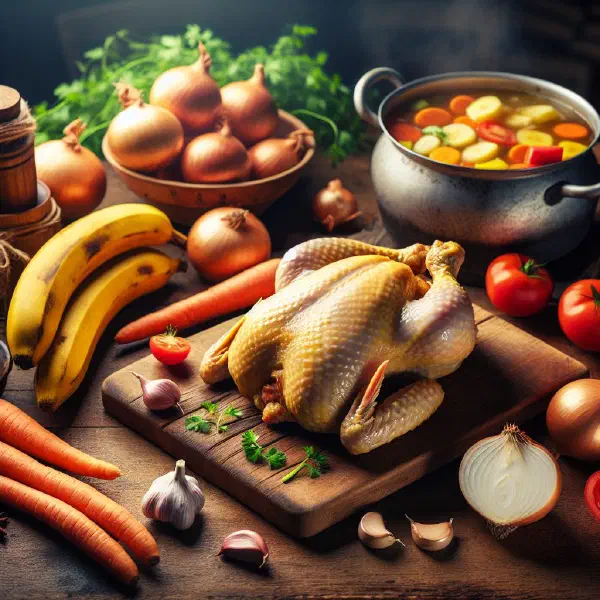
- 200 g vegetables or meat of your choice (beef or chicken, for example)
- 2–3 cloves of garlic
- 1 onion
- Seasoning to taste (salt, pepper, chilli)
Shopping for the ingredients
To make Water Fufu and Ekwang, start with a well-stocked supermarket or, better still, an African grocery. Look out for fresh cassava, as this forms the backbone of the fufu. The vegetables and meat matter just as much for the flavour of the ekwang, so choose good-quality produce. If you cannot get hold of fresh spinach leaves, other sturdy greens such as chard work perfectly well as a wrapper.
Preparing the dish
Preparing Water Fufu and Ekwang is straightforward, though it does take a little time. Begin by peeling and pounding the cassava until it reaches a smooth consistency. While that is under way, get the remaining ingredients ready: wash the greens and cut the meat into small pieces. Good preparation is what keeps everything on schedule and ensures the finished dish tastes balanced rather than rushed.
Step-by-step instructions
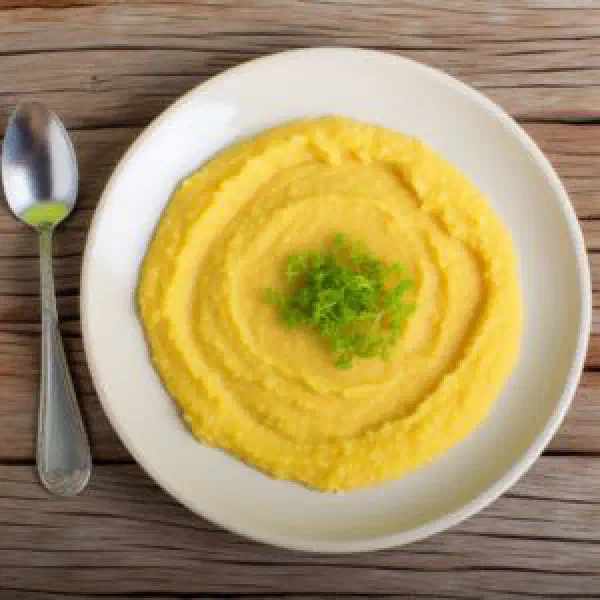
- Peel the cassava, cut it into pieces and purée it in a blender.
- Cook the puréed cassava in a pan with 200 ml of water over medium heat.
- Stir constantly until a thick, smooth consistency forms.
- Combine the ekwang filling — vegetables, meat and seasoning — and wrap it in the prepared leaves.
- Steam the wrapped ekwang parcels for 30–40 minutes.
- Serve the fufu alongside the warm ekwang and enjoy.
Gluten-free / lactose-free version
Water Fufu and Ekwang are naturally gluten-free and lactose-free, which makes the dish an excellent choice for anyone with particular dietary needs. The main ingredient, cassava, contains no gluten at all, so it is safe for people with coeliac disease. Do still check the labels on any spice blends or seasoning mixes you add, just to be sure nothing gluten-containing has slipped in.
Tips for vegans and vegetarians
The dish adapts beautifully for vegans and vegetarians. Swap the meat for plant-based proteins such as beans or tofu to keep the result nourishing and full of flavour. Spices like turmeric or paprika add welcome depth, much as they do in a hearty Njama Njama. Handled this way, your Water Fufu and Ekwang gains a new dimension of taste while staying wholesome and satisfying.
More tips and tricks
A few practical pointers make all the difference here. Purée the cassava thoroughly. This is what gives the fufu its characteristic creaminess. When wrapping the ekwang, seal the leaves carefully so none of the filling escapes during steaming. And do not overlook a final garnish of fresh herbs such as parsley or coriander, which lifts the look of the plate considerably.
Adapting the recipe to your taste
Water Fufu and Ekwang are remarkably flexible and easy to shape around personal preference. Feel free to bring in different vegetables or cuts of meat depending on what you enjoy. You might also want to adjust the heat by using more or less chilli. The dish can be as individual as you are while still holding on to the traditional flavours of Cameroon.
Ingredient substitutions
If certain ingredients prove hard to find, there is no need to worry. In place of fresh cassava you can use tapioca starch, which delivers a comparable result and is the same shortcut that works well when making a simple Fufu. Frozen vegetables stand in perfectly when fresh ones are unavailable, though fresh produce generally gives the best flavour. Be inventive and work with whatever you have to hand.
Drink pairing ideas
To round off the experience, serve something suitable alongside your Water Fufu and Ekwang. A spiced fruit juice is a traditional choice, as is the palm wine of a classic Matango Drink, which suits these flavours beautifully. Alternatively, reach for a chilled craft beer or a lightly sweetened iced tea. Each of these complements the dish nicely and creates a harmonious pairing.
Serving and presentation ideas
Presentation matters when you are showing off Water Fufu and Ekwang. Serve it on an attractive plate, perhaps finished with fresh herbs or a slice of lemon. Arranging the ekwang parcels neatly beside the mound of fufu makes the whole thing far more appealing to look at. We eat with our eyes first, and a thoughtful presentation can lift the entire meal.
A bit of history
The roots of Water Fufu and Ekwang run deep into the cultural history of Cameroon. These are not simply foods but carriers of tradition and custom. Preparation is often a communal affair, shared between families or neighbours, which highlights the social side of eating. It is common to see the dish served at festivals, weddings and other celebrations, underlining its standing within Cameroonian cuisine.
More recipe ideas
Summary: Water Fufu and Ekwang
Water Fufu and Ekwang stand for the abundance of Cameroonian food culture and are essential eating for anyone keen to explore the flavours of Africa. The pairing of creamy fufu with savoury, well-seasoned ekwang delivers a taste experience that suits special occasions and everyday meals alike. With simple, adaptable ingredients and a history behind it, this dish is a delicious way to get acquainted with Cameroon. Give it a go and let the flavours and hospitality of the country win you over.