National Dish Cameroon: Waterfufu and Eru (Recipe)
In this article
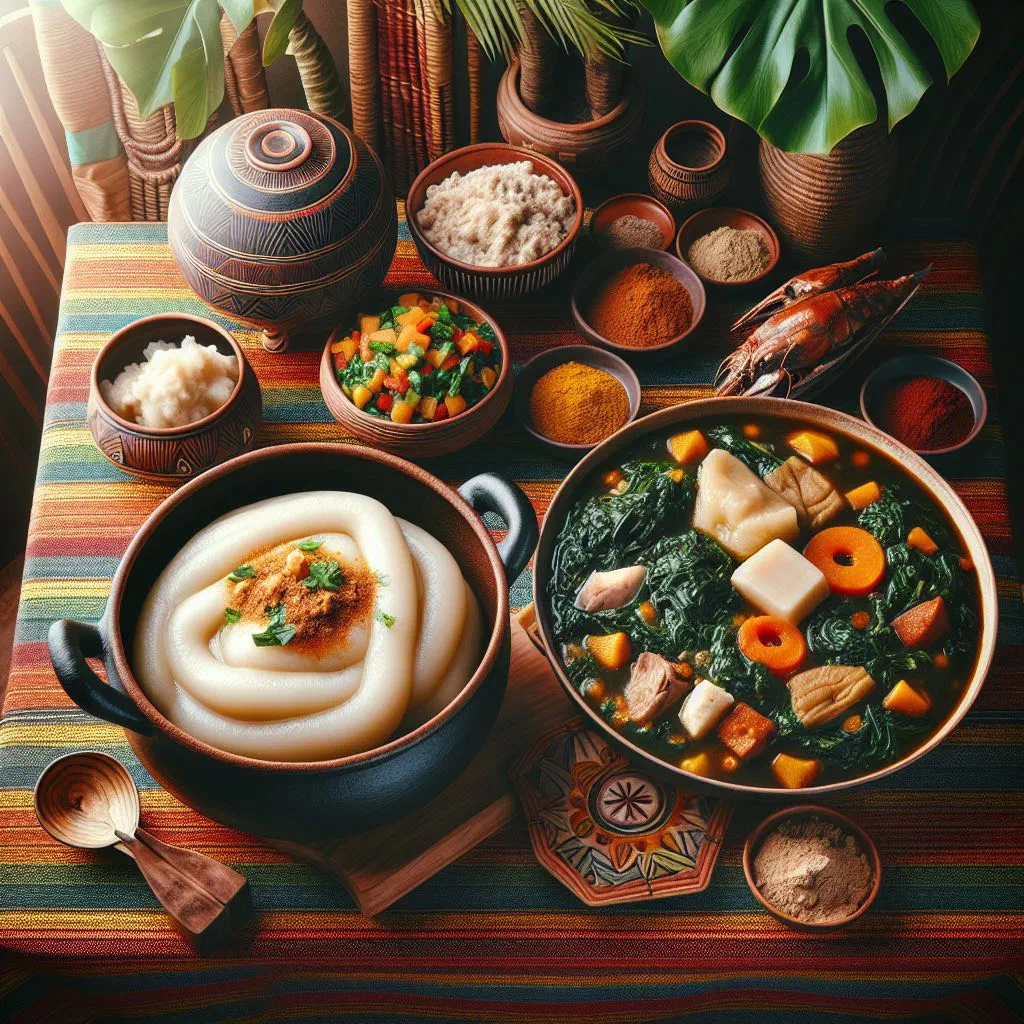
Few plates say Cameroon quite like Waterfufu and Eru. Soft, pillowy cassava fufu sits beside a dark, glossy tangle of slow-cooked eru leaves, spiced with onion, garlic and chilli and enriched with fragrant palm oil. It is a dish of contrasts, mild against savoury, smooth against leafy, and one that families across the country return to again and again. Warm, generous and deeply rooted in tradition, it is an ideal introduction to Cameroon’s home cooking.
About Waterfufu and Eru
The culinary richness of Cameroon comes through beautifully in Waterfufu and Eru. The pairing of tender waterfufu with the savoury, well-seasoned eru is both a treat for the senses and a reflection of the country’s long-standing food culture. Waterfufu, a soft starch accompaniment, provides the perfect base, while the eru leaves win people over through careful preparation and a confident hand with the spices. This is a dish where flavour and culture meet, and it rewards anyone curious enough to try it.
Ingredients (serves 1–2)
- 200 g waterfufu flour (cassava or yam flour)
- 500 g fresh eru leaves
- 1 onion, finely chopped
- 2–3 cloves of garlic, crushed
- 1–2 chillies (to taste)
- Oil for frying (palm oil or groundnut oil)
- Salt and spices to taste (pepper, nutmeg)
Shopping for the ingredients
When shopping for the ingredients for waterfufu and eru, it pays to pick fresh, good-quality produce. Many of these items are stocked by African grocery shops or well-supplied supermarkets. If you are not sure where to find waterfufu flour or eru, a quick look online will usually turn up local markets or specialist shops that deliver. Bear in mind that fresh eru leaves tend to have a far more pronounced flavour than the frozen versions.
Preparing the dish
Getting waterfufu and eru ready takes a little time and attention, but the effort is well worth it. Begin by washing the eru leaves thoroughly to remove any grit. Then shred them into small pieces so they cook down quickly and evenly. This is also the moment to plan the waterfufu, which is normally cooked out over gentle heat with plenty of stirring. Much like preparing Kwacoco, a calm and orderly kitchen makes all the difference.
Step-by-step instructions
- Bring a large pan of water to the boil.
- Add the waterfufu flour slowly to the boiling water, stirring vigorously to avoid lumps.
- Turn the heat down and let the waterfufu cook for 10–15 minutes, stirring constantly.
- In a second pan, heat the oil and fry the chopped onion and garlic until golden.
- Add the prepared eru leaves and fry briefly, followed by the spices and chillies.
- Take the pan off the heat and serve the eru alongside the waterfufu.
Gluten-free / lactose-free version
Waterfufu and eru are naturally gluten-free, since the fufu is made from cassava or yam flour. That makes the dish an excellent choice for anyone with coeliac disease or a gluten intolerance. It also contains no dairy at all, so it suits people who are lactose intolerant. Simply take care when choosing your oils and seasonings so that no gluten- or lactose-containing products slip in through the back door.
Tips for vegans and vegetarians
Waterfufu and eru are wonderfully suited to vegans and vegetarians, as they are built entirely on plant ingredients. Do check your spice blends to make sure no animal products are hiding in them. For a deeper savoury note, a good vegetable stock works beautifully. You could also fold extra vegetables such as carrots or aubergine into the eru for more colour and nutrition, in the spirit of a hearty Njama Njama.
More tips and tricks
A few tips and tricks will make the dish even better. Experiment with different spices and herbs to shift the aroma in your own direction. A scattering of roasted groundnuts adds a welcome crunch. To get the waterfufu right, work it well as it cooks so it reaches that smooth, elastic consistency. Serving it with a variety of vegetable sides is another easy way to enrich the meal.
Adapting the recipe to your taste
Adapting the recipe to personal preference is very much part of the fun with waterfufu and eru. Dial the heat up or down by adding more or fewer chillies. The choice of oil matters too: palm oil gives the classic colour and depth, while groundnut oil keeps things lighter. Alternative spice combinations are also worth exploring if you want to bring the dish closer to your own palate.
Ingredient substitutions
Not everyone has access to every ingredient, so it helps to consider substitutions. If fresh eru is unavailable, spinach or chard both make sensible stand-ins. The same goes for the fufu: while cassava or yam is traditional, other gluten-free flours will do the job. The starchy base can also be swapped altogether for Pounded Yam. Experimenting with alternatives is a good way to uncover new flavour nuances.
Drink pairing ideas
There are plenty of options when it comes to drinks for waterfufu and eru. Traditionally, palm wine or a local lager is served, and both sit well with the earthy flavours of the dish, a chilled Matango Drink is the classic choice. For an alcohol-free pairing, freshly pressed fruit juices or lightly sweetened herbal teas work nicely. The right drink will round out the meal and lift the flavours of the main dish.
Serving and presentation ideas
An attractive presentation can improve the eating experience considerably. Serve the waterfufu in a handsome bowl and arrange the eru colourfully around it. Fresh herbs or edible flowers make a fine garnish and add a splash of contrast. A carefully arranged serving board with a few dips and side dishes, perhaps some Grilled Plantains, will always draw admiring looks.
A bit of history
The roots of waterfufu and eru run deep into Cameroon’s history and are closely tied to farming and regional food culture. Cassava and leafy greens feature across many African kitchens and show just how varied the region’s botanical resources are. Preparing eru has traditionally been the work of the women of the family, who pass their recipes down through the generations with patience and care. That tradition enriches the flavour and the sense of togetherness, as families gather around the table to share Cameroon cuisine.
More recipe ideas
Summary: Waterfufu and Eru
To sum up, waterfufu and eru is a truly distinctive dish that shines through its flavour and through the way it embodies the food culture of Cameroon. The combination of soft fufu and richly seasoned eru strikes a perfect balance of texture and aroma, and makes for a wholesome, satisfying meal. It is something everyone should taste at least once. Let the charm of Cameroonian cooking win you over and discover the wonders of this traditional dish.