National Dish Central African Republic: Kanda (Recipe)
In this article
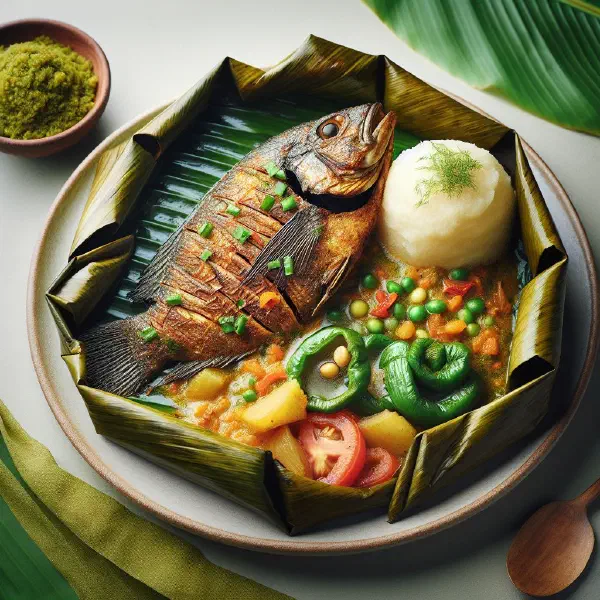
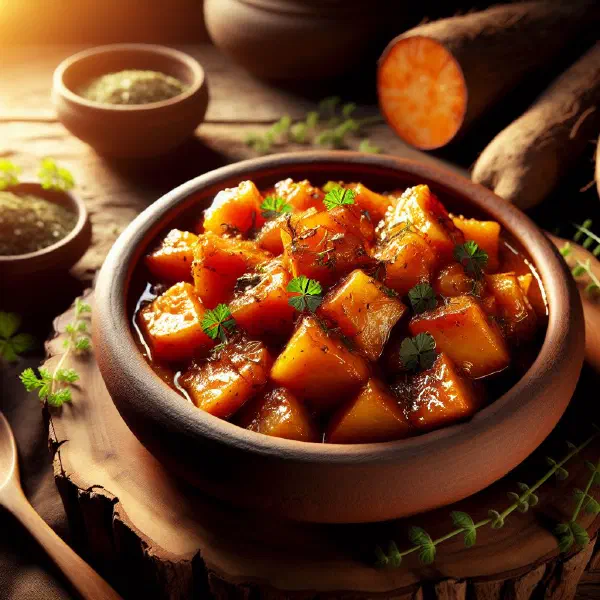
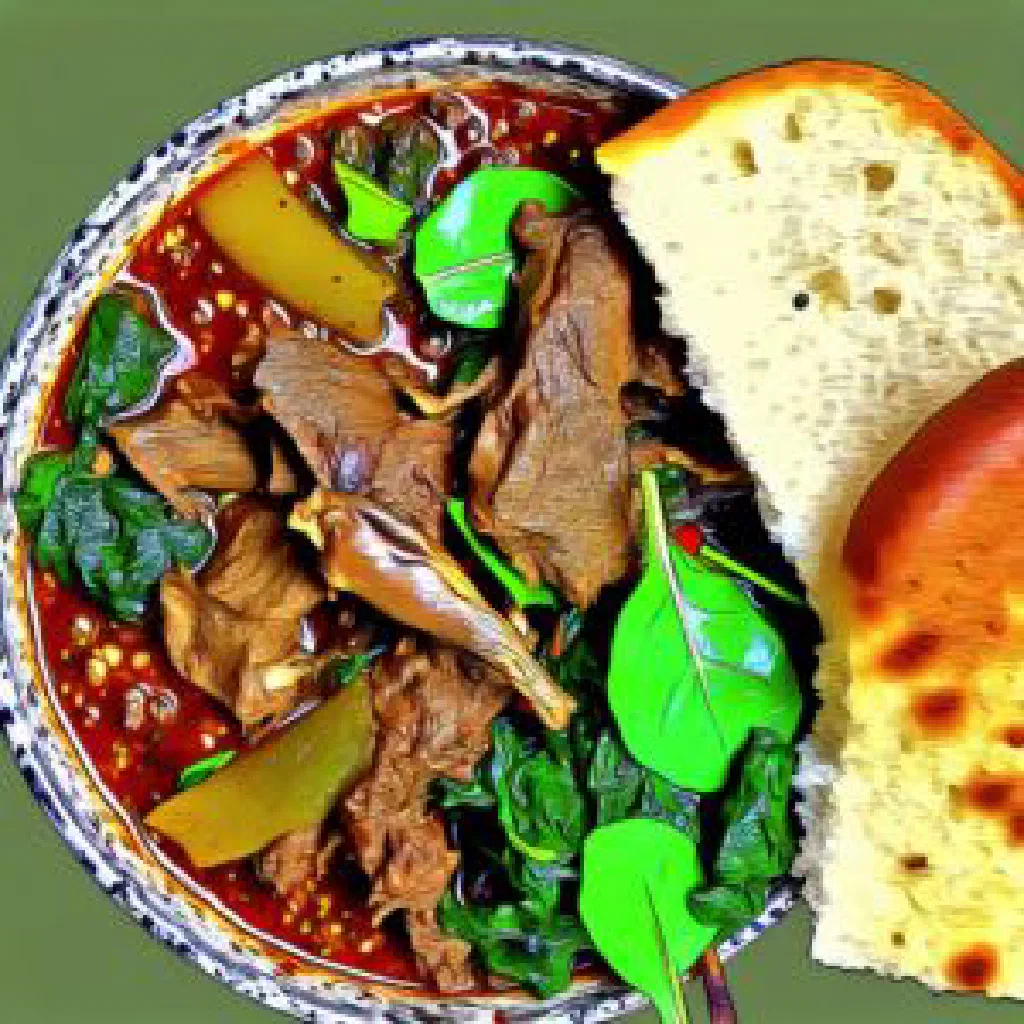
Kanda is meat or fish cooked in a tomato base and served with cassava paste. In its fullest form, kanda ti nyma, the meat is wrapped in leaves with ground pumpkin seed and steamed, which is the version worth seeking out. This is the everyday one.
About Kanda
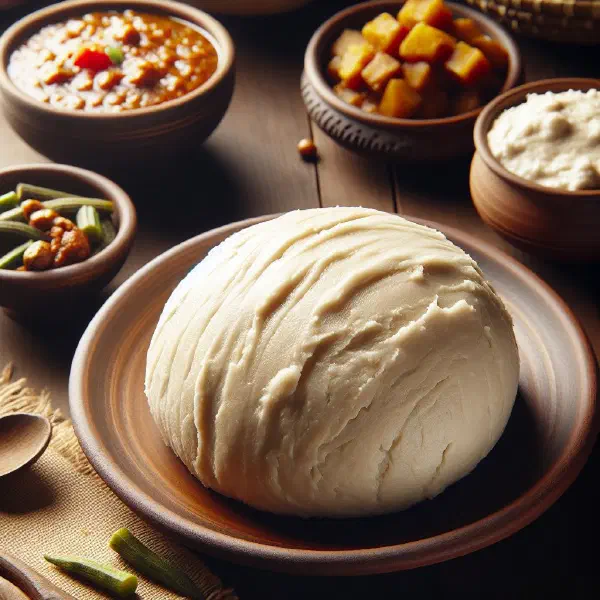
The Central African Republic eats cassava as its staple, in the stiff paste form that goes by fufu or boule across the region. Kanda is what accompanies it: a sauce of onion, tomato and garlic with fish or meat cooked through it.
The proportions are the opposite of European expectations. The cassava is the meal and the kanda is the flavouring, in modest quantity.
Ingredients (serves 1–2)
- 200 g ground cassava
- 400 ml water
- 250 g fish or meat of your choice
- 1 onion, finely chopped
- 2 tomatoes, diced
- 1 garlic clove, crushed
- Salt and pepper to taste
- Oil, for frying
Shopping for the ingredients
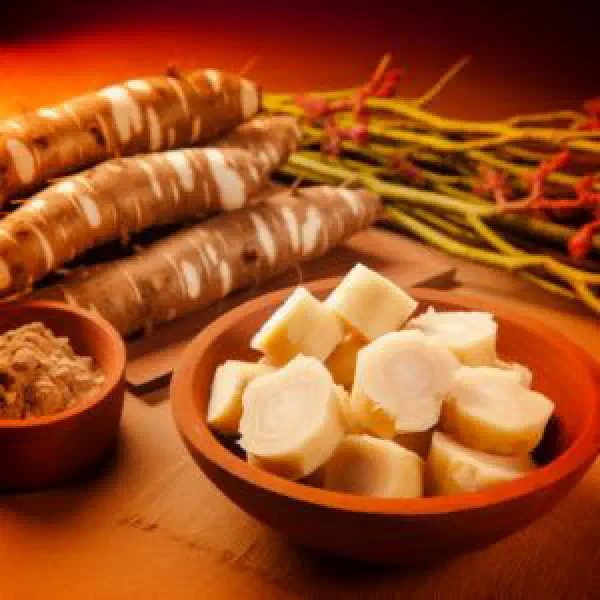
Cassava flour is sold in African and Latin American shops, sometimes as gari or farine de manioc. Gari is fermented and coarser; plain cassava flour gives a smoother paste. For the protein, smoked or dried fish is more common locally than fresh and gives a much deeper flavour.
Preparing the dish
Cook the sauce first, since the cassava paste stiffens as it cools and must be served straight from the pan. Slacken the cassava flour with a little cold water before it meets boiling water, which is the reliable way to avoid lumps.
Step-by-step instructions
- Heat the oil in a pan and add the onions and garlic. Fry until golden brown.
- Add the diced tomatoes and let the mixture simmer for about 5 minutes.
- Add the prepared meat or fish and continue cooking until it is done all the way through.
- In a separate pan, bring the water to the boil and stir in the cassava, mixing well until a smooth paste forms.
- Serve the kanda warm, with the sauce spooned over the fish or meat.
Gluten-free / lactose-free version
Cassava contains no gluten and there is no dairy in the dish, so it needs no adaptation at all. This is one of the more straightforward national dishes for both restrictions.
Tips for vegans and vegetarians
The tomato and onion base works without meat. Saka saka, pounded cassava leaves, and ngunja aux arachides, greens in peanut sauce, are the region’s established vegetarian dishes and are better starting points than an adapted kanda.
More tips and tricks
Stir the cassava paste hard and without stopping, using a wooden spoon and some force. It thickens fast and lumps are permanent. Cook the tomato base until the oil separates. And serve immediately, because cassava paste sets to rubber within fifteen minutes.
Adapting the recipe to your taste
Kanda ti nyma, the leaf-wrapped version with ground pumpkin seeds, is the celebratory form. Okra added to the sauce thickens it. Chilli is usual and can be as hot as you like.
Ingredient substitutions
Smoked fish gives more depth than fresh. Palm oil in place of vegetable oil is more traditional. Plantain fufu can replace the cassava paste.
Drink pairing ideas
Jus de bissap, the hibiscus drink, is the local standard. Palm wine is drunk in rural areas. Water is what accompanies most meals.
Serving and presentation ideas
Serve the cassava paste as a mound with the kanda in a separate bowl. Pull off a piece of paste with the right hand, press a hollow in it with the thumb, and use it to scoop. Plates are shared.
A bit of history
Cassava came to Central Africa from Brazil through Portuguese trade and displaced older staples because it grows in poor soil and stores in the ground. The country’s cooking is built on it, and Central African cuisine shares most of its repertoire with Congo and Cameroon.
More recipe ideas
Summary: Kanda
Kanda is fish or meat in a tomato and onion sauce, served with cassava paste. Slurry the flour first, stir it hard, and serve the paste the moment it is made.