National Dish Central African Republic: Klouikloui (Recipe)
In this article
Klouikloui is a peanut ring, and its whole method is subtraction: roasted peanuts are ground to a paste, the oil is pressed out, and what remains is shaped and fried. The pressing is what makes it crisp rather than greasy, and the same snack is sold from Bangui to Ouagadougou.
About Klouikloui
Klouikloui is the crisp peanut nibble of the Central African Republic. Roasted, ground peanuts are worked into a firm paste, rolled into small rings and fried golden. Savoury and nutty in flavour, pleasantly crunchy in the bite, this snack is known across central and West Africa as popular street food, cheap, keepable and hard to stop eating.
Ingredients (serves 1–2)
- 200 g roasted, unsalted peanuts
- A pinch of salt
- A pinch of chilli powder, optional
- 2–3 tablespoons warm water
- 1 tablespoon peanut flour or cornmeal, for shaping
- Oil, for deep frying
Shopping for the ingredients
Unsalted roasted peanuts are essential; salted ones become inedible once concentrated. Roasting raw peanuts yourself takes ten minutes in a hot oven and gives a noticeably better flavour. Groundnut oil is the traditional frying medium.
Preparing the dish
Grind the peanuts to a paste, then press out as much oil as possible by squeezing handfuls in a cloth. This is the crucial step, the drier the paste, the crisper the ring. Keep the extracted oil for frying.
Step-by-step instructions
- Grind the roasted peanuts to a thick, oily paste.
- Press the paste in a cloth to extract as much oil as you can; keep the oil.
- Mix the pressed paste with the salt and chilli.
- Add warm water a teaspoon at a time until it holds together as a stiff dough.
- Dust with the peanut flour and roll into thin ropes.
- Join the ends to form rings about 5 cm across.
- Heat the oil to 170°C and fry in batches for 3–4 minutes until deep golden.
- Drain on paper and cool completely before eating — they crisp as they cool.
Gluten-free / lactose-free version
Klouikloui is naturally gluten-free and lactose-free, peanuts, salt, spice and oil. Use peanut flour rather than wheat flour for shaping and nothing else needs attention.
Tips for vegans and vegetarians
The snack is vegan as written and is a dense source of plant protein, which is why it functions as travel and working food across the region. Nothing needs substituting.
More tips and tricks
Press out as much oil as you can. This single step decides whether the rings turn out crisp or greasy. Keep the frying oil steady at 170°C. And let them cool completely before judging; warm klouikloui always seems soft.
Adapting the recipe to your taste
Ginger or garlic in the paste adds depth. More chilli is common. Shaping the paste into sticks or balls instead of rings gives kuli kuli, the same thing under a different name further west.
Ingredient substitutions
Cashews or a peanut-cashew mix work. Cornmeal substitutes for peanut flour when shaping. Smoked paprika can replace some of the chilli.
Drink pairing ideas
Bissap, the hibiscus drink, cuts the richness well. Ginger juice works the same way. A cold beer suits it as a bar snack.
Serving and presentation ideas
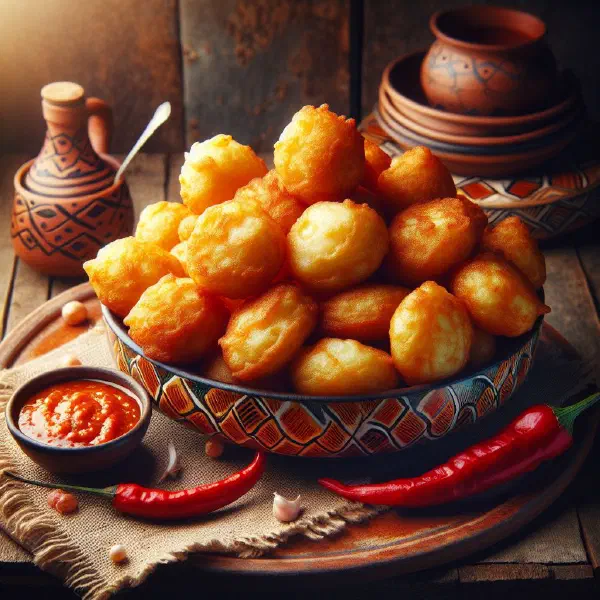
Serve klouikloui piled in a bowl or threaded on string as the markets sell them. They keep for a week in an airtight tin and are eaten from the hand, alongside a bowl of foufou or on their own with a cold drink.
A bit of history
Groundnuts are grown throughout central Africa, and the pressed cake left after oil extraction is never wasted. It becomes snacks like this one, or thickens stews. The same principle produces kuli kuli in Nigeria and Benin, evidence of how far this food travels. It offers a genuine window onto Central African cuisine.
More recipe ideas
Summary: Klouikloui
Klouikloui is roasted peanut paste pressed dry, shaped into rings and fried crisp. Squeeze out the oil, fry at a steady 170°C, and let them cool before tasting.