National Dish Central African Republic: Maboke de Poisson (Recipe)
In this article
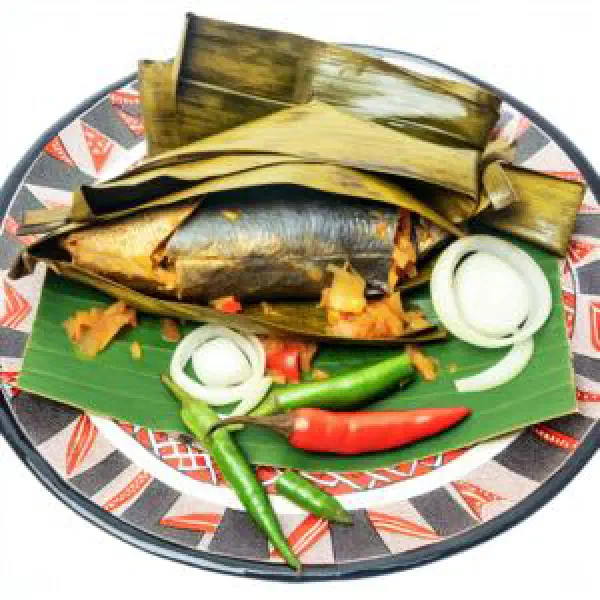
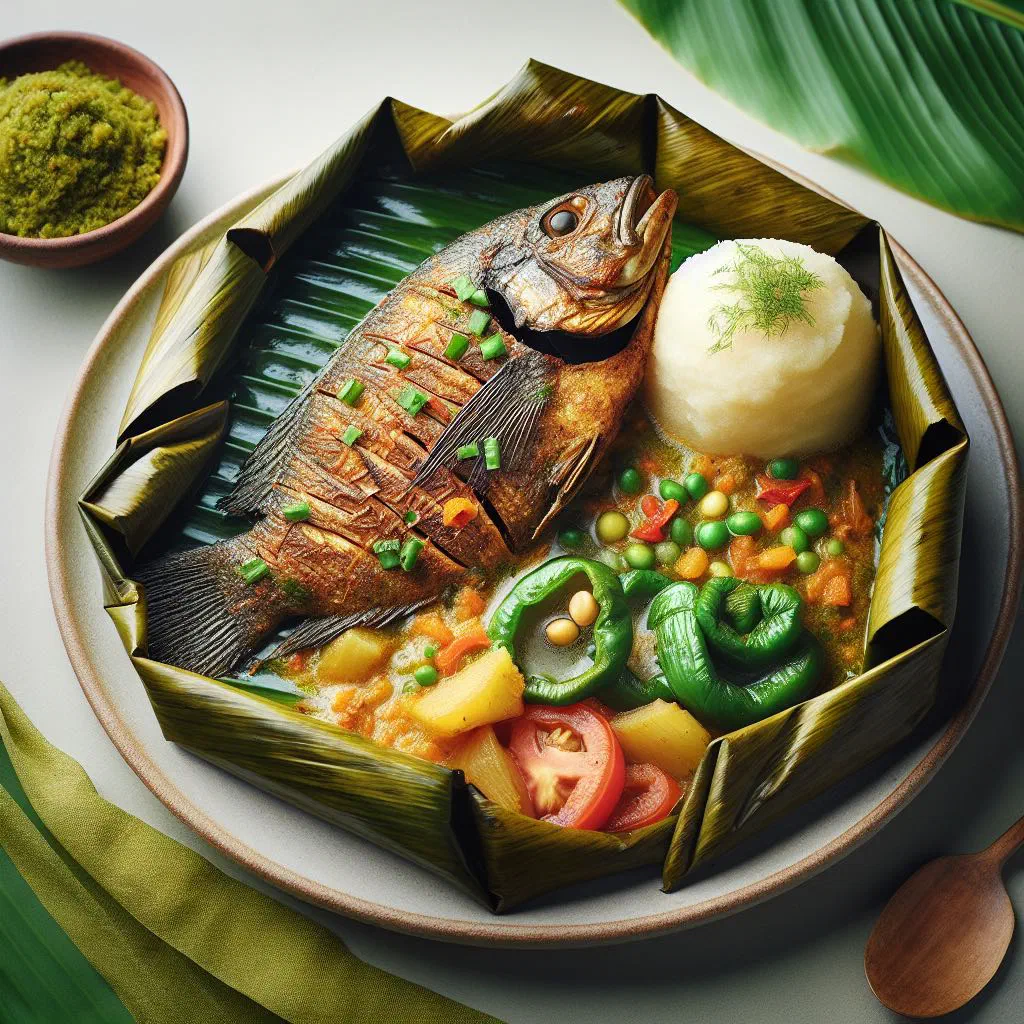
Few dishes capture the spirit of Central African cooking as neatly as Maboke de Poisson, a parcel of fresh fish steamed inside banana leaves until it is meltingly tender. The leaves trap every drop of moisture and every wisp of spice, so the fish arrives at the table fragrant and gently smoky. It is a simple, unfussy way of cooking that rewards good ingredients rather than complicated technique, and it makes a beautiful centrepiece for a shared meal.
About Maboke de Poisson
Maboke de Poisson is a traditional dish of the Central African Republic that brings freshness and aroma together in perfect balance. Wrapped in banana leaves, the fish is cooked with fragrant spices and regional ingredients. Because the parcel seals everything in, the flavours concentrate rather than escape, giving an intensely aromatic result. The dish is a feast for the senses and a tribute to the rich culinary traditions of Africa, where cooking in leaves is an art in its own right.
Ingredients (serves 1–2)
- 2 fresh fish fillets (tilapia or trout, for example)
- 1 large onion, finely chopped
- 2 tomatoes, diced
- 2 cloves of garlic, crushed
- 1 green pepper, diced
- 2–3 tablespoons vegetable oil
- 1 teaspoon paprika
- Fresh herbs (parsley or coriander)
- Salt and pepper to taste
- Banana leaves for wrapping
Shopping for the ingredients
For maboke de poisson it is essential to use fresh ingredients. Look for fish fillets that appear clear and glossy, and check that they smell clean and of the sea rather than sharp or sour. Vegetables such as onions, tomatoes and peppers should likewise be firm and unblemished. Shopping at a local market or a good fishmonger is the surest route to top quality, and African or Asian grocers are the best place to find banana leaves, often sold frozen.
Preparing the dish
The preparation for maboke de poisson is straightforward and quickly done. Begin by washing and cleaning the fish fillets, making sure they are free of scales and any other bits and pieces. While you work, the vegetables can be washed, chopped and set out ready to use. Remember to blanch the banana leaves briefly so they become pliable, fold neatly around the fish and hold the aromas more effectively.
Step-by-step instructions
- Heat the vegetable oil in a pan and sauté the onions and garlic until softened.
- Add the diced tomatoes and pepper, then season everything with paprika, salt and pepper.
- Lay the fish fillets on a piece of banana leaf and spread the vegetable mixture over them.
- Fold the banana leaf around the fish and secure it with kitchen string.
- Steam the parcels in a steamer basket or over the hob for about 20–30 minutes.
- Serve the dish hot, scattered with fresh herbs.
Gluten-free / lactose-free version
Maboke de poisson is naturally gluten-free and lactose-free. None of the ingredients contains gluten, so anyone with coeliac disease or a lactose intolerance can enjoy it without worry. Do check, however, that the spice blends and oils you use are also certified free from gluten, as cross-contamination can creep in with pre-mixed seasonings. That keeps the dish suitable for every intolerance around the table.
Tips for vegans and vegetarians
Although maboke de poisson is normally made with fish, vegan alternatives deliver a remarkably similar experience. Instead of fish, use firm tofu, or vegetables such as aubergine and courgette, the same approach that works so well in Caviar de Legumes. Keep the spices and the vegetable base exactly as they are so the flavour profile stays intact. Wrap the plant-based fillings in banana leaves in the same way and steam them for the same aromatic depth as the original.
More tips and tricks
One small trick when making maboke de poisson is to toast the banana leaves briefly over a flame before use. This intensifies their scent and makes them far more supple to fold. Beyond that, feel free to add different spices to suit your own palate, chilli, for instance, for a proper kick of heat. Take care not to use too much water when steaming, or the aroma will be diluted rather than concentrated.
Adapting the recipe to your taste
The recipe for maboke de poisson adapts easily to personal preference. Experiment with different types of fish to ring the changes, from firm river fish to more delicate sea varieties. Extra flavourings such as lemon juice or ginger can also be added for a fresher, brighter finish. Adjustments like these let you make the dish genuinely your own, much as cooks do with Poisson Braise.
Ingredient substitutions
If some ingredients are unavailable or simply not to your liking, there are plenty of alternatives. Peppers, for example, can be replaced with other vegetables such as courgette. If fresh fish is not on offer, frozen fish works perfectly well once thoroughly thawed and patted dry. This is a dish built on improvisation.
Drink pairing ideas
Light, refreshing drinks pair beautifully with maboke de poisson. A cold beer or a fruity cocktail would be an excellent choice. Alternatively, serve homemade lemonades or unsweetened teas, which support rather than compete with the spices in the dish. A glass of Jus De Gingembre is another lively option that adds to the atmosphere of the meal.
Serving and presentation ideas
The presentation of maboke de poisson can be lifted with the simplest of means. Serve the folded banana-leaf parcels straight onto the plate, perhaps with extra herbs or a wedge of lime as a garnish. Attractive tableware and an uncluttered setting create a warm, inviting atmosphere. Guests are invariably pleased when they open the parcel themselves and the steam and scent are released at the table.
A bit of history
Maboke de poisson has its roots in Central African cooking, which is known for its use of fresh ingredients and aromatic spices. It reflects the traditions and the culture of a region where fish is a staple food, drawn from the rivers that run through the country. Cooking in banana leaves symbolises a connection to the natural world and the sense of community that grows around a shared meal. Food carries deep meaning in many cultures, and this dish is a perfect example of that within Central African cuisine.
More recipe ideas
Summary: Maboke de Poisson
Maboke de poisson is a delicious and wholesome dish from the Central African Republic that nourishes body and soul alike. With simple, fresh ingredients and fragrant spices, it is both a pleasure for the palate and a lovely way to experience the culinary traditions of Africa. This dish is certain to impress. Dare to discover the flavours of Central African cooking, the banana leaf does most of the work for you.