National Dish Central African Republic: Saka Saka (Recipe)
In this article
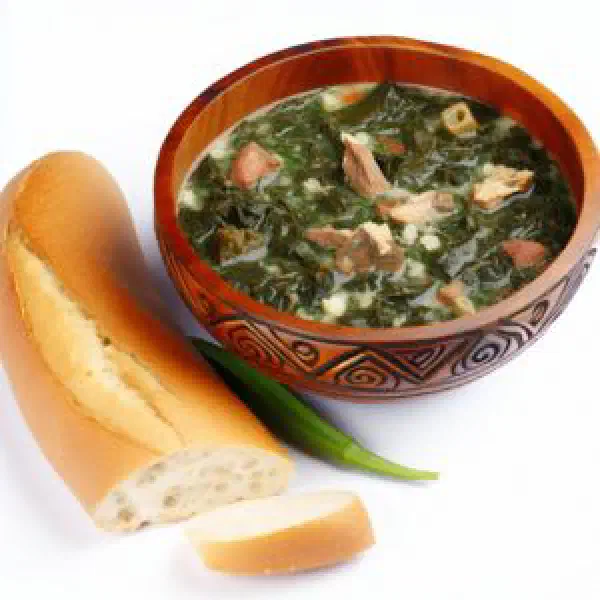
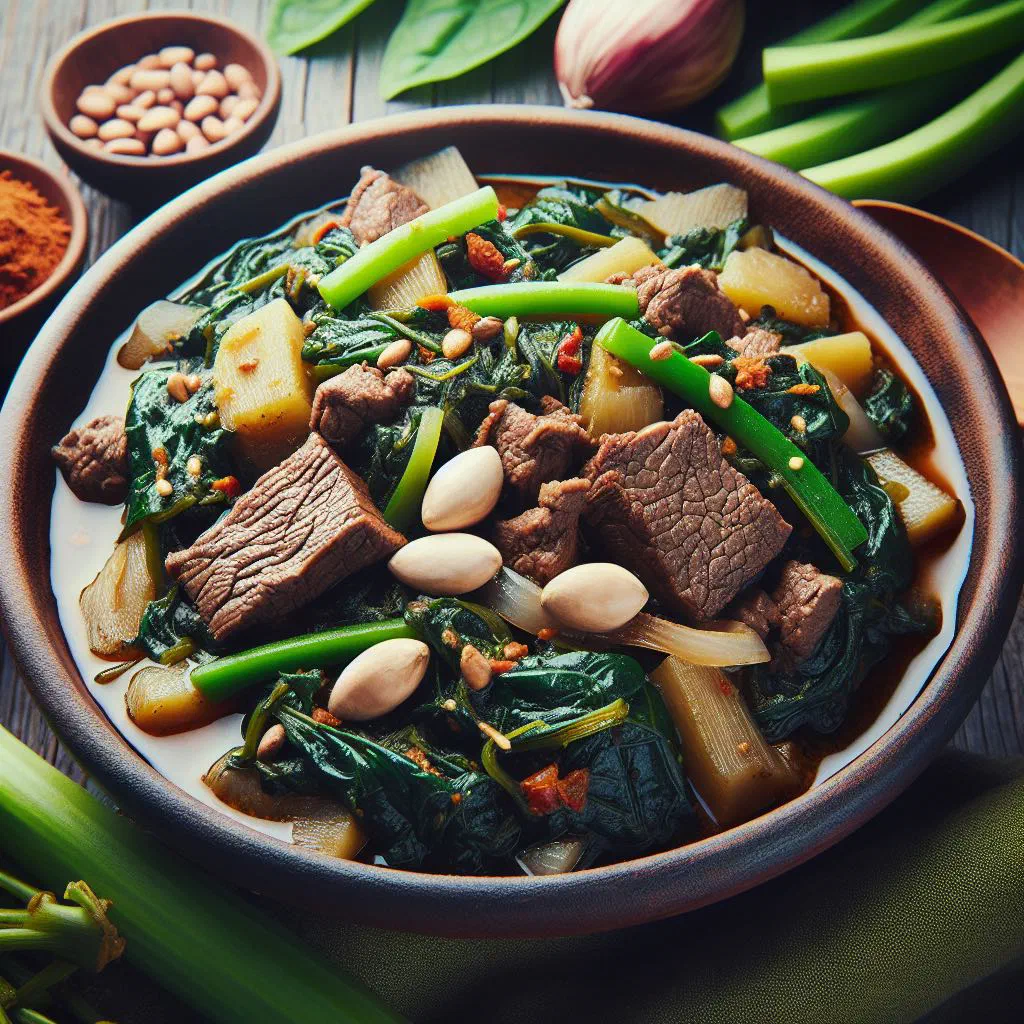
Discover Saka Saka, the national dish of the Central African Republic, a deep green, gently simmered stew built on tender cassava leaves and crushed peanuts. The leaves bring an earthy, almost spinach-like depth, while the nuts melt into the pot and give the whole thing a creamy, rounded finish. Season it with onion, garlic and a spoonful of rich palm oil and you have a dish that is nourishing, naturally plant-based and utterly satisfying.
About Saka Saka
Saka Saka is a traditional dish from the Central African Republic that mirrors both the flavours and the natural abundance of the region. Its main ingredient is cassava leaves, which are rich in nutrients and play a central role in cooking right across the continent. The leaves are combined with peanuts, lending the dish a creamy texture and a distinctly nutty taste. Saka Saka is wonderfully versatile: it can be served as a main course in its own right or as a side alongside grilled meat or fish.
Ingredients (serves 1–2)
- 200 g fresh cassava leaves
- 100 g peanuts
- 1 onion, finely chopped
- 2 cloves of garlic, chopped
- 1 teaspoon palm oil or vegetable oil
- 1 teaspoon salt
- 1 teaspoon pepper
- Water, as needed
Shopping for the ingredients
Pay particular attention to the cassava leaves, since they are the ingredient the whole dish rests on. You will find them fresh or frozen in most African and Asian grocery shops, sometimes sold ready-pounded. Peanuts are easy to pick up in any supermarket and can also be used roasted, which adds an extra layer of flavour. Buy good-quality spices and oil too, with so few ingredients, the quality of each one really shows in the finished pot.
Preparing the dish
Before you start cooking Saka Saka, wash the cassava leaves thoroughly and strip away any tough stalks. The leaves can taste bitter if they are not cooked properly, so blanch them first to draw out those bitter compounds before going any further. The peanuts benefit from a light toasting at this stage as well: it deepens the nutty aroma and improves the way they break down into the sauce during cooking.
Step-by-step instructions
- Blanch the cassava leaves: drop them into a pan of boiling water, cook for 10 minutes, then drain and leave to cool.
- Toast the peanuts in a dry frying pan until golden brown, then crush them coarsely.
- Heat the palm oil in a pan, add the chopped onion and garlic, and fry until translucent.
- Add the blanched cassava leaves and the crushed peanuts to the pan. Stir well and season to taste with salt and pepper.
- Pour in a little water to loosen the mixture, then leave to simmer for a few minutes. Adjust the seasoning before serving.
Gluten-free / lactose-free version
Saka Saka is naturally gluten-free and lactose-free, as it contains neither cereal products nor any dairy. Every element of the recipe can be enjoyed without worry by anyone with these dietary restrictions. To be completely certain, check the labels on any processed items you buy, particularly ready-ground peanut pastes and spice blends. The preparation is straightforward, which makes this an ideal dish for cooks catering to special dietary needs.
Tips for vegans and vegetarians
Although Saka Saka is already a plant-based dish, vegans and vegetarians can adapt it in several ways. The palm oil can be swapped for another vegetable oil such as olive oil for a lighter result. You can also bulk it out with extra vegetables such as spinach or tomatoes, which raises the nutritional value and enriches the flavour at the same time. The key is simply to make sure every ingredient is purely plant-based, much like the meat-free Caviar De Legumes.
More tips and tricks
To intensify the aroma of Saka Saka, add spices such as cumin or chilli, depending on how much heat you enjoy. You can also play with the texture by crushing the peanuts more or less coarsely, a fine grind gives an almost velvety sauce, a rough one keeps some bite. Fresh herbs such as coriander or parsley, stirred in towards the end of cooking, add another dimension. All these small adjustments make the dish tastier and give you plenty of room to vary it.
Adapting the recipe to your taste
A good recipe should flex to suit the cook, and Saka Saka is no exception. Experiment with the quantity of spices to shape the flavour to your own preference. You can also use different nuts, such as cashews or almonds, for a slightly different character. Adding further vegetables like carrots or peppers makes the dish healthier and helps it meet particular dietary requirements or personal tastes. If you enjoy a thicker, silkier sauce, try the approach used in Sauce Pistache.
Ingredient substitutions
If you cannot track down the ingredients for Saka Saka, there are some reliable alternatives. Spinach makes an excellent stand-in for cassava leaves, while ground almonds can take the place of peanuts. If palm oil is unavailable, coconut oil works nicely and lends the dish a subtle sweetness. Substitutions like these mean you can still make Saka Saka even when some ingredients are hard to find locally.
Drink pairing ideas
Saka Saka is best matched with African drinks that complement its earthy, nutty flavours. A refreshing Jus De Gingembre or a fruity smoothie made with local fruits such as mango or pineapple is ideal. If you prefer something more robust, a traditional regional beer is an excellent choice.
Serving and presentation ideas
Saka Saka can be presented beautifully by serving it in a large bowl and garnishing it with fresh herbs such as coriander. Scattering red peppers or tomatoes over the surface adds welcome flashes of colour against the deep green. A wedge of lime on the side does double duty: it lifts the look of the plate and brings a citrus twist to the flavour. A well-arranged dish, perhaps with Fufu alongside for scooping, makes the meal feel like an occasion.
A bit of history
Saka Saka has deep cultural roots in the Central African Republic and is often prepared for special occasions and celebrations. The use of cassava reflects how important the plant is to farming across the region, serving as a staple food for countless communities. The dish is a symbol of the connection to the land and of the range of flavours found in traditional Central African Republic cuisine. Its story mirrors the identity and heritage of the people who cook it.
More recipe ideas
Summary: Saka Saka
Saka Saka is a remarkable and nourishing dish that carries the essence of the Central African Republic in every spoonful. The combination of cassava leaves, peanuts and aromatic spices makes it a culinary experience that rewards you as much culturally as it does on the plate. It offers a wonderful way into the variety of African cooking. Let this dish inspire you and discover the traditions and flavours that make it so special.