National Dish Chad: Kissar (Recipe)
In this article
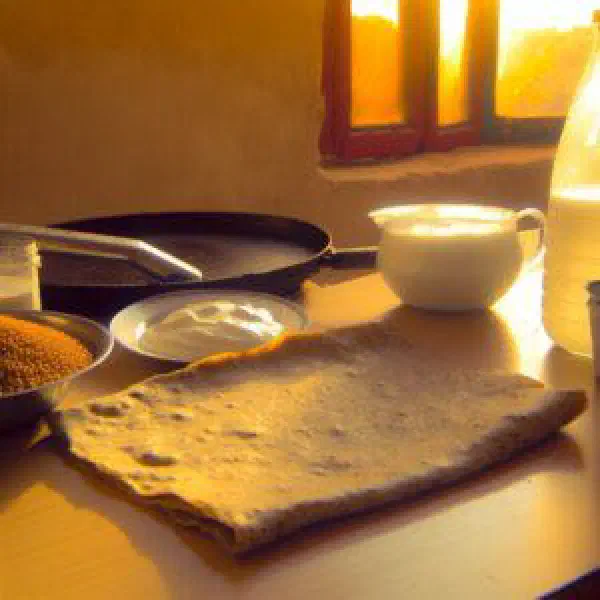
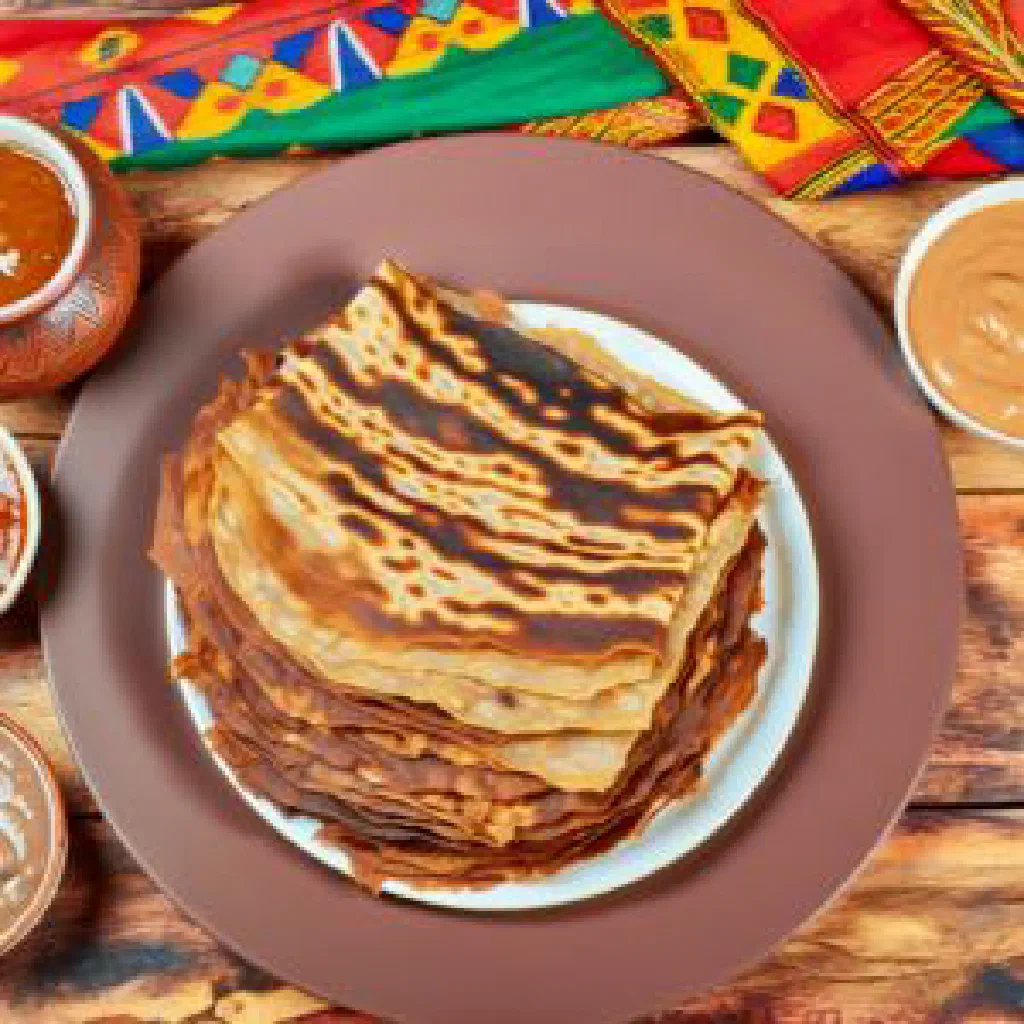
Kissar is a fermented sorghum crêpe, spread paper-thin on a hot plate and peeled off in seconds. The batter sours overnight, which gives the bread its faintly tangy, nutty flavour, and it is torn and used to scoop up stew. In Chad and Sudan it is the everyday bread, made fresh most days.
About Kissar
Kissar is Chad’s wafer-thin fermented millet flatbread. A simple batter of sorghum or millet flour ferments overnight, is then spread thinly on a hot plate like a crêpe, and comes out gently sour and nutty. Served in the classic way alongside well-spiced stews, kissar is a staple of central African cooking, and the fermentation makes the grain considerably more digestible.
Ingredients (serves 1–2)
- 250 g sorghum flour (millet flour) — or light millet flour or buckwheat flour
- 500 ml lukewarm water
- A pinch of salt
- A little oil, for greasing the pan
Shopping for the ingredients
Sorghum flour is sold in African and health food shops; millet flour works identically. Buckwheat flour is the closest widely available substitute and gives a similar sourness. There is no starter culture needed, wild yeasts on the flour do the work.
Preparing the dish
Whisk the flour into the water and leave it, covered with a cloth, at room temperature overnight. It should smell pleasantly sour by morning and show small bubbles. Keeping a spoonful of the previous batch to add to the next speeds up subsequent fermentations.
Step-by-step instructions
- Whisk the sorghum flour into the lukewarm water until completely smooth.
- Cover with a cloth and leave at room temperature for 12–24 hours.
- It is ready when it smells sour and shows bubbles.
- Stir in the salt and thin with a little water to a pourable, crêpe-like consistency.
- Heat a wide flat pan or griddle over medium heat and grease very lightly.
- Pour a ladleful and spread it as thinly as possible with the back of the ladle.
- Cook for about 1 minute, until the surface sets and the edges lift — do not turn it.
- Peel off, stack under a cloth and repeat; serve with stew.
Gluten-free / lactose-free version
Sorghum and millet contain no gluten, and there is no dairy at all, so kissar is naturally suitable for both restrictions. Use buckwheat rather than wheat if substituting the flour.
Tips for vegans and vegetarians
Kissar is vegan, flour, water and salt. It is one of the most useful gluten-free vegan breads there is, and the overnight ferment improves both flavour and nutrition.
More tips and tricks
Spread the batter as thinly as you possibly can; thick kissar is heavy and doughy. Do not turn it. It cooks on one side only, like injera. And stack the finished breads under a cloth so they stay pliable.
Adapting the recipe to your taste
A little wheat or rice flour makes the batter easier to spread, though it changes the character. Fenugreek added to the ferment is common in Sudan. A longer ferment gives a sharper flavour.
Ingredient substitutions
Millet, teff or buckwheat flour all work. A spoonful of previous batter accelerates the fermentation. Warm water speeds it in a cold kitchen.
Drink pairing ideas
Sweet spiced tea with cardamom and ginger accompanies meals in Chad. Karkade, the hibiscus drink, is the cold alternative. Water is what usually appears at the table.
Serving and presentation ideas
Serve kissar stacked and folded on a plate, torn by hand and used to scoop up stew, daraba, okra sauces, meat broths. Everyone eats from a communal dish, which is what the bread is designed for.
A bit of history
Sorghum is the staple grain of the Sahel, tolerant of drought where almost nothing else grows, and fermented sorghum breads run across Chad, Sudan and beyond as kisra or kissar. The fermentation is not a refinement but a necessity: it breaks down the tannins that make sorghum hard to digest. It offers a genuine window onto Chadian cuisine.
More recipe ideas
Summary: Kissar
Kissar is sorghum batter fermented overnight and spread paper-thin on a hot plate, cooked on one side only. Spread it thin, never turn it, and stack it under a cloth.