National Dish Chad: Rice Pilaf (Recipe)
In this article
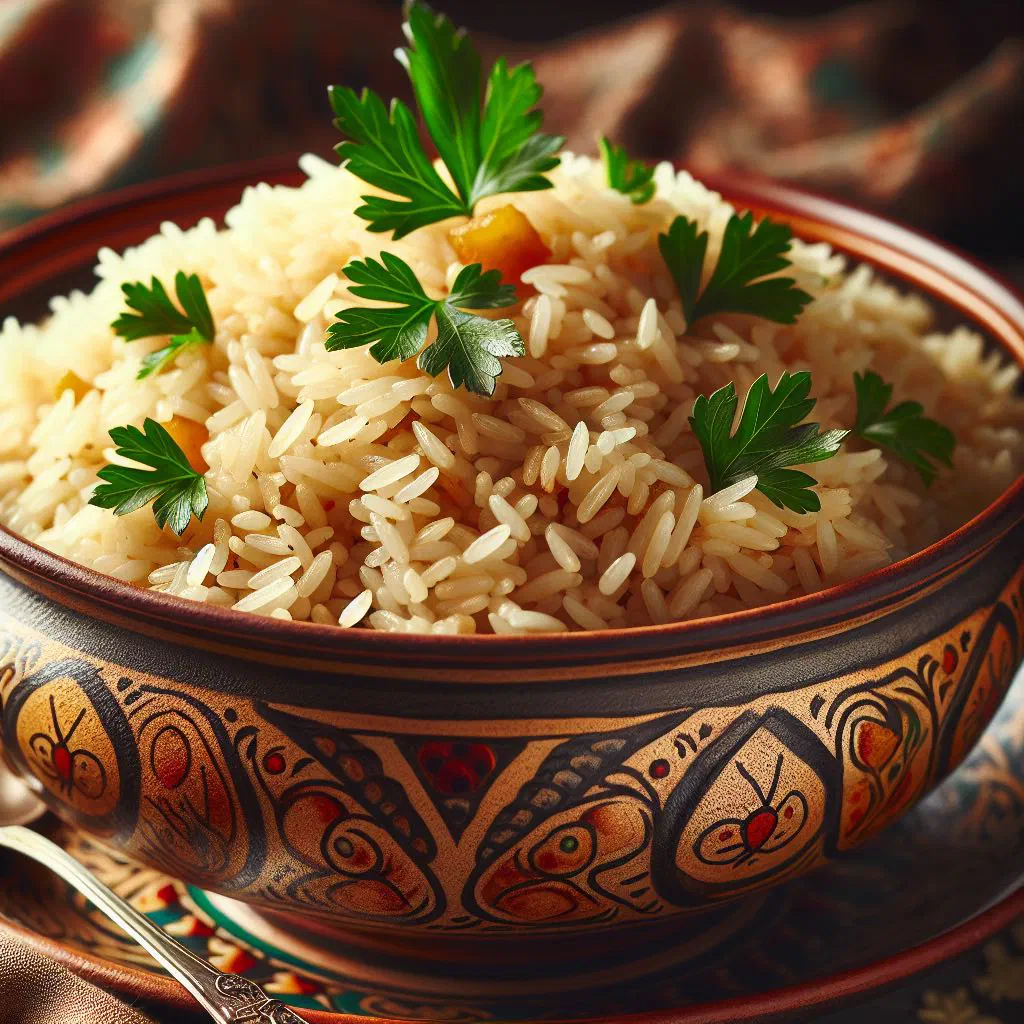
Discover Rice Pilaf, the fragrant celebration dish of Chad. Fluffy grains soak up a warmly spiced stock while tender meat and colourful vegetables cook alongside them, filling the kitchen with the aromas of cumin and sweet paprika. It is the sort of one-pot cooking that turns a family gathering into an occasion, generous, comforting and endlessly easy to make your own.
About Rice Pilaf
Rice Pilaf is a feast for the senses and one of the defining national dishes of Chad. This hearty rice dish is served at special occasions and is famous for its delicious combination of spices, vegetables and tender meat. The range of ingredients reflects the country’s rich culture and traditions, offering everyone who tries it an authentic journey through flavour. Cooking this festive dish brings the warmth and character of the Chadian way of life straight into your own kitchen.
Ingredients (serves 1–2)
- 150 g rice (basmati or jasmine, for example)
- 200 g chicken breast or lamb, diced
- 1 onion, diced
- 1 carrot, diced
- 1 pepper, diced
- 2 garlic cloves, chopped
- 2 tablespoons vegetable oil
- 1 teaspoon cumin
- 1 teaspoon paprika
- Salt and pepper to taste
- 500 ml vegetable or chicken stock
- Fresh herbs (parsley or coriander), to garnish
Shopping for the ingredients
To make an authentic rice pilaf, it is worth choosing good-quality ingredients. Most of them are easy to find in supermarkets or at an African or Middle Eastern grocery. Pay particular attention to the freshness of the meat and the vegetables, as both have a considerable influence on the flavour of the finished dish. Spices such as cumin and paprika can be picked up at a well-stocked health food shop or ordered online, the same cupboard staples that give a Ragoût de Viande its depth.
Preparing the dish
The preparation for rice pilaf takes a little time, but it is very straightforward and well worth the effort. Begin by cutting the vegetables and the meat into evenly sized cubes so that everything cooks at the same rate. If you like, marinate the meat with some of the spices beforehand to deepen the flavour. These steps are what ensure the dish is full of the aromas that make it such a pleasure to eat.
Step-by-step instructions
- Heat the oil in a large pan over medium heat and add the onion. Fry until soft and golden brown.
- Add the garlic, the carrot and the pepper, and cook the vegetables for a further 3–4 minutes.
- Add the meat to the pan and fry until lightly browned all over.
- Scatter the spices over the meat and vegetables and stir well.
- Add the rice and pour over the stock. Bring everything to the boil.
- Reduce the heat and leave to simmer for about 15–20 minutes, until the rice has absorbed the liquid.
- Once the rice is cooked, take the pan off the heat and let it rest for 5 minutes before serving.
Gluten-free / lactose-free version
Rice pilaf is naturally gluten-free and lactose-free, provided you choose your ingredients accordingly. Do check that any ready-made stock you use is also gluten-free. Fresh vegetables and meat contain no lactose at all, which makes this dish an excellent choice for anyone with intolerances. With these simple adjustments you can enjoy the full range of flavours without compromising on health.
Tips for vegans and vegetarians
To make rice pilaf vegan or vegetarian, simply leave out the meat and use vegetable stock instead. Round the dish out with extra vegetables such as peas, courgette or broccoli to boost its nutritional value. You can also add plant-based protein such as chickpeas or lentils to keep it hearty and filling, much as you would in a bowl of Lentilles Aux Epices. Be sure to use the same spices so none of the flavour is lost.
More tips and tricks
A few extra tips will help you perfect your pilaf. Let the rice rest, covered, for a few minutes after cooking so it can absorb the last of the moisture. Try different spice combinations, or add a pinch of saffron for a touch of luxury. Finishing the dish with fresh herbs gives it not only a lovely colour but extra fragrance too.
Adapting the recipe to your taste
One of the best things about rice pilaf is how versatile it is. Experiment with regional or seasonal produce to vary the taste from one occasion to the next. That way every mouthful becomes a new experience and your pilaf never grows dull.
Ingredient substitutions
If you do not have every listed ingredient to hand, there are plenty of alternatives. Rice can be swapped for couscous or quinoa for a different texture, the sort of change that brings it closer to a plate of Couscous De Mil. Instead of chicken or lamb you might use cubes of tofu or another plant-based protein. Be creative with your choices and create a pilaf that is entirely your own, and just as delicious.
Drink pairing ideas
Rice pilaf goes beautifully with a wide range of drinks. A cool glass of mineral water or a homemade iced tea are perfect partners, balancing the warmth of the spices. If you prefer something alcoholic, a light white wine or a fruity cocktail works very well. Just make sure the drink is not too dominant, so the flavour of the food stays centre stage.
Serving and presentation ideas
Presentation can raise the whole pilaf experience. Serve the dish in a shallow bowl and garnish it with fresh herbs or toasted nuts for added texture and colour. A good napkin and elegant cutlery complete the picture and give the meal a festive air. Remember that we eat with our eyes first, an attractive presentation makes a real difference.
A bit of history
The history of rice pilaf reaches far back, and versions of it turn up in many cultures. In Chad the dish is regarded as a symbol of hospitality and takes pride of place at celebrations and family gatherings. Every region has its own particular cooking methods and ingredients, a reflection of Africa’s cultural variety and a hallmark of Chadian cuisine. Today the pilaf is not merely food but an expression of cultural identity.
More recipe ideas
Summary: Rice Pilaf
Rice pilaf is an immensely popular dish that captures the cultural traditions of Chad beautifully. With its combination of tender meat, fresh vegetables and warm spices, it conjures up a piece of Africa on your table. Its simple preparation and the ease with which it can be adapted to personal taste make it an ideal choice for any occasion.