National Dish China: Biang Biang Noodles (Recipe)
In this article
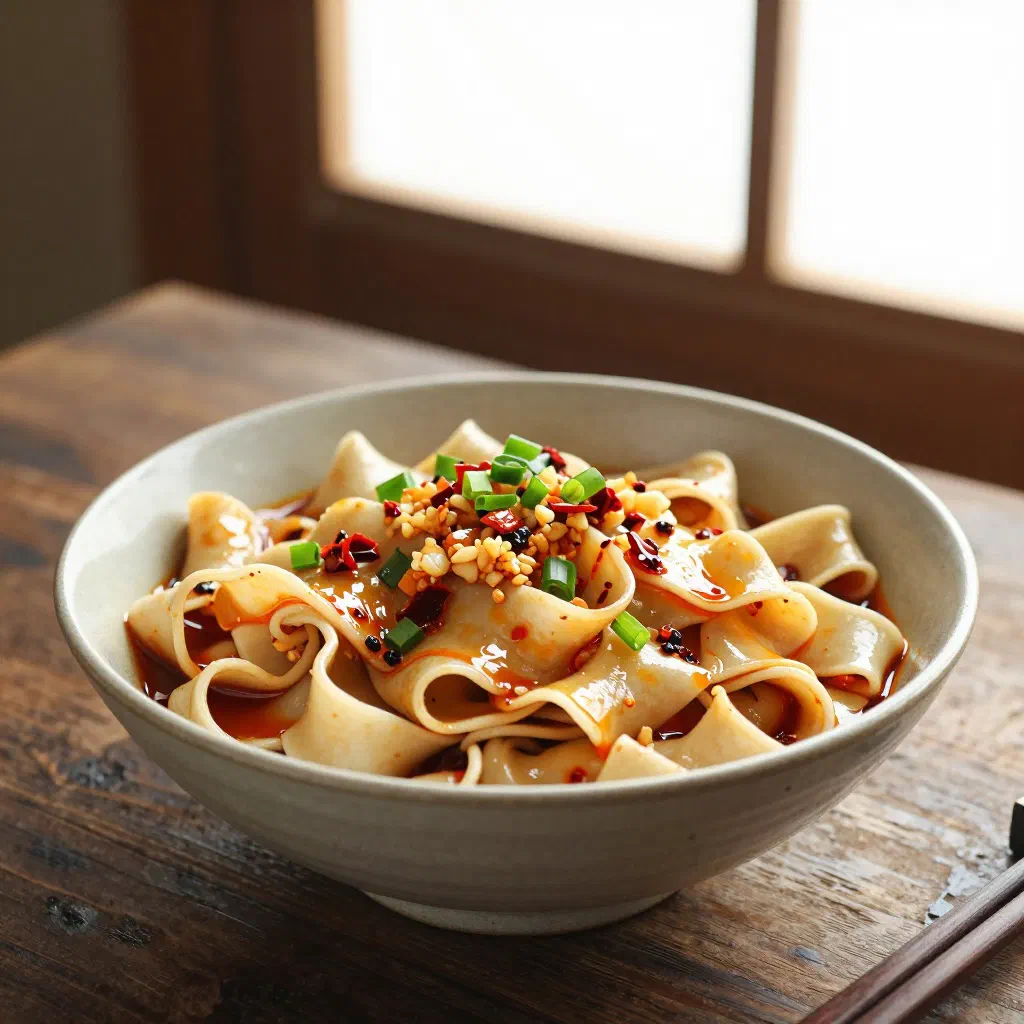
Discover Biang Biang Noodles, one of China’s most memorable street-food treasures. These broad, hand-pulled wheat noodles come tossed with a fiery garlic-and-chilli sauce and a scatter of crisp fresh vegetables. Springy in texture and big on flavour, they bring the lively spirit of a Shaanxi noodle stall straight to your own kitchen. This Chinese classic delivers a genuinely memorable bite.
About Biang Biang Noodles
Biang Biang Noodles are a truly one-of-a-kind dish from the Shaanxi province of China. They are famous for their broad, thick, hand-pulled strands, which give a wonderfully satisfying chew. Making these noodles calls for real skill and centuries-old techniques passed down from one generation to the next. The dish is a beloved piece of street food and a symbol of China’s rich culinary heritage, celebrated as much for its dramatic preparation as for its bold, comforting flavour.
Ingredients (serves 1–2)
- 250 g plain wheat flour
- 1/2 teaspoon salt
- 120 ml water
- 2 tablespoons vegetable oil
- 2–3 cloves garlic, finely chopped
- 1–2 chillies, chopped
- Fresh vegetables of your choice (such as spring onions and coriander)
- Soy sauce and vinegar, to taste
Shopping for the ingredients
To make truly delicious biang biang noodles, it pays to seek out good-quality ingredients. Choose fresh wheat flour that is free from additives to guarantee the best texture and flavour. The garlic and chillies should be fresh too, so they bring an intense, fragrant aroma to the dish. Seasonal vegetables are also a smart choice, lending the noodles a colourful, wholesome note. Most of these items are easy to find in a regular supermarket, while any specialist ingredients can be tracked down at an Asian grocer.
Preparing the dish
Preparing biang biang noodles involves kneading the dough and chopping the vegetables. First, mix the flour and the salt together in a bowl, then gradually add the water. Knead the dough firmly until it is elastic and smooth. Leave it to rest for around 30 minutes so the gluten can develop properly, which is crucial for the structure of the noodles. While the dough rests, finely chop your garlic, chillies and vegetables so everything is ready when it is time to cook.
Step-by-step instructions
- Roll the rested dough out thinly on a floured surface.
- Cut it into even strips roughly 2 cm wide.
- Gently stretch each strip to achieve the characteristic broad shape.
- Cook the noodles in a large pot of boiling salted water for 3–4 minutes.
- Heat the oil in a pan and fry the garlic and chillies until fragrant.
- Add the cooked noodles to the pan and toss with soy sauce and vinegar.
- Garnish with fresh vegetables and serve hot.
Gluten-free / lactose-free version
For a gluten-free version of biang biang noodles, you can use gluten-free flour. There are special gluten-free flour blends that make kneading and shaping easier. As you work, keep a close eye on the consistency of the dough, since gluten-free flour usually behaves quite differently in texture. Happily, all the other ingredients in the recipe are naturally lactose-free, so no further adjustments are needed for anyone avoiding dairy.
Tips for vegans and vegetarians
Biang biang noodles are naturally very adaptable and lend themselves beautifully to vegan and vegetarian cooking. Instead of animal products, use plant-based oils and soy sauce to bring depth of flavour to the dish. Round the noodles out with a variety of vegetables such as courgette, peppers or carrots for extra nutrients. Adding tofu or tempura is another excellent way to boost the protein and make the meal more filling while keeping it entirely plant-based.
More tips and tricks
One key tip when making biang biang noodles is to avoid overcooking them. They are at their best when al dente, retaining a slight bite. Beyond that, feel free to adjust the seasonings to suit your own palate and to dial the heat up or down. Experiment with different sauces and side dishes too, so you can bring plenty of variety to your meals and discover new favourite combinations along the way.
Adapting the recipe to your taste
Biang biang noodles are wonderfully versatile and easy to tailor to your personal preferences. Add different spices, for example, or vary the types of vegetables to uncover new flavour combinations. If you fancy a little more punch, you can also reach for Sriracha or other hot sauces. Just be sure that any changes stay within the spirit of the basic recipe so you preserve the signature texture and taste of the noodles.
Ingredient substitutions
For a bit of variety, you can swap certain ingredients for clever alternatives. In place of wheat flour, for instance, you might use rice flour to achieve a different character. Soy sauce can be replaced with tamari, which is especially handy for anyone sensitive to gluten, the same thoughtful tweak that works well in Dan Dan Nudeln. You can also use sesame oil instead of plain vegetable oil for added aroma, lending the dish an extra layer of nutty depth.
Drink pairing ideas
A range of drinks pairs beautifully with biang biang noodles, depending on your taste and the occasion. A traditional Chinese jasmine tea sits perfectly alongside the bold flavours of the noodles. For something more special, you might serve a light white wine or an Asian sake to round out the experience. If you prefer alcohol-free options, a fresh smoothie or sparkling water with a squeeze of lemon makes a wonderfully refreshing choice.
Serving and presentation ideas
Thoughtful presentation can greatly enhance the biang biang noodle experience. Serve the noodles in a deep bowl and garnish generously with freshly sliced vegetables and herbs. A squeeze of lime juice or a sprinkle of sesame on top adds flavour and visual appeal. Take care to combine the colours of your ingredients, too, so the finished dish looks every bit as appetising as it tastes.
A bit of history
The story of biang biang noodles stretches back to ancient times and is deeply rooted in the culture of Shaanxi province. The name “biang” is famous for its remarkably complex written character, standing as a symbol of the rich tradition and regional identity of Chinese cuisine. The noodles themselves are a fine example of China’s vast range of dough-based dishes and reflect the local way of eating. Today they are popular not only across China but around the world, winning over food lovers everywhere.
More recipe ideas
Summary: Biang Biang Noodles
Biang biang noodles are a delicious and versatile dish from China, defined by their broad, hand-pulled strands. With their distinctive preparation and very good flavour, they are ideal for anyone who loves Asian cooking. Whether interpreted in a traditional or a modern way, biang biang noodles offer a memorable taste experience that both satisfies and appeals to. Let the rich cultural history and the variety of Chinese flavours win you over, and give them a try for yourself.