National Dish China: Kung Pao Chicken (Recipe)
In this article
Discover Kung Pao Chicken, one of China’s most celebrated dishes and a true icon of Sichuan cuisine. This fiery stir-fry brings together tender pieces of chicken, crunchy peanuts and the unmistakable tingle of Sichuan pepper for a dish that crackles with flavour. Sweet, savoury and gently numbing all at once, it is a feast for the senses that comes together in minutes. Fire up the wok and let this Chinese classic spark your next kitchen adventure.
About Kung Pao Chicken
Kung Pao Chicken is a classic dish from the Sichuan region, famous for its spicy yet subtly sweet flavour and its crunchy peanuts. Its uniqueness comes from the combination of chicken, chilli and the distinctive aroma of Sichuan pepper. Together these ingredients set off a real fireworks display of flavour, making the dish a firm favourite with food lovers everywhere. It is a wonderful introduction to the bold, layered tastes that define Chinese cuisine.
Ingredients (serves 1–2)
- 300g chicken breast, cut into cubes
- 2 tablespoons vegetable oil
- 1 teaspoon Sichuan pepper
- 8–10 dried chillies, roughly chopped
- 2 cloves garlic, finely chopped
- 1 piece of ginger, about 2cm, finely chopped
- Spring onions, sliced into rings
- 3 tablespoons peanuts, roasted and unsalted
- For the sauce:
- 3 tablespoons soy sauce
- 2 tablespoons rice wine or dry sherry
- 1 tablespoon sugar
- 1 teaspoon cornflour
- 1 tablespoon vinegar
- 60ml chicken stock or water
Shopping for the ingredients
When buying the chicken, look for quality and freshness. Sichuan pepper and dried chillies can be found in an Asian grocery or a well-stocked supermarket, and they are also easy to order online. If you cannot find rice wine, dry sherry makes a good alternative. As with the warming spices used in Dan Dan Noodles, a little care in sourcing the right ingredients goes a long way towards an authentic result.
Preparing the dish
Cut and measure out all of your ingredients before you start cooking. Slicing the chicken into evenly sized cubes ensures it cooks through at the same rate. Mix the ingredients for the sauce together in a small bowl and keep it close to hand, as a stir-fry moves quickly once the wok is hot. A tidy, well-organised work surface makes the whole process smooth and stress-free.
Step-by-step instructions
- Heat the oil in a large pan or wok over the highest heat.
- Add the Sichuan pepper and dried chillies and toast briefly until they become fragrant.
- Add the chicken cubes and fry until browned all over.
- Stir in the garlic, ginger and spring onions and cook briefly together.
- Pour the prepared sauce over the chicken and bring to the boil until it thickens.
- Finally, stir through the peanuts and combine everything well.
Gluten-free / lactose-free version
Kung Pao Chicken is naturally lactose-free, so there is no need for any dairy swaps. To make it gluten-free, simply use a certified tamari or gluten-free soy sauce in place of regular soy sauce, and check that your rice wine and cornflour are gluten-free as well. With these small adjustments, everyone at the table can enjoy the dish without worry.
Tips for vegans and vegetarians
To enjoy a vegetarian or vegan version, replace the chicken with firm tofu, tempeh or mushrooms, which soak up the sauce beautifully. Swap the chicken stock for vegetable stock and double-check any pre-made sauces for hidden animal products. With these tweaks the dish keeps all of its signature heat and crunch while suiting a plant-based diet.
More tips and tricks
If you prefer a milder dish, simply reduce the number of dried chillies. For extra depth, a splash of dark soy sauce adds richness and colour. Toasting the Sichuan pepper and chillies only briefly is key, let them release their aroma without burning, or they will turn bitter. Working over high heat and keeping everything moving in the wok gives the dish its lively, restaurant-style finish.
Adapting the recipe to your taste
This dish is easy to adjust to your own preferences. If you like it vegetarian, swap the chicken for tofu or mushrooms. You can dial the heat up or down by adjusting the chillies, and a touch more sugar or vinegar lets you fine-tune the sweet-and-sour balance. Like the crowd-pleasing Yangzhou Fried Rice, it welcomes whatever vegetables you have to hand.
Ingredient substitutions
Vegan and vegetarian alternatives are simple to achieve by replacing the chicken with firm tofu cubes, tempeh or seitan. If peanuts are not to your taste, cashews make an excellent substitute and bring a similar satisfying crunch, much like the nutty texture you find in Yunnan Over the Bridge Noodles. Cider vinegar or black rice vinegar can stand in for the vinegar in the sauce, letting you adapt the recipe to whatever is in your cupboard.
Drink pairing ideas
Traditional Chinese teas such as jasmine or green tea are an excellent match, as their gentle character soothes the heat of the dish. A well-chilled alcohol-free beer can also be wonderfully refreshing alongside the spice. For something a little different, a lightly sweetened iced tea balances the chilli beautifully without overpowering the flavours.
Serving and presentation ideas
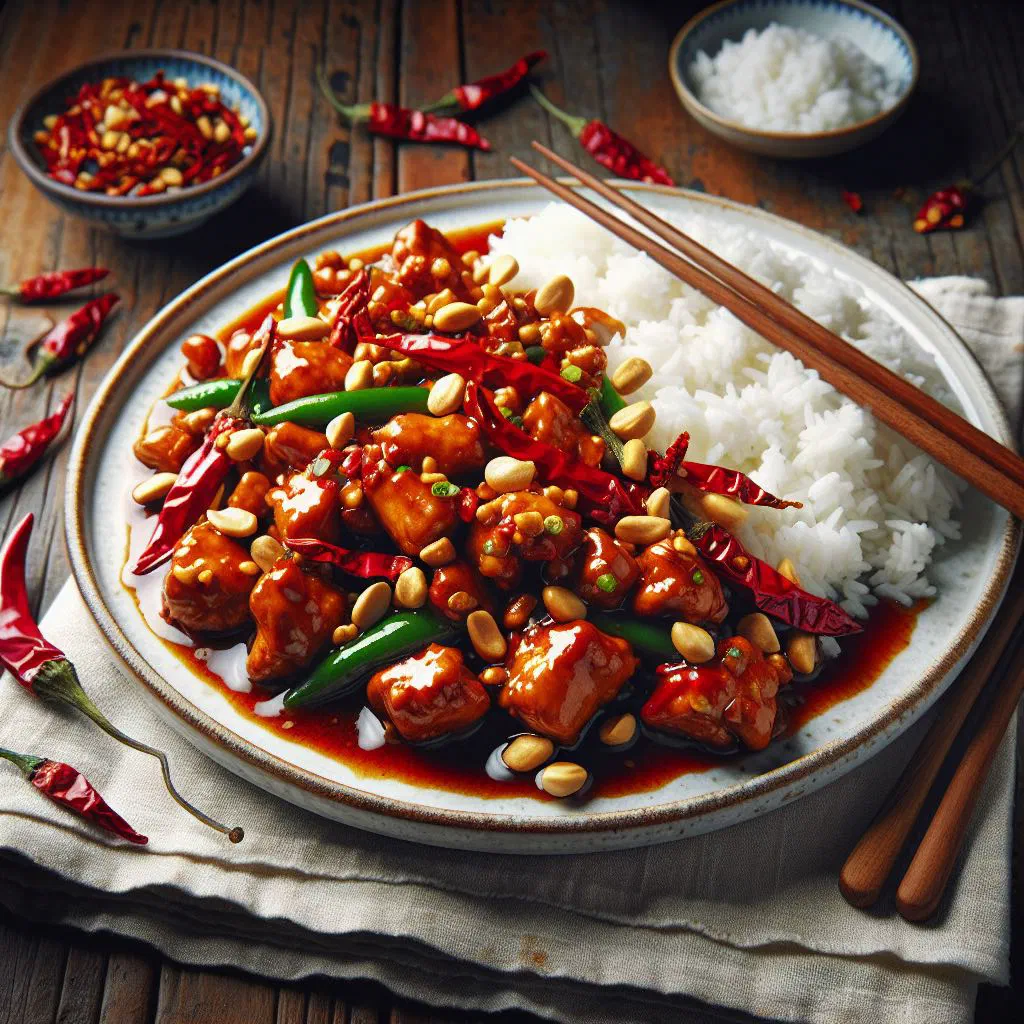
Serve the Kung Pao Chicken in a deep bowl or on a wide plate. Garnish it with fresh spring onion rings and a sprig of coriander for colour and freshness. A bowl of steamed rice alongside soaks up the sauce perfectly, and a few extra whole chillies scattered on top hint at the heat to come. Presented this way, the dish looks every bit as inviting as it tastes.
A bit of history
The name “Kung Pao” goes back to a title from the late Qing dynasty and was coined in memory of the official Ding Baozhen, who held that rank. The dish has its origins in the province of Sichuan and has since spread and established itself around the world. Like the celebrated Fish-Flavored Eggplant of the region, it captures the bold, numbing-and-spicy character that has made Sichuan food famous far beyond China.
More recipe ideas
Summary: Kung Pao Chicken
Kung Pao Chicken is a wonderfully versatile dish that is easy to adapt to your own taste. With a little preparation it comes together in minutes, offering a marvellous combination of flavours and textures that are so prized in Chinese cooking. Sweet, spicy and full of crunch, it is a dish that rewards every cook. Let this Sichuan classic inspire you and give it a try, your taste buds will thank you.