National Dish China: Luo Bo Gao (Recipe)
In this article
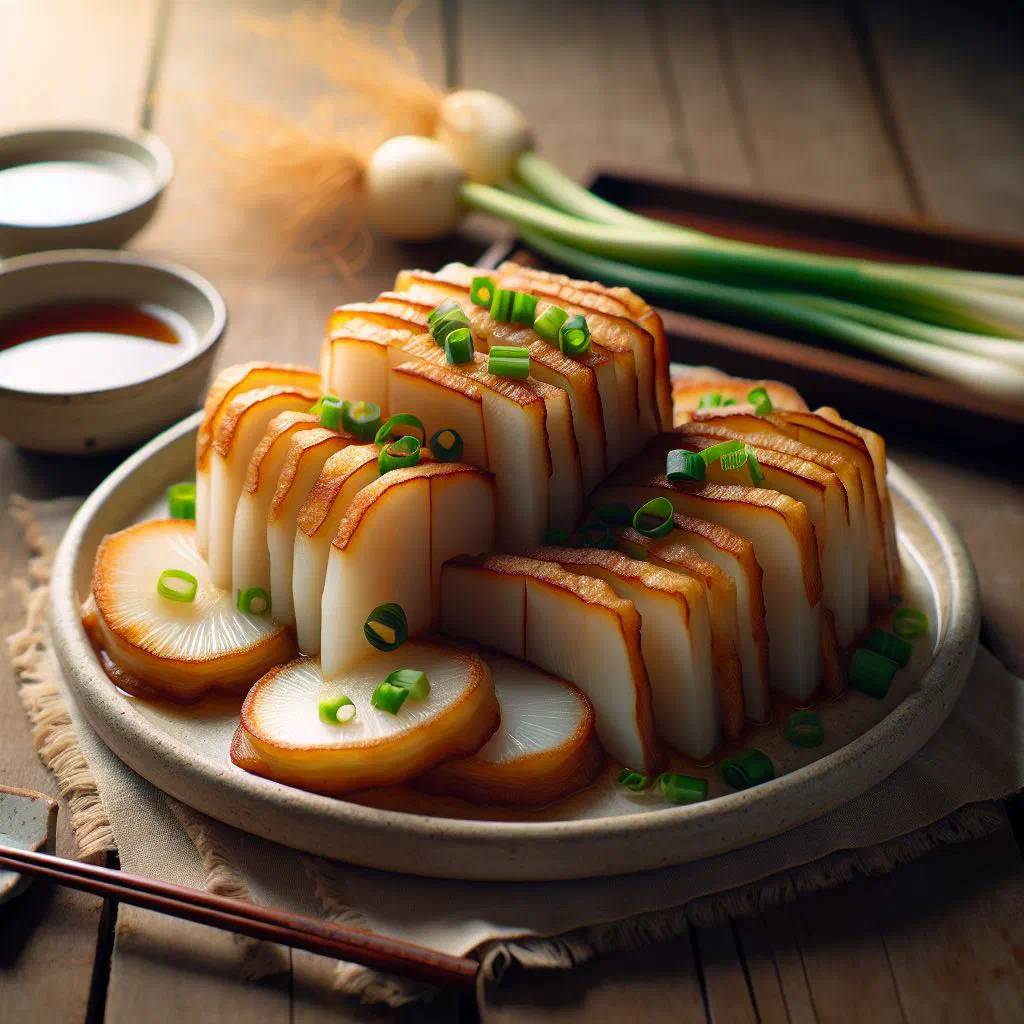
Meet Luo Bo Gao, the savoury radish cake that turns up on dim sum trolleys and at street stalls across China, especially when the weather turns cold. Tender and yielding on the inside, golden and crisp on the outside, it makes the most of humble daikon radish and a handful of pantry staples. This comforting little cake brings a taste of a Chinese winter kitchen straight to your table.
About Luo Bo Gao
Luo Bo Gao, also known as radish cake, is a celebrated dish in Chinese cooking that comes into its own during the winter months. A cornerstone of the country’s street-food culture, it pairs the clean freshness of daikon radish with an outer layer that is at once delicate and crisp. The exact method and ingredients shift from region to region, yet the characteristic flavour of the radish always shines through. Served as a quick snack or as a special side to a main course, Luo Bo Gao delivers a taste experience all of its own.
Ingredients (serves 1–2)
- 250 g grateable radish (such as daikon)
- 100 g rice flour or potato flour
- 1 tsp salt
- 1/2 tsp pepper
- 2 spring onions, finely chopped
- 1 tbsp soy sauce
- Oil, for frying
Shopping for the ingredients
The key to a good Luo Bo Gao is a good radish, so look for one that feels firm and is free of soft spots or blemishes. Rice flour or potato flour can be found in Asian grocers or in well-stocked supermarkets. For the spring onions, organic varieties are worth seeking out if you want even more flavour and a fresher aroma in the finished cake.
Preparing the dish
Before you start cooking Luo Bo Gao, peel the radish thoroughly and then grate it. Grating matters here, as it determines the texture of the cake and helps the radish cook through evenly. Next, combine the grated radish with the flour and the remaining ingredients to form a smooth, even mixture. A handy tip: let the mixture rest for a few minutes so the flavours have a chance to develop.
Step-by-step instructions
- Tip the grated radish into a sieve and press out any excess liquid.
- In a bowl, combine the radish with the rice or potato flour, salt, pepper, chopped spring onions and soy sauce.
- Heat a frying pan with a little oil and spread the mixture evenly across the base.
- Fry over medium heat for about 5–7 minutes, until the underside is golden brown, then flip and cook the other side.
- Once both sides are crisp, lift the Luo Bo Gao out of the pan and cut into pieces. Serve warm.
Gluten-free / lactose-free version
For a gluten-free version of Luo Bo Gao, simply use rice flour or cornflour in place of wheat flour. Just check that the flour you choose is labelled gluten-free, so that anyone with a gluten intolerance can enjoy this tasty dish too. There is no dairy in the recipe at all, which means it is naturally suitable for those who are lactose intolerant.
Tips for vegans and vegetarians
Luo Bo Gao is vegetarian by nature and easily made vegan, all you need to do is make sure none of your ingredients contain animal products. Check that your soy sauce has no animal-derived additives, and you are good to go. Vegans can adapt the recipe freely, for instance by folding in extra vegetables such as carrots or courgette. Experiment with different seasonings to discover new flavour directions.
More tips and tricks
To get the perfect texture in your Luo Bo Gao, it is important to squeeze the radish well so that excess moisture is removed. You can also play with the heat of the hob to fine-tune that crisp crust. For an extra layer of aroma, stir a little sesame oil or garlic into the mixture. Create your own signature version that suits your taste exactly, much as you might with crowd-pleasing Scallion Pancakes.
Adapting the recipe to your taste
The great thing about Luo Bo Gao is just how versatile it is. You can add different vegetables to explore new flavours, courgette, carrots or even mushrooms all sit beautifully alongside the radish. Beyond that, you can vary the seasonings to give the dish a spicier edge, adding chilli or ginger to taste. Be creative and try out new combinations, in the same adventurous spirit as Stir-Fried Lotus Root.
Ingredient substitutions
If you do not have any spring onions to hand, you can use ordinary onions or leeks instead for a similar flavour. In place of soy sauce, a gluten-free tamari makes an easy swap for a fully gluten-free version. For a touch of sweetness, you might also add a teaspoon of sugar, which brings out the natural flavour of the radish. Adjust the ingredients according to what you have and to your own taste.
Drink pairing ideas
A range of drinks goes wonderfully with Luo Bo Gao. A classic green tea offers a refreshing accompaniment and harmonises nicely with the flavours of the dish. Alternatively, a light, crisp Asian beer plays up the crunch of the cake. For a non-alcoholic option, a fruit smoothie rounds the meal off beautifully.
Serving and presentation ideas
Presentation can do a lot to lift the enjoyment of Luo Bo Gao. Serve the pieces on a decorative plate, perhaps garnished with fresh herbs such as coriander or chives. A homemade soy dipping sauce on the side lets guests season their own portions to taste. If you are serving the dish for a special occasion, you could even add a few edible flowers for a festive touch.
A bit of history
Luo Bo Gao has a long history in Chinese cuisine and is often prepared for festivals and special occasions. The dish traces its origins to an Asian tradition of keeping ingredients simple and seasonal. It has evolved over the decades to become a much-loved snack or side in many households. It is a prime example of how a few modest ingredients can be combined into something hearty and delicious.
More recipe ideas
Summary: Luo Bo Gao
Luo Bo Gao is a versatile and flavourful recipe that shows off the freshness of radish at its best. With its perfect balance of a crisp exterior and a tender centre, it is a treat as both a snack and a side. The preparation is straightforward and easily adapted to your own preferences. Give this recipe a go and discover the delicious flavours of Chinese cooking.