National Dish China: Red-Cooked Fish (Recipe)
In this article
Bring a touch of festive Chinese cooking to your own table with Red-Cooked Fish, a dish celebrated for its glossy, deeply savoury sauce and meltingly tender fillets. Slow-simmered in soy sauce, sugar and fresh aromatics, it delivers a wonderful balance of sweet and savoury notes in every bite. Easy to prepare yet impressive to serve, it is the kind of dish that turns an ordinary evening into a special occasion and never fails to please guests.
About Red-Cooked Fish
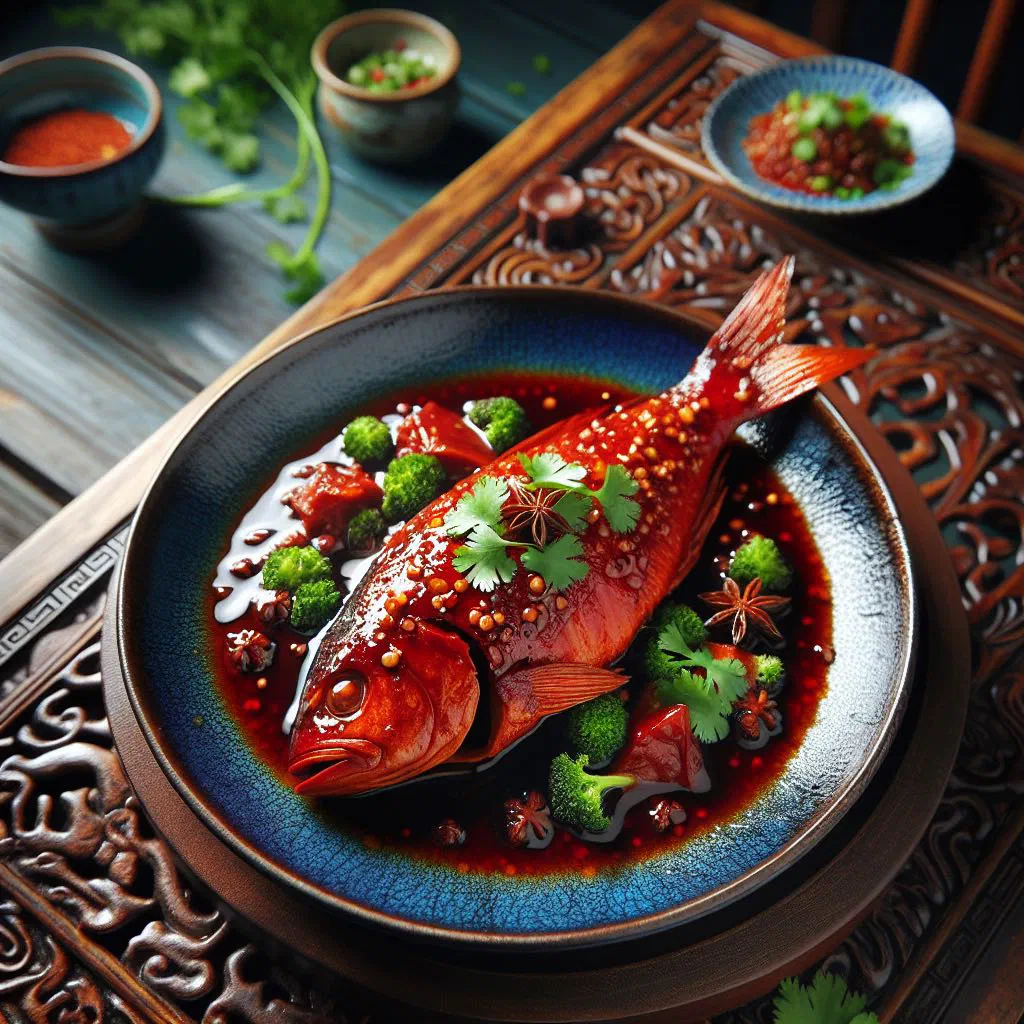
Red-Cooked Fish is a traditional Chinese dish renowned for its rich flavours and its glossy, sweet-and-savoury sauce. It brings together tender fish fillets with a delicious blend of soy sauce, sugar and fresh aromatics. This fragrant recipe is straightforward to make and a real crowd-pleaser at festivals and special occasions. Surprise your guests with a dish that appeals to the eye as much as the palate, a fine example of the depth and warmth that defines Chinese cuisine.
Ingredients (serves 1–2)
- 300 g fish fillet (e.g. salmon or trout)
- 3 tablespoons soy sauce
- 2 tablespoons sugar
- 1 piece fresh ginger (about 2 cm)
- 2 spring onions
- 1 cup water
- 2 tablespoons oil (e.g. groundnut oil)
Shopping for the ingredients
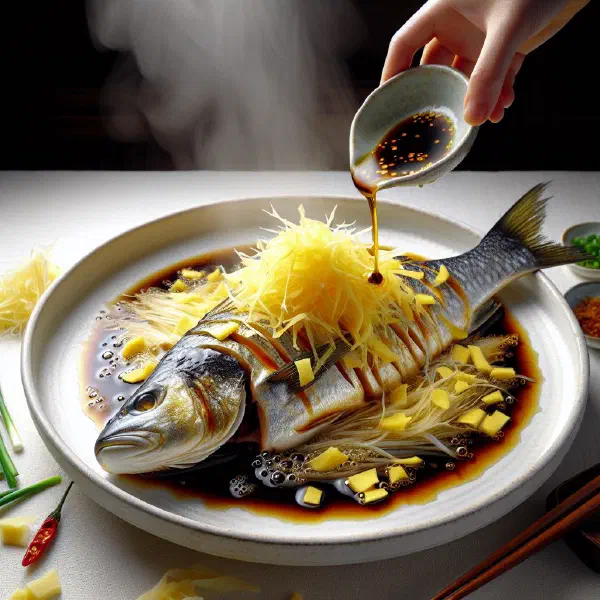
To make Red-Cooked Fish you need only a handful of basic ingredients, most of which are easy to find in any supermarket. When buying the fish fillet, look for the freshest quality you can to get the best flavour. The soy sauce, sugar and ginger should also be of good quality so the aromatic sauce can really shine. It is well worth visiting an Asian grocery too, where you will often find top-notch ingredients similar to those used in Steamed Fish with Ginger and Soy.
Preparing the dish
Before you start cooking, gather and prepare all your ingredients. Slice the ginger thinly and cut the spring onions into fine rings, which helps the flavours infuse the sauce while the fish cooks. It is especially important to pat the fish dry before adding it to the pan, as this gives you a lovely golden sear and draws the best out of the aromatics.
Step-by-step instructions
- Heat the oil in a frying pan over medium heat.
- Fry the fish until golden brown on both sides.
- Add the ginger and most of the spring onions and stir-fry briefly.
- Pour in the soy sauce, sugar and water, then bring to the boil.
- Reduce the heat and let the fish simmer gently in the sauce for about 10 minutes.
- Garnish with the remaining spring onions and serve.
Gluten-free / lactose-free version
For a gluten-free version you can use gluten-free soy sauce, often sold as tamari. It is a great choice for anyone with a gluten intolerance and offers a flavour very similar to ordinary soy sauce. Take care, too, that the fish does not come into contact with any gluten-containing products. No special adjustment is needed for a lactose-free version, as all the ingredients are naturally free of dairy.
Tips for vegans and vegetarians
Vegans and vegetarians can adapt Red-Cooked Fish beautifully by using tofu or seitan as protein-rich alternatives. These stand in for the fish and soak up the sweet-and-savoury sauce especially well. Marinate the tofu beforehand to get the most flavour out of it. If you keep the spices and the cooking method the same, you will end up with a delicious vegan version of the classic.
More tips and tricks
One key trick for perfect Red-Cooked Fish is managing the heat as it cooks. Make sure the temperature is not too high, so the fish cooks evenly throughout. You can also adjust the sauce to taste. Try adding garlic or a pinch of red chilli flakes for a spicier edge. Letting the fish rest in the sauce for a little while afterwards allows the flavours to deepen and intensify.
Adapting the recipe to your taste
This recipe is easy to tailor to your own preferences. Add vegetables such as peppers or courgette, for example, to bring in more colour and nutrients. You can also vary the sweetness of the sauce by adding more sugar or a little honey. Experiment with different kinds of fish to discover new flavours and fine-tune the dish exactly to your liking.
Ingredient substitutions
If you happen to be missing an ingredient, there are often tasty alternatives to hand. Instead of soy sauce you could use tamari, or a mix of miso paste and water. When it comes to the fish, salmon, trout or even cod all work well in this recipe, the same fresh approach that suits a fragrant Longjing Shrimp. The sugar, meanwhile, can be swapped for honey or agave syrup for a slightly different but equally delicious note.
Drink pairing ideas
A range of drinks pairs nicely with Red-Cooked Fish and complements its flavours. A lightly sparkling white wine or a well-chilled rosé highlights the sweet-and-savoury notes of the sauce beautifully. Alternatively, green tea makes for a balanced and harmonious match. For those who prefer to skip the alcohol, a fresh lemonade or a ginger ale is a refreshing choice.
Serving and presentation ideas
Presentation is an important part of any dish. Serve the Red-Cooked Fish in a deep bowl and decorate it with fresh spring onion rings and coriander for an inviting look. A few thin slices of lime or lemon alongside add a splash of colour and a hint of freshness. Remember to offer rice or Asian noodles on the side to round out the meal, much like you would with Yangzhou Fried Rice.
A bit of history
Red-Cooked Fish has its roots in traditional Chinese cooking, which is defined by an extraordinary range of flavours and techniques. Braising in soy sauce is an age-old method known both for preserving food and for creating intense, layered flavours. This dish is often served at festivals and family celebrations, where it brings together good food and good company. It reflects the cultural richness and diversity of China’s culinary heritage, in the same tradition as a comforting Wonton Soup.
More recipe ideas
Summary: Red-Cooked Fish
Red-Cooked Fish is a wonderful dish that brings the flavours of China into your home. With its rich, sweet-and-savoury sauce and tender fish, it is ideal for special occasions or festive dinners. The preparation is simple, and the recipe adapts beautifully to individual tastes. Let this classic dish inspire you and enjoy a slice of Chinese tradition at your own table.