National Dish China: Tea Eggs (Recipe)
In this article
Discover Tea Eggs, one of China’s most beloved snacks. Steeped in a fragrant brew of black tea, soy and warming spices, these humble eggs take on a striking marbled pattern and a savoury, deeply aromatic flavour. They are wonderfully easy to make, the ingredients are kitchen-cupboard staples, and the result feels far more special than the effort suggests. Bring a taste of a Chinese tea house straight to your own table.
About Tea Eggs
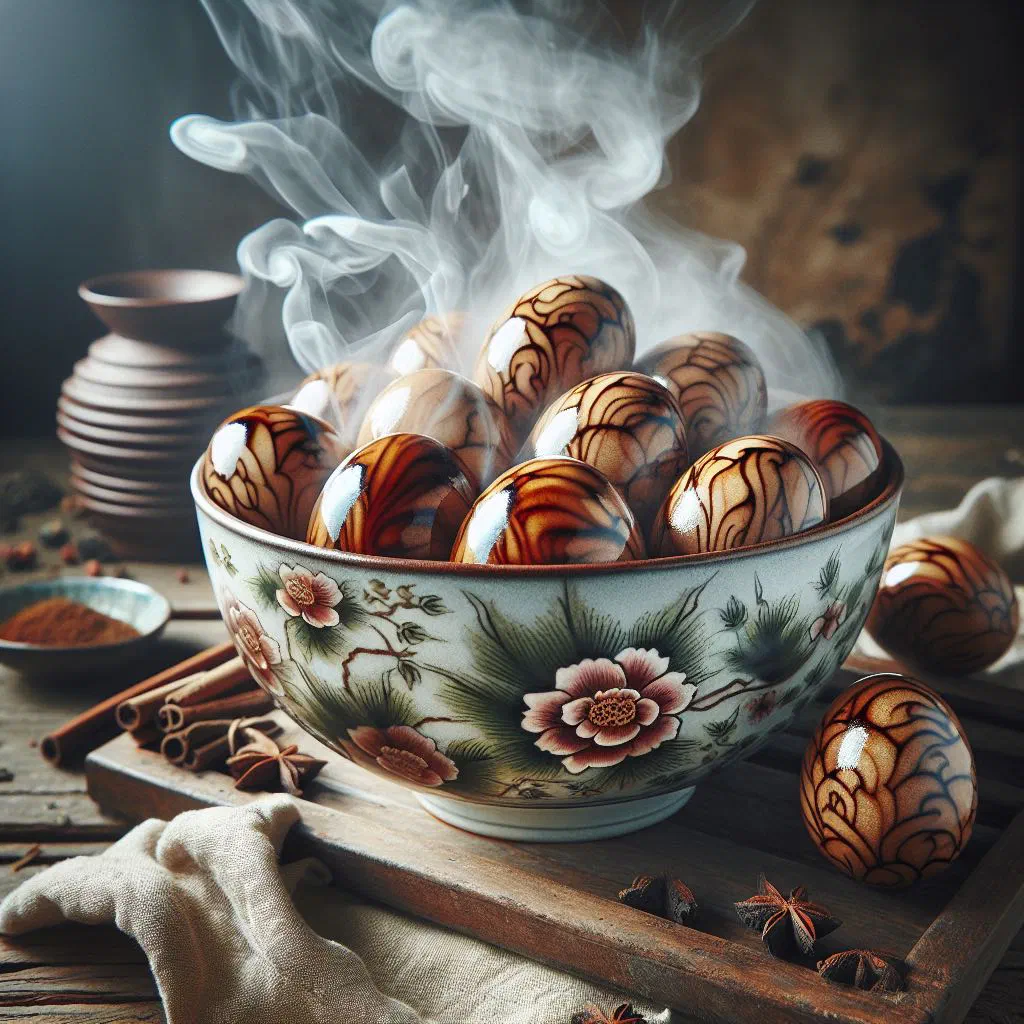
Tea eggs are a traditional Chinese snack loved the world over for their unique flavour and their mesmerising marbled shells. Simmered in a blend of black tea and a handful of spices, they offer a taste that is at once savoury and beautifully fragrant. The method is simple and the ingredients easy to find in most kitchens. More than just delicious, tea eggs are a lovely example of Chinese cookery and its knack for turning everyday staples into something quietly extraordinary.
Ingredients (serves 1–2)
- 4 hard-boiled eggs
- 2 cups water
- 2 tablespoons black tea
- 3 tablespoons soy sauce
- 1 tablespoon dark seasoning sauce (optional)
- 1 cinnamon stick
- 2–3 star anise
- 1 teaspoon peppercorns
- 1 teaspoon sugar
Shopping for the ingredients
When shopping for tea eggs, it is worth choosing fresh eggs, as they are the foundation of the whole dish. Most shops also carry the spices you will need for the brew, such as cinnamon, star anise and peppercorns. The black tea is just as important for the signature flavour and colour, so reach for a good-quality leaf. Ingredients like soy sauce or a dark seasoning sauce are often more varied in an Asian supermarket, which is a great place to stock up.
Preparing the dish
Preparing tea eggs begins with boiling the eggs hard in the usual way. Make sure they are fully cooked, then plunge them into iced water to stop the cooking. Once cooled, gently tap and crack the shells all over without removing them. This is what creates the characteristic marbling. It is a key step, as the cracks let the spiced brew seep in and work its flavour right through the egg.
Step-by-step instructions
- Boil the eggs in a pan of water for about 10–12 minutes until hard-boiled.
- Tap the eggs gently to crack the shells without peeling them away.
- In a separate pan, bring the water, black tea, soy sauce, seasoning sauce, cinnamon, star anise, peppercorns and sugar to the boil.
- Add the cracked eggs to the tea mixture and let them steep for 1–3 hours.
- Lift the eggs from the brew and serve them warm or cold, as you prefer.
Gluten-free / lactose-free version
This recipe is easy to make gluten-free and lactose-free simply by reaching for a gluten-free soy sauce. Many brands offer such alternatives with no loss of flavour. The remaining ingredients are naturally lactose-free, so anyone with an intolerance can tuck in too. It is always worth scanning the labels to make sure no hidden allergens have crept in.
Tips for vegans and vegetarians
As they are built around eggs, tea eggs are not suitable for vegans. A creative stand-in, however, is tofu, which takes very well to the same treatment. Marinate the tofu just as you would the eggs so it soaks up all the spice and tea. The method stays exactly the same, which means the wonderful aromas carry over, a version your vegan friends will happily enjoy. The dish remains a firm favourite among vegetarians as it is.
More tips and tricks
A handy tip when making tea eggs is to let them steep in the fridge overnight. This gives the flavours far longer to develop and leaves the eggs tasting bolder and richer. Playing with different spices can open up whole new flavours, too. Try adding a little chilli or some garlic, for instance, for a spicier edge.
Adapting the recipe to your taste
The tea egg recipe is easily tailored to personal preference. If a particular spice is not to your liking, simply leave it out or swap in another. You can also adjust the amount of soy sauce or tea to dial the intensity of the flavour up or down. Many regional kitchens across China have their own versions, much like the layered spicing you will find in Dan Dan Noodles, so it is well worth trying a few different takes.
Ingredient substitutions
If you have no soy sauce to hand, or would prefer a lower-salt option, coconut aminos make a fantastic and rather healthy alternative. For anyone with a sensitivity to cinnamon, a little nutmeg can be an interesting swap that gives the brew a slightly different character. Aim to replace each ingredient measure for measure so the balance of the recipe stays just right.
Drink pairing ideas
Tea eggs pair beautifully with all sorts of drinks that round out the experience. A cup of green tea or fragrant jasmine tea works wonderfully, echoing the eggs’ flavour and underlining the dish’s Asian character. Alternatively, a light Asian lager or a glass of plum wine complements the savoury notes nicely. Ginger tea is another refreshing companion that sits well alongside the spices.
Serving and presentation ideas
To show tea eggs off at their best, arrange them on a handsome serving plate framed with fresh herbs. A simple scattering of sesame seeds adds an extra inviting touch. Make sure the marbling on the eggs is on show, as that intriguing, appetising pattern is half the appeal. A piece of good Chinese tableware helps tie the whole presentation together.
A bit of history
Tea eggs have their roots in Chinese cuisine and rank among the many traditions of the country’s rich food culture. They were originally devised as a practical dish, a way to keep eggs longer while letting them drink in the flavours of the spices. They are especially common in the Fujian region, where they often turn up at festivals and celebrations. Their distinctive preparation has won them a devoted following that has only grown over the years, and they sit proudly within the wider world of Chinese cuisine.
More recipe ideas
Summary: Tea Eggs
Tea eggs are an exquisite yet simple dish that unfurls the flavours of China in every bite. Their captivating marbling and memorable taste make them a perfect snack or a fine addition to any festive spread. With easy-to-find ingredients and straightforward methods, you can make this little delicacy at home without any fuss. Let its culture and culinary heritage inspire you, and enjoy tea eggs as part of your next meal.