National Dish Comoros: Ladu (Recipe)
In this article
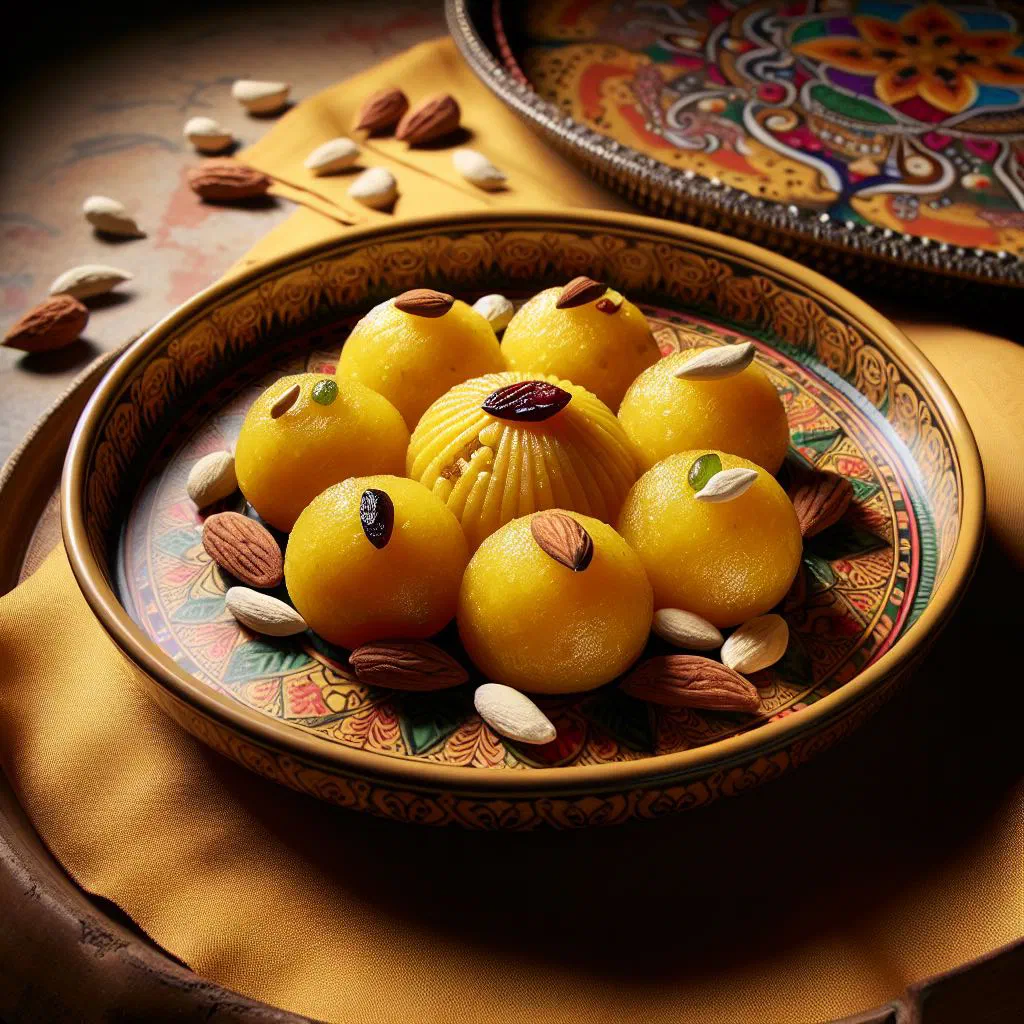
Ladu are the little sweet balls that turn up at every Comorian celebration: semolina toasted in ghee until nutty, mixed with grated coconut, cardamom and sugar, then pressed into balls while still warm. The Indian influence is unmistakable — these are close cousins of laddu — but the coconut and clove make them entirely Comorian.
About Ladu
Ladu are small, fragrant sweet balls of toasted semolina, grated coconut and cardamom, and they belong to every celebration on the islands. The Indian influence is unmistakable, the archipelago’s trade links across the Indian Ocean run deep, but the Comorian signature of coconut and clove makes them something of their own. They are simple to make and keep well, which is why they appear in such quantity at weddings and religious festivals.
Ingredients (serves 1–2)
- 100 g semolina (durum wheat)
- 50 g freshly grated coconut (or desiccated coconut)
- 60 g brown sugar
- 40 g ghee or butter
- ½ teaspoon ground cardamom
- A pinch of ground clove
- 1 tablespoon chopped cashews or raisins
- 2–3 tablespoons warm milk, as needed
Shopping for the ingredients
Fine or medium semolina both work; coarse semolina stays gritty. Freshly grated coconut gives the best texture and moisture, though desiccated coconut soaked briefly in warm milk is a good substitute. Ghee is worth using over butter. It gives a nuttier flavour and does not burn as readily during the toasting.
Preparing the dish
Have everything measured before you start, because toasting semolina requires constant attention and cannot be left. Warm the milk so it does not seize the mixture. If you are using desiccated coconut, soak it in a little warm milk for ten minutes so it softens.
Step-by-step instructions
- Melt the ghee in a heavy pan over a medium-low heat.
- Add the semolina and toast, stirring constantly, for 8–10 minutes until golden and fragrant.
- Stir in the coconut and toast a further 2 minutes.
- Remove from the heat and mix in the sugar, cardamom, clove and cashews.
- Add warm milk a spoonful at a time until the mixture just holds together when squeezed.
- While still warm, press firmly into small balls with your hands.
- Cool completely on a plate before storing in an airtight tin.
Gluten-free / lactose-free version
For a lactose-free version, use coconut oil in place of ghee and coconut milk instead of dairy milk. Both suit the flavours perfectly. Semolina is wheat, so a gluten-free version requires substituting fine cornmeal or ground almonds, which changes the texture but still works.
Tips for vegans and vegetarians
The sweets are vegetarian as written and become vegan with coconut oil and plant milk. Coconut oil in particular complements the grated coconut, and nobody is likely to notice the substitution.
More tips and tricks
Toast the semolina patiently over moderate heat. This is where all the flavour comes from, and rushing it gives a raw, pasty taste. Add the milk cautiously; too much and the balls will not hold their shape. And shape them while the mixture is warm, since it becomes crumbly as it cools.
Adapting the recipe to your taste
Rose water or a pinch of saffron are elegant additions. Chopped dates or dried apricots work alongside the raisins. Some families roll the finished balls in extra grated coconut, which looks handsome and adds texture.
Ingredient substitutions
Ground almonds can replace part of the semolina for a richer sweet. Jaggery or palm sugar substitute for brown sugar with a deeper flavour. Any nut works in place of cashews, pistachios look particularly good.
Drink pairing ideas
Sweet spiced tea is the standard Comorian accompaniment, often with cardamom or ginger. Strong coffee suits the sweetness well. For something cold, coconut water or a glass of milk works nicely.
Serving and presentation ideas
Serve ladu piled on a plate at the end of a meal or alongside tea, ideally in small paper cases if you are presenting them formally. They keep for a week in an airtight tin, which makes them ideal for making ahead of a celebration.
A bit of history
The Comoros sit at a crossroads of the Indian Ocean, and their cooking carries Swahili, Arab, Indian and French influences in equal measure. Ladu are a direct descendant of the Indian laddu, brought by traders and settlers and reworked with the coconut that grows everywhere on the islands. They offer a genuine window onto Comorian cuisine.
More recipe ideas
Summary: Ladu
Ladu are toasted semolina and coconut pressed into fragrant little balls with cardamom and clove. Toast the semolina properly, bind it lightly, and shape while warm, a festive Comorian sweet that keeps for a week.