National Dish Croatia: Peka (Recipe)
In this article
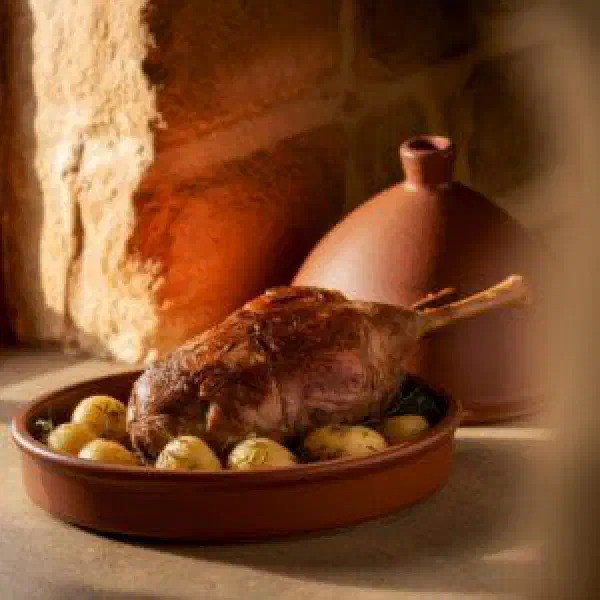
Peka is a cooking method rather than a recipe. A heavy iron bell goes over meat and vegetables, embers are heaped on top, and everything cooks in its own steam for two hours. No liquid escapes, so nothing dries out.
About Peka
Peka is Dalmatian, and the sač or bell is the whole apparatus: a domed iron lid that sits on the hearth with coals piled over it. Meat and vegetables go underneath with oil and wine, and the enclosed heat cooks from every direction at once.
Restaurants along the coast ask for it to be ordered several hours ahead. That is not affectation, it is the cooking time.
Ingredients (serves 1–2)
- 500 g lamb or veal, cut into cubes
- 4 medium potatoes, quartered
- 2 carrots, sliced
- 1 large onion, roughly chopped
- 4 garlic cloves, whole
- 2 tablespoons olive oil
- Salt and pepper, to taste
- 1 teaspoon dried Mediterranean herbs (rosemary, thyme)
- 100 ml white wine
- 2 bay leaves
Shopping for the ingredients
Lamb shoulder on the bone gives the best result, since bone and connective tissue enrich the whole dish. Use waxy potatoes, which hold their shape over two hours. A good Croatian olive oil from Istria is worth using; it is a serious product.
Preparing the dish
Cut the potatoes larger than the meat, because they cook faster. Everything goes in one layer if possible, with the meat on top so its fat drips down. Without a peka bell, a heavy casserole with a tight lid in a 180°C oven is a reasonable approximation.
Step-by-step instructions
- Season the meat with salt and pepper and rub it with the Mediterranean herbs.
- Gently sauté the prepared potatoes, carrots, onion and garlic cloves in olive oil, then transfer them to an ovenproof dish.
- Lay the meat on top of the vegetables and pour over the white wine.
- Place the Peka bell over the meat and vegetables and cover it with hot embers.
- Let the Peka cook for about 2 hours, checking the embers from time to time and topping them up as needed.
Gluten-free / lactose-free version
Meat, vegetables, oil and wine contain no gluten and no dairy. Peka is naturally suitable for both, which is more than can be said for most festive dishes.
Tips for vegans and vegetarians
The method works on vegetables alone. Potatoes, peppers, aubergine, courgette and whole garlic under the bell with oil, rosemary and wine make a real dish, and Dalmatian restaurants will make it if asked. Kruh ispod peke, bread baked under the bell, uses the same equipment.
More tips and tricks
Do not lift the lid. Every check releases the steam the method depends on, and the traditional practice is to open it once, at the ninety-minute mark, to turn things. Keep the embers topped up on the top of the bell, not just around it. And use less liquid than instinct suggests, since nothing evaporates.
Adapting the recipe to your taste
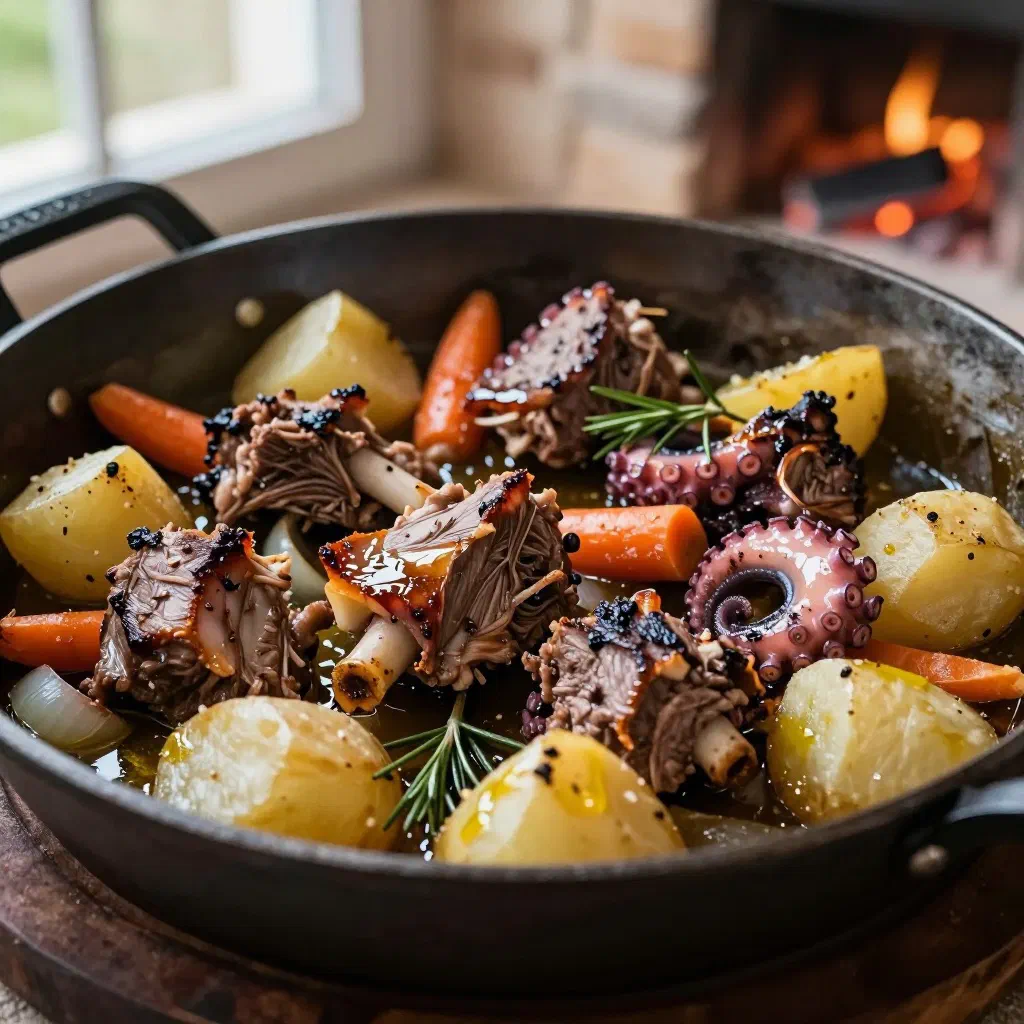
Octopus peka is the coastal alternative and arguably better, cooked the same way for slightly less time. Veal is more common than lamb inland. Some cooks add a splash of stock, though purists say the meat should provide its own.
Ingredient substitutions
A cast-iron Dutch oven in a conventional oven is the practical substitute for the bell. Chicken works with a shorter cooking time, around 75 minutes. Red wine in place of white is used with beef.
Drink pairing ideas
A Dalmatian red such as Plavac Mali is the local match. Pošip, the Korčula white, suits the octopus version. Homemade rakija comes before and after.
Serving and presentation ideas
Bring the whole dish to the table and serve straight from it, with bread to soak up the juices at the bottom. There is no accompaniment beyond that, because the potatoes are already in the pot. It is shared and it is unhurried.
A bit of history
Cooking under a bell covered in embers is ancient across the Mediterranean and the Balkans, and pottery versions have been found in Illyrian sites in Dalmatia. The method survives because it suits an open hearth and produces very good results with little attention. It is central to Croatian cuisine on the coast, alongside pašticada.
More recipe ideas
Summary: Peka
Peka is meat and vegetables cooked for two hours under an iron bell heaped with embers. Use little liquid, keep the lid down, and bring the whole dish to the table.